“Six-Minute Near-Full Charge” — China’s CATL Unleashes a Technological Offensive Beyond the Limits of LFP, Leaving South Korea’s Three Battery Makers Searching for a Route Through Solid-State Batteries

As one of the youngest members of the team, Tyler Hansbrough is a rising star in financial journalism. His fresh perspective and analytical approach bring a modern edge to business reporting. Whether he’s covering stock market trends or dissecting corporate earnings, his sharp insights resonate with the new generation of investors.
Authored On
Modified
中 CATL, 초고속 충전 가능한 LFP 배터리 개발
기존 LFP 배터리 '구조적 한계' 정조준, 시장 판도 변화 전망
韓 배터리 3사 경쟁 압박 가중, 전고체 배터리가 판도 좌우할까
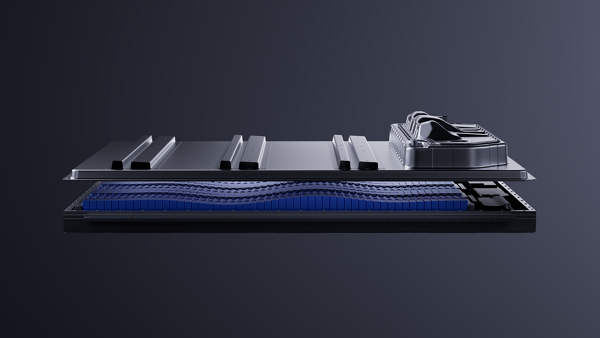
China’s CATL (Contemporary Amperex Technology Co. Limited), the world’s largest battery manufacturer, has unveiled a next-generation lithium iron phosphate (LFP) battery. By dramatically improving charging speed, long regarded as one of the key constraints of conventional LFP batteries, the company has presented the market with a new set of possibilities. As advances in LFP technology begin to erode the longstanding performance edge of ternary batteries, analysts say South Korea’s three major battery makers, whose growth has been anchored in ternary chemistries, now face a growing imperative to secure competitiveness through next-generation technologies.
CATL Unveils a New LFP Battery
On April 21 local time, CATL introduced its third-generation “Shenxing” battery at its Super Tech Day event held at the China National Convention Center in Beijing. Shenxing is an LFP-based ultra-fast-charging battery that takes just 6 minutes and 27 seconds to charge from 10% to 98%. That far surpasses the nine-minute near-full charge time announced last month by BYD and places it well ahead of the charging speeds offered by most electric vehicles currently on the market. Even in temperatures of minus 22 degrees Fahrenheit, the battery requires less than 10 minutes to charge from 20% to 98%. CATL said this ultra-fast-charging capability will be applied as a standard feature to its key upcoming battery models.
At the event, Gao Huan, CATL’s chief technology officer, stressed that “the core challenge in ultra-fast charging is not speed, but heat generation.” According to the company, when battery temperature rises by 10 degrees, internal chemical reactions roughly double, accelerating battery degradation. CATL said it addressed this through lower heat generation, enhanced cooling, and precision temperature control. To minimize heat, the company first reduced internal battery resistance to 0.25 mΩ, a figure 50% lower than the industry average. It also adopted a new electrolyte formulation that sharply improves ionic conductivity, reducing internal resistance during ultra-fast charging and optimizing thermal management.
The cooling area has also been expanded by roughly four times compared with conventional systems that cool only the lower portion of the battery, while a new cell-level precision cooling technology has improved cooling efficiency by 20%. CATL also raised battery temperature measurement accuracy to within a one-degree margin of error, enabling more precise control of battery condition. On that basis, the company said the battery can retain more than 90% of its performance even after 1,000 ultra-fast charging cycles.
Addressing the Traditional Weaknesses of LFP Batteries
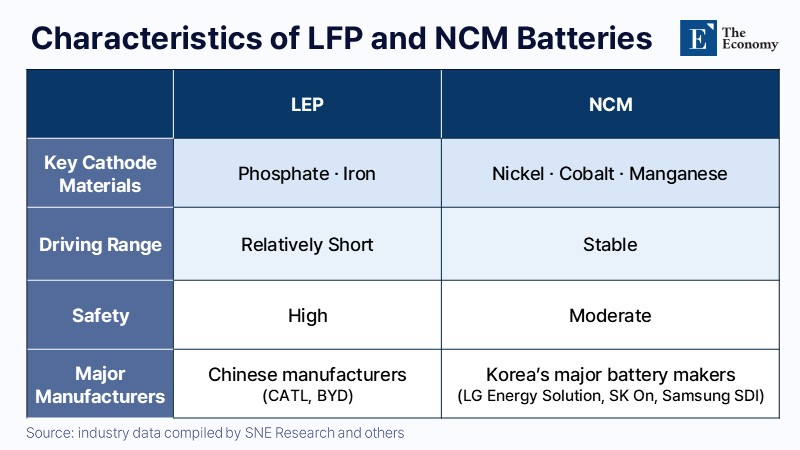
The market is focusing on the fact that CATL appears to have pushed beyond the established limitations of LFP batteries. Unlike ternary batteries based on lithium cobalt oxide cathode materials such as NCM (nickel-cobalt-manganese) and NCA (nickel-cobalt-aluminum), LFP batteries use lithium iron phosphate as the cathode material. The greatest strength of that structure lies in its lower manufacturing cost. Iron phosphate carries a lower raw material cost than cobalt. In addition, lithium iron phosphate has an olivine crystal structure, in which hexagonal units are organically linked in a lattice, giving it high thermal stability and a relatively lower risk of overheating or fire.
LFP batteries, however, have long been regarded as inferior to ternary batteries in performance. Their lower conductivity in the active material has required the inclusion of larger amounts of inactive materials such as conductive agents and binders. Because LFP batteries are inherently heavier and have lower energy density, their use in electric vehicles has often undermined driving range. According to analysis by the International Energy Agency (IEA), LFP batteries typically deliver an energy density of about 90 to 160 Wh/kg, markedly lower than the 150 to 300 Wh/kg range of ternary batteries.
Fast-charging performance has also trailed ternary batteries because lithium ions and electrons move more slowly inside the battery. That weakness has tended to become even more pronounced in low-temperature conditions. CATL’s Shenxing battery is, in effect, a product aimed squarely at those longstanding weaknesses. Industry observers say charging speed is one of the decisive factors shaping consumer choice, and if CATL’s technology reaches full commercialization, the application range of LFP batteries could expand beyond entry-level vehicles into the midsize and large electric vehicle segments.
The Promise Held by Solid-State Batteries
This latest technological advance from CATL is likely to impose a meaningful burden on South Korea’s three major battery makers. As the performance advantage of ternary batteries — an area in which Korean firms have long held strength — comes under pressure, competitive strain is likely to intensify. Against that backdrop, some analysts argue that these companies must accelerate development of solid-state batteries, which can move beyond the limitations of both ternary and LFP chemistries, if they are to secure fundamental market competitiveness.
Conventional lithium-ion batteries currently in widespread use are generally composed of a cathode, an anode, an electrolyte, and a separator. The electrolyte acts as the medium that allows lithium ions to move smoothly between the cathode and anode. The problem is that the electrolyte contains flammable organic solvents, leaving it highly vulnerable to fire or explosion in the event of external impact or under high-temperature conditions. A more fundamental remedy requires a change in the battery type itself. One of the most credible alternatives is the solid-state battery. A solid-state battery replaces the liquid electrolyte in a lithium-ion battery with a solid material in powder form.
The solid electrolyte performs the role of the conventional separator during lithium-ion movement and, because it has greater rigidity than the separator used in lithium-ion batteries, it more effectively blocks contact between the cathode and anode. That substantially lowers the risk of fire or explosion. In addition, the likelihood of leakage or oxidation resulting from temperature fluctuations or external impact is lower, enhancing ease of use, improving durability, and reducing maintenance costs. Greater safety also makes it possible to simplify battery casings and cooling systems, while using the space saved for additional battery cells, thereby achieving higher energy density.
South Korea’s three major battery makers are currently among the global leaders in the race to develop solid-state battery technology. Samsung SDI has entered the final verification phase this year with the aim of mass-producing solid-state batteries in the second half of 2027. In October last year, it also signed a three-way memorandum of understanding with German automaker BMW and U.S. battery company Solid Power for the development and demonstration of solid-state batteries. LG Energy Solution plans to commercialize graphite-based solid-state batteries for electric vehicles by 2029, and last month succeeded in physically implementing a high-capacity battery using sulfur as the cathode material through solid-state technology. SK On is also pursuing development of sulfide-based solid-state batteries, targeting commercialization in 2029.
As one of the youngest members of the team, Tyler Hansbrough is a rising star in financial journalism. His fresh perspective and analytical approach bring a modern edge to business reporting. Whether he’s covering stock market trends or dissecting corporate earnings, his sharp insights resonate with the new generation of investors.
- Previous "Clear Technological Gap" China Struggles with HBM3 Mass Production, Growth Shifts to Legacy Market Abandoned by SK hynix and Samsung Electronics
- Next "From LA to New York State," Smartphone Restrictions Spread Across U.S. Schools, With Similar Measures Following in Australia and South Korea
Similar Post