Trump in a Hurry vs. Iran Playing for Time: A Political-Economic Game of Chicken Intensifies

Siobhán Delaney is a Dublin-based writer for The Economy, focusing on culture, education, and international affairs. With a background in media and communication from University College Dublin, she contributes to cross-regional coverage and translation-based commentary. Her work emphasizes clarity and balance, especially in contexts shaped by cultural difference and policy translation.
Authored On
Modified
Persistent Divide Between the Two Countries Over Iran’s Nuclear Issue
Economically Battered Iran, Trump Facing Backlash Amid High Oil Prices
Iran Rejects Proposal, but U.S. ‘Options’ Narrow
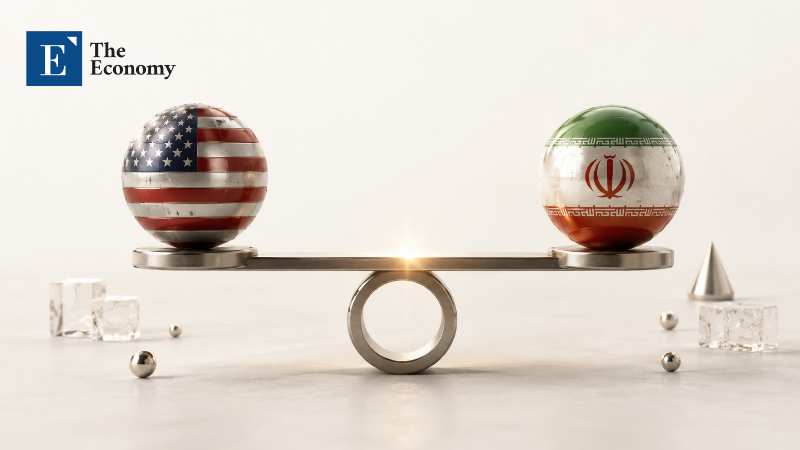
Negotiations aimed at ending the war between the United States and Iran have collapsed once again, pushing any breakthrough toward a ceasefire back into uncertainty. The United States sent Iran a proposal to end the war, and Iran delivered its response, but U.S. President Donald Trump expressed dissatisfaction with it and declared the ongoing indirect negotiations over.
The collapse of the talks starkly illustrates the wide gap in perception between the two sides. From Trump’s standpoint, with Iran’s military capabilities substantially degraded and the United States tightening Iran’s funding channels through a maritime blockade and additional sanctions, Tehran has little choice but to accept Washington’s demands. Iran, however, has shown little inclination to back down while using its remaining naval capabilities to block the Strait of Hormuz. Tehran appears to believe that a war of attrition is not necessarily disadvantageous, judging that Trump is under mounting political pressure as not only global oil prices but also domestic U.S. energy prices surge.
For Trump, the situation itself is a political liability, as he must shoulder both the mounting costs of war and the burden of large-scale support ostensibly aimed at restoring Iran’s economy. Analysts say that if the war drags on and leads directly to defeat in the midterm elections, it could even raise the possibility of an early lame duck period for Trump.
Trump Dismisses Iran’s Ceasefire Proposal, End-of-War Talks Back on the Brink
According to major foreign media outlets including Reuters and the Associated Press on the 10th local time, Trump firmly rejected Iran’s counterproposal that day through his social media platform Truth Social. “I have just read the response sent by Iran’s so-called ‘representatives,’” Trump said. “I don’t like it. It is completely unacceptable.” Although Iran’s position was conveyed through Pakistan, which has been serving as a mediator, Trump openly criticized it and made clear that he could not accept it.
Iran demanded broad concessions from the United States as conditions for ending the war. Tehran’s key demands included war reparations, control over the Strait of Hormuz, an end to the U.S. maritime blockade, and a 30-day lifting of the ban on Iranian oil sales. On nuclear issues, including enriched uranium, Iran argued that they should be excluded from any end-of-war agreement. It also demanded firm guarantees against further attacks. The United States had earlier proposed halting hostilities before full-fledged discussions on reducing Iran’s nuclear program and resuming navigation through the Strait of Hormuz.
With Trump nullifying Iran’s response, the prospects for extending the ceasefire and resuming negotiations have once again become uncertain. Still, there is growing analysis that Washington has left room for a diplomatic resolution through pressure rather than an immediate return to armed conflict. Mike Waltz, the U.S. ambassador to the United Nations, said on ABC, “We are giving diplomacy every possible opportunity before returning to hostilities.” Trump has repeatedly warned that if Iran does not accept an agreement to reopen the strait and scale back its nuclear program, the United States will resume full-scale bombing. Analysts also say the United States could resume military action at any time if Iran shows no change in attitude.
Iran, too, appears determined to fight to the end. According to Iranian state media, Mojtaba Khamenei, Iran’s supreme leader who had disappeared from public view, met with military commanders and instructed them to “continue operations and confront the enemy forcefully.” Iranian President Masoud Pezeshkian also declared that Iran would “never submit to the enemy,” reaffirming his commitment to defending national interests. Iran’s military authorities have also issued the highest level of alert to protect uranium storage facilities against possible infiltration by U.S. special forces.
Trump Says “Iran Is Collapsing” vs. Iran Says “Regime Survival Comes Before the Economy”
The standoff between the United States and Iran is increasingly taking the form of a game of chicken over which side breaks first. The United States is trying to choke Iran’s economy through a maritime blockade and drag Tehran back to the negotiating table, while Iran appears to be digging in after calculating Washington’s political and time constraints. Iran strongly believes that the Hormuz blockade must be lifted first because of its economic problems. Bloomberg reported that Iran, facing a “tank top” situation as oil storage facilities rapidly fill up due to blocked crude export routes, has begun cutting production. This means Tehran has few other options despite the risk that once oil wells are shut down, they could be permanently disabled.
Iran’s economy has already been badly shaken by the shock of war. Local estimates show that 1 million jobs have disappeared and 2 million people have been affected in employment terms. In particular, the prices of food and medicine have surged four- to fivefold, sharply worsening the economic conditions felt by ordinary Iranians. Iran currently has neither war nor peace. The damage Iran has suffered from U.S. and Israeli attacks is estimated at $270 billion. Iran’s production capacity has fallen by roughly 15%. This is the backdrop to Trump’s repeated pressure campaign, in which he has said that “Iran is financially collapsing.”
However, the possibility of Iran’s economy collapsing completely remains limited. Since the 1979 Islamic Revolution, when the monarchy was overthrown and the current leadership took power, Iran’s rulers have consolidated their power base by elevating anti-Americanism into a governing ideology despite domestic and external economic turbulence. Even then, the Western campaign of isolation and war imposed extreme national sacrifices, but the regime proved its resilience by mobilizing public nationalist sentiment. Iran also experienced the maximum pressure policy during Trump’s first administration and endured even while cutting oil production in half. Iran is currently known to have secured additional storage capacity of 30 million barrels. By also considering converting retired oil tankers into temporary storage facilities, Iran is expected to be able to hold out for at least another two to three months.
Iran’s calculation is simple. It believes U.S. political pressure will reach its limits before Iran’s economic pain does. Trump is currently facing rising fatigue inside the United States over the prolonged war and growing political backlash. In particular, if oil prices continue to rise and inflationary pressure persists ahead of the midterm elections in November, the political burden could escalate sharply. The Washington Post projected that “the national average gasoline price in the United States has risen to $4.39 per gallon, the highest level during the war, and could rise further as long as the strait remains closed.” High oil prices are bound to weigh heavily on Trump. Ultimately, for Iran, the fight has become a question of whether “the economy collapses first,” while for the United States it is whether “politics collapses first,” with both sides using time as a weapon while waiting for the other to reach its limit.
China’s Mediation Card Limited, Trump’s Political Bleeding Accelerates
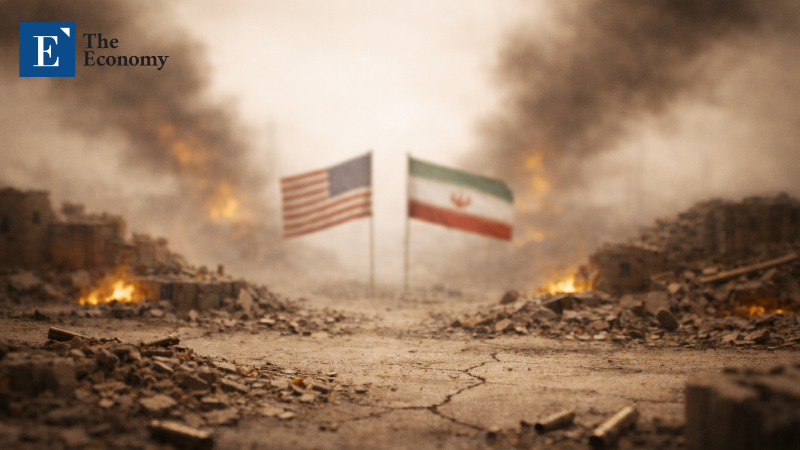
Some analysts view the wartime relationship between the United States and Iran as a “cat-and-mouse game.” The argument is that Iran is waging a psychological war that tests the other side’s patience through strategic ambiguity and provocations while avoiding all-out war. In effect, the American cat is trying to catch the Iranian mouse, but the mouse is artfully slipping away by exploiting asymmetric tactics, terrain, and geopolitical complexity.
Iran’s mouse strategy is to prevent the cat from attacking further through shadow warfare, cyberattacks, tanker seizures, and proxy warfare by militias. Although Iran is overwhelmingly outmatched in conventional military firepower, the blockade of the strait and attacks using small fast boats, missiles, and drones have created a situation in which the cat cannot attack recklessly. Iran, backed by China and Russia, has also achieved a degree of success in information warfare and propaganda. On April 27, Iranian Foreign Minister Abbas Araghchi visited Russia and requested support from President Vladimir Putin.
For the cat, the United States, however, the costs and risks of fully catching the mouse, Iran, are too great. At this point, Trump has few options. With the Hormuz blockade continuing, policy tools to lower oil prices in the short term have effectively been exhausted, while his negative job approval rating has surged to 62%, the highest across both his first and second terms. For Trump, securing support for domestic policy has become a key variable, but it is hardly an easy task.
Some observers say the U.S.-China summit set to take place in Beijing on the 14th could serve as a variable that shakes the deadlock between the two countries, but the prevailing analysis is that China’s practical influence is limited. China is one of the largest customers that has secured large volumes of Iranian crude at discounted prices. A prolonged blockade of the Strait of Hormuz would translate directly into pressure on China’s manufacturing sector and energy supply system. By contrast, the United States is assessed to have relatively greater shock-absorption capacity because it has a shale oil production base and a strategic petroleum reserve system. This means China has a far more urgent need for an early resolution, but its means of exerting substantive pressure on the United States are limited.
Ultimately, experts widely agree that a realistic compromise will have to converge on a path in which the United States provides Iran with economic compensation and induces a face-saving withdrawal. The failure of the Iran war to end as a short campaign and its slide into a prolonged conflict is a clear liability for Trump. Ahead of the midterm elections, Trump had expected to win through a short war and present the spoils to the public as planned, but that is proving difficult. According to forecasts by major foreign media outlets including The Economist, The Hill and The New York Times, the likelihood of a Democratic victory in the midterm elections is rising. This effectively signals the beginning of Trump’s lame duck period.
Siobhán Delaney is a Dublin-based writer for The Economy, focusing on culture, education, and international affairs. With a background in media and communication from University College Dublin, she contributes to cross-regional coverage and translation-based commentary. Her work emphasizes clarity and balance, especially in contexts shaped by cultural difference and policy translation.
- Previous Meta Bets on Humanoids Through ARI Talent Acquisition as Aggressive AI Spending Fuels Both Synergy Expectations and Monetization Concerns
- Next British Local Elections Deliver Landslide for Anti-Immigration Right-Wing Party, European Politics Recast Around Immigration-versus-Anti-Immigration Divide Beyond Traditional Left-Right Alignment
Similar Post