"From Trade to Iran and Taiwan": U.S.-China Summit Laden With Difficult Issues Likely to Remain Superficial

Authored On
Modified
U.S.-China summit unlikely to produce comprehensive trade agreement
Core issues between the two countries remain misaligned, with tensions over Middle East conflict also unresolved
Wide differences persist over Taiwan Strait, while U.S. focuses on preventing military clash
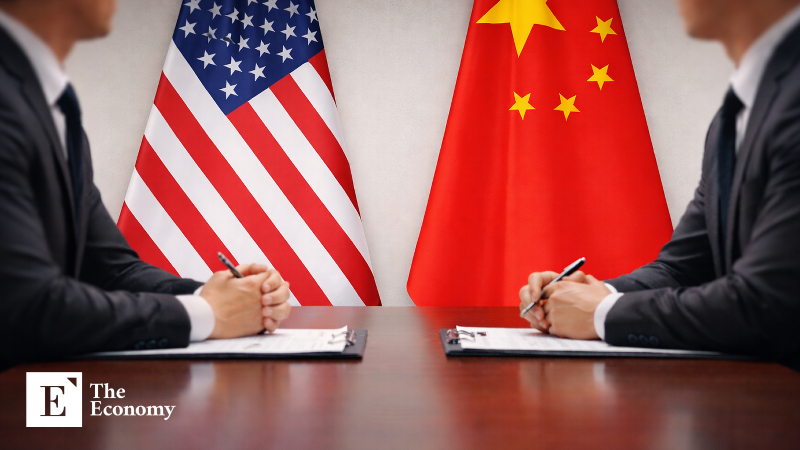
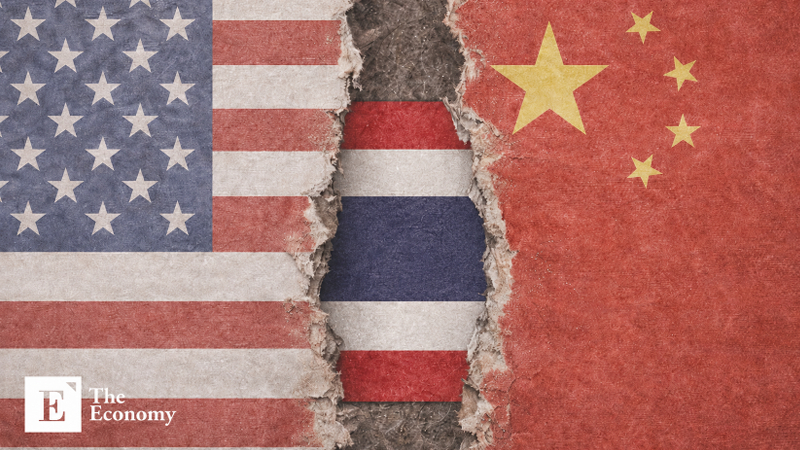
As the U.S.-China summit approaches, international attention is turning to the issues expected to be placed on the table. Foreign media outlets assess that the two countries are unlikely to reach a comprehensive agreement on trade and will struggle to produce meaningful outcomes on core issues tied to their respective national interests. Dialogue over the Taiwan Strait is also expected to go in circles due to the sharp divergence in the two sides’ positions.
The Current State of U.S.-China Trade
On the 10th (local time), White House Deputy Press Secretary Anna Kelly said in a telephone briefing on President Donald Trump’s visit to China that Trump is scheduled to arrive in Beijing on the evening of the 13th. The trip was moved up from its original schedule of the 14th to 15th. “On Thursday morning, President Trump will attend a welcoming ceremony and a bilateral meeting with President Xi Jinping,” Kelly said. “In the afternoon, he is scheduled to tour the Temple of Heaven with President Xi, and in the evening he will attend a state banquet.” She added that “during this visit, President Trump will, as he has over the past year, recalibrate relations with China and restore America’s economic self-reliance by prioritizing reciprocity and fairness.”
One of the main agenda items for the U.S.-China summit is trade between the two countries. According to a report by the South China Morning Post (SCMP) that day, experts said the two sides are likely to seek a pragmatic agreement that exchanges an easing of technology restrictions for expanded purchases of energy and agricultural products. Expectations for a comprehensive trade pact remain low. Kelly did mention the creation of a “U.S.-China Board of Trade” as a key agenda item for the summit, but said the board would “allow the two governments to manage trade in non-sensitive goods.” In effect, discussions on strategic items that have long been at the center of repeated trade frictions have been excluded.
Behind this situation lies a fundamental shift in U.S. perceptions. Trump and the U.S. political establishment are said to share the view that the more the United States opens its market to China, the more it loses its industrial base and trade balance, while China alone secures growth opportunities. From the U.S. perspective, trade normalization is therefore hardly seen as a positive development. In recent years, China has expanded its supply-chain dominance across a wide range of sectors, including steel, chemicals, batteries, solar panels, electric vehicles and rare earths, on the back of economies of scale and state subsidies. If the United States opens its market under these conditions, low-cost Chinese goods could flood in and accelerate the decline of U.S. manufacturing. Consumer prices may stabilize to some extent, but the cost would be devastating: fewer manufacturing jobs and the erosion of the industrial ecosystem.
Core Issues Also Set to Go in Circles
Some analysts also believe the two countries will use specific trade issues to pressure each other. According to The New York Times and others on the 9th, the United States is likely to demand that China purchase Boeing aircraft, U.S. beef and soybeans during the summit. These are issues that could reduce the U.S. trade deficit with China while also delivering direct economic benefits to Trump’s core support base, including U.S. manufacturers and farmers. Boeing aircraft symbolize advanced U.S. manufacturing and employment, while beef and soybeans are directly tied to the interests of Midwestern agricultural regions that form Trump’s political base.
China is expected to raise tariffs, the removal of technology restrictions and Taiwan as key agenda items. Tariffs are increasing the burden on exports and the economy, while technology restrictions are constraining China’s industrial upgrading and growth in artificial intelligence (AI). The Taiwan issue is one of the matters China regards as a “core national interest.” The problem is that these demands are difficult to resolve through a simple “transaction.” What the United States wants is expanded Chinese purchases and the restoration of industrial balance, while what China wants is an easing of U.S. strategic pressure. In other words, one side is demanding economic gains, while the other is demanding an end to containment aimed at checking its hegemony.
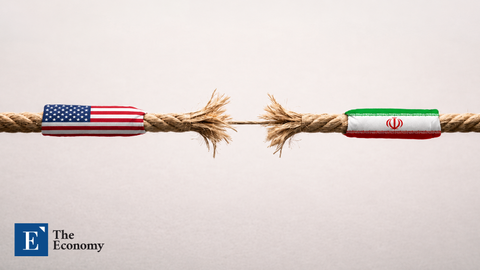
The Iran war may also emerge as a topic between the two countries during the summit. A senior U.S. official told the Associated Press that “the president is expected to apply pressure” on China over the Middle East conflict. The United States currently suspects that China has effectively financed the war by importing Iranian crude oil on a large scale. On the 8th, the U.S. Treasury Department sanctioned nine Chinese companies and one individual over allegations of supporting Iran’s armed resources, while the State Department separately sanctioned four Chinese companies accused of providing satellite information to Iran.
Risks Embedded in the Taiwan Strait
Dialogue over the Taiwan Strait is also expected to effectively go in circles. This is because the United States is in a position where it must prevent a clash in the Taiwan Strait by any means. Chinese military experts have steadily argued that if the United States were to directly confront China over Taiwan, its very capacity to maintain the world order could be tested. The battlefield structure in the Western Pacific has changed fundamentally in recent years. China has steadily built anti-access/area-denial (A2/AD) capabilities aimed at aircraft carriers, which once symbolized the overwhelming superiority of the U.S. Navy. U.S. military think tanks and some defense reports have repeatedly warned that U.S. carrier strike groups could be exposed to hypersonic weapons and mass missile attacks in the event of a Taiwan Strait contingency.
Another problem is the high possibility that the repercussions of a military clash would spread across the global economy. The Taiwan Strait is a key route for the global semiconductor supply chain and maritime energy transport, with hundreds of ships passing through the area each day. If a military clash were to occur there, production bases across Asia would immediately be thrown into turmoil, with port congestion and parts supply disruptions likely to unfold in sequence. For the United States, already strained by high inflation and massive national debt, the possibility that a prolonged military conflict could lead to financial market instability and weakened domestic demand is difficult to ignore.
Taking these risks into account, the United States is intensifying its efforts to check China. The U.S. Indo-Pacific Command (INDOPACOM) began regular exercises and drills with multiple regional allies last month. These include Thailand’s multinational joint exercise Cobra Gold, the South Korea-U.S. combined exercise Freedom Shield, the Korean Marine Exercise Program (KMEP), the U.S.-Japan combined amphibious exercise Iron Fist, and the Sea Dragon anti-submarine exercise involving the United States, Japan, India, Australia and New Zealand. INDOPACOM is actively publicizing these exercises with allies and partners on its official website. The move is interpreted as an effort to underscore that the U.S.-led regional military readiness posture remains intact despite the conflict situation in the Middle East.
Similar Post