“Defeated-Nation Shackles Lifted” Germany Reduces Reliance on U.S. Troops, Accelerates Rearmament Through Defense Spending Surge and Independent Military Strategy

Authored On
Modified
Germany, Which Relaxed Its ‘Debt Brake’ Last Year, Continues Raising Defense Expenditure
U.S. Signals Possible Reduction of Troops Stationed in Germany and Withdrawal of Missile Deployment Plan
Germany Secures Political Justification for Military Expansion, Moves Toward Independent Strategic Doctrine
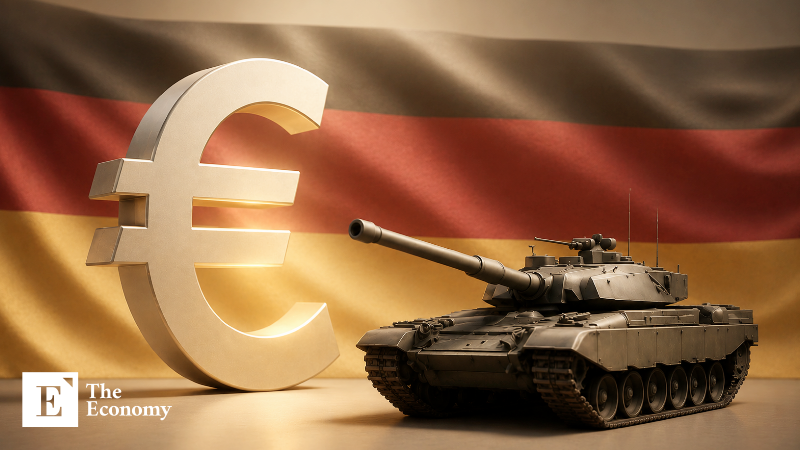
Germany’s rearmament drive is gathering momentum. Following last year’s easing of the country’s “debt brake,” Berlin has sharply expanded defense spending while rapidly strengthening its indigenous military capabilities. Analysts expect the trend to accelerate further in the coming years. Cracks have emerged in the postwar security architecture centered on the United States, giving Germany fresh political legitimacy and strategic justification to expand its own military power.
Germany’s Defense Expansion Drive
According to an article contributed by international security expert Prakash Nanda to India’s EurAsian Times on July 4 local time, Germany’s recent rearmament push is reshaping the balance of postwar European security. Data from Washington-based think tank Atlantic Council show Germany’s defense spending this year approaching $127 billion. By comparison, Britain’s defense expenditure stands at roughly $84 billion, while France’s totals around $70 billion over the same period. The figures underscore Germany’s increasingly outsized investment in its defense architecture relative to other major European powers.
The trajectory is expected to continue next year. At a cabinet meeting last month, the German government approved budget guidelines for 2027 that include $124 billion in defense spending and $139 billion earmarked for infrastructure investment. Based on the framework, ministries will finalize the budget proposal around July, while Berlin intends to maintain the current trajectory and raise defense spending to 3.5% of gross domestic product by 2029. By Atlantic Council estimates, Germany’s annual defense budget at that point would reach approximately $189 billion.
Germany has been able to pursue such aggressive investment in defense because it decisively loosened its fiscal constraints. Last year, the German parliament passed a constitutional amendment easing the country’s debt brake, thereby establishing the institutional foundation for expanded military spending. The revised framework effectively exempts defense expenditure exceeding 1% of GDP from borrowing restrictions. At the same time, Germany established a special fund worth approximately $585 billion to finance infrastructure, climate, and security investment over the next decade. The move is widely viewed as Germany’s most consequential rearmament turning point since World War II.
U.S. Pullback From Germany’s Security Architecture
The trend is expected to persist for the foreseeable future. Concerns have recently intensified over the possibility of a substantial reduction in U.S. troop deployments stationed in Germany. Earlier, on July 1, the Donald Trump administration officially announced plans to withdraw roughly 5,000 troops from Germany. Currently, approximately 35,000 to 36,000 U.S. personnel are deployed in the country, centered around facilities such as Ramstein Air Base in Rhineland-Palatinate. International media outlets highlighted that the decision came shortly after German Chancellor Friedrich Merz publicly criticized Washington’s military operations against Iran. On June 27, Merz stated that “the United States entered the war without a clear exit strategy” and that “America as a whole is being humiliated by Iran.”
Ramstein officials, however, insist there are currently no visible indications of an imminent troop withdrawal. In a virtual briefing with foreign media on July 6, Ramstein Mayor Ralf Hechler said he immediately contacted the base liaison office following the announcement but “did not really believe Ramstein itself would be affected.” He added that “massive amounts of money have recently been invested in U.S.-related infrastructure, including local schools, over the past five to six years,” while noting that “although the U.S. president is naturally unpredictable, there are absolutely no signs or atmosphere suggesting the Americans are preparing to leave.”
In addition, President Trump is reportedly reviewing plans to scrap the missile deployment agreement previously established between former President Joe Biden and former German Chancellor Olaf Scholz. Addressing the issue recently, Merz publicly remarked that “the United States itself does not possess sufficient missile stockpiles” and that “there is currently very little room for Washington to deploy missiles to Germany.” The two countries had previously agreed during the 2024 NATO summit in Washington to begin rotational deployments of U.S. ground-launched missiles in Germany starting this year. The arrangement marked the first deployment of U.S. intermediate-range strike systems to Germany since the Cold War, aimed at strengthening deterrence against Russia’s nuclear-capable Iskander missiles. The deployment package included SM-6 missiles with ranges exceeding 286 miles, Tomahawk cruise missiles capable of striking beyond 994 miles, and the Dark Eagle hypersonic weapons system.
Easing Pressure on a Former Defeated Power
Germany maintains that the weakening of U.S. influence has not come as a sudden development. According to reports published July 1 by German outlets Die Zeit and Deutsche Welle (DW), German Defense Minister Boris Pistorius stated that “a U.S. withdrawal from Europe and Germany had long been foreseeable,” adding that “NATO must now become more Europeanized, and Europeans must assume greater responsibility for their own security.” He also cited measures including military expansion, faster procurement of defense equipment, and infrastructure construction, insisting that “Germany is on the right track.” Chancellor Merz has likewise emphasized that Washington’s troop reduction plans are unrelated to tensions between the two leaders and instead represent an extension of long-standing military planning.
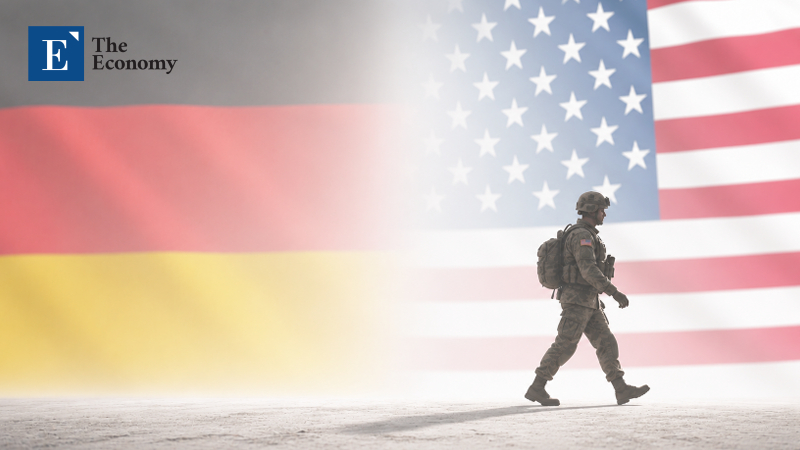
Some analysts argue the growing fissures between Washington and Berlin may ultimately benefit Germany. The interpretation is that U.S. forces stationed in Germany have served not only NATO’s collective defense mission but also a broader strategic function of managing and constraining postwar Germany. In practice, the United States maintained large troop deployments in West Germany immediately after the end of World War II. Germany, constrained by constitutional restrictions on military activity and a postwar anti-rearmament framework, became heavily dependent on the American nuclear umbrella and the U.S. troop presence for its national security. Washington’s increasingly visible retreat from European security affairs has therefore become a catalyst strengthening the political legitimacy and strategic rationale for German rearmament.
Amid the rapidly shifting geopolitical landscape, Germany is accelerating efforts to establish an independent military doctrine that excludes U.S. influence. A representative example emerged last month, when Berlin formally designated Russia as the greatest threat to both German and European security and unveiled its first comprehensive military strategy since 1955. In a strategic document partially disclosed by the German Defense Ministry on June 22, Berlin stated that “the focus of military strategy is currently directed toward Russia, the most significant and direct threat to Germany, Europe, and transatlantic security,” adding that “as Europe’s largest economy and the largest allied nation without its own nuclear weapons, Germany bears special responsibility.” Pistorius has repeatedly outlined plans to build Europe’s strongest conventional military force by 2039 through securing a combined force structure of 460,000 personnel, including 260,000 active-duty troops and 200,000 reservists, alongside long-range precision strike capabilities.
German forces are also expected to participate in future mine-clearing operations in the Strait of Hormuz. According to a July 6 report by DW, the German Navy minehunter Fulda departed the Kiel-Wik naval base in the Baltic Sea on July 5 and headed toward the Mediterranean. Germany plans to integrate the vessel into NATO mine-countermeasure forces and prepare it for immediate deployment should an international mine-clearing operation commence. Germany is regarded as possessing world-class mine-removal capabilities and has continuously conducted operations to eliminate residual mines and unexploded ordnance in the Baltic Sea since the end of World War II. The German government, however, maintains that any direct military support would only become possible after the conclusion of active hostilities.
Similar Post