“Military Threats Return as Negotiations Stall” Desperate Trump Escalates Pressure on Iran Through Expanded ‘Project Freedom’

Authored On
Modified
Trump Slams Ceasefire as “Life Support Dependent”
Signals Resumption of Hormuz Escort Operations
Analysts View Remarks as “Strategic Messaging Through Escalation”
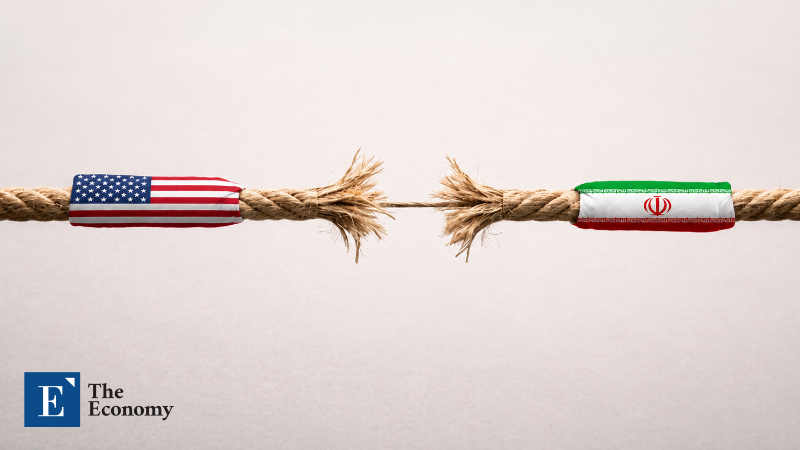
U.S. President Donald Trump has floated an expansion of “Project Freedom.” The rationale, he said, is that the probability of the ceasefire with Iran surviving stands at barely 1%. With end-of-war negotiations mired in prolonged deadlock and the window for diplomacy rapidly narrowing, Trump is now signaling the possible resumption of military measures in a direct attempt to destabilize Tehran’s “delay strategy.”
Trump Calls Iran Proposal “Garbage,” Reviews Renewed Strikes
Speaking on the 11th during a White House event focused on maternal healthcare, Trump described Iran’s response to the U.S. ceasefire proposal as “stupid,” adding that the truce with Tehran was now “in its weakest state.” He derided the Iranian proposal as “a piece of garbage,” saying he “didn’t even read all of it.” Trump continued, “The ceasefire is hanging on serious life support,” comparing the situation to “a doctor walking in and saying your loved one has maybe a 1% chance of surviving.” He further stressed, “They think I’ll get tired of this, or bored, or pressured. But there is absolutely no pressure.”
Addressing the terms of negotiations with Iran, Trump said, “The plan is very simple. Iran cannot have nuclear weapons.” He claimed Iran had been “completely defeated militarily,” adding, “They may have rebuilt a little, but we could wipe it out again in one day.” He continued, “They will not have nuclear weapons, and they were unwilling to even go that far. How stupid.” Trump also warned that the United States had struck only around 70% of its originally intended targets and could intervene for another two weeks if necessary to eliminate the remaining objectives.
In separate phone interviews with Fox News and CBS on the same day, Trump also revealed that he was considering resuming Project Freedom, the previously suspended maritime support operation in the Strait of Hormuz. This time, he warned, the mission would involve “a far more serious level” than simple commercial escort operations. Project Freedom is a U.S. military initiative designed to provide armed assistance for vessels attempting to transit the Strait of Hormuz. Trump had launched the operation on the 4th before suspending it on the 5th, citing major progress in ceasefire negotiations with Iran.
No final decision has reportedly been made. Although the primary objective remains maritime support rather than a full-scale assault on Iran, any operation would likely make limited military clashes unavoidable. U.S. outlet Axios, citing three American officials, reported that Trump convened a meeting with key members of his national security team — including Vice President J.D. Vance, Secretary of State Marco Rubio, Defense Secretary Pete Hegseth, and CIA Director John Ratcliffe — to discuss Iran response measures, adding that Trump appeared increasingly inclined toward reviving military options.
Direct Pressure on Iran’s “Delay Tactics”
As a result, some analysts believe stronger pressure from the United States and Israel could instead reinforce the influence of conservative hardliners centered around Iran’s Islamic Revolutionary Guard Corps (IRGC). Iran has also spent decades adapting to sanctions pressure. Many assessments conclude that the regime has secured a degree of sustainability through energy-smuggling networks, indirect trade channels with China and Russia, and informal financial systems. Ultimately, if Washington seeks to turn regime collapse into a realistic outcome, substantially greater military and economic pressure would be required beyond current levels. Trump’s latest remarks therefore appear to leave open the possibility of additional escalation targeting military facilities, command structures, and energy infrastructure.
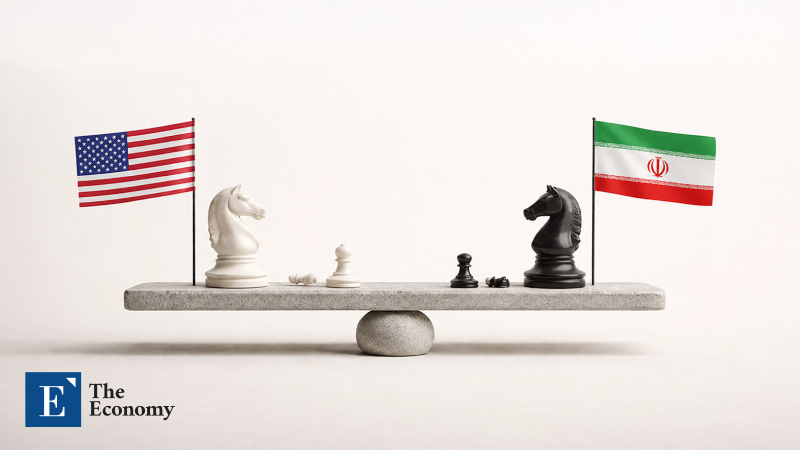
Negotiation Pressure Outweighs Immediate Strike Intentions
Phase Two of the White House roadmap for weakening the Iranian regime reportedly centers on restructuring global energy markets. The strategy involves accelerating modernization of U.S. refining facilities while collaborating with Middle Eastern allies Saudi Arabia and the United Arab Emirates (UAE) to establish a new overland pipeline consortium known as “TransAram.” If connected through Israel into Europe, the pipeline could effectively neutralize Iran’s repeated threats to shut down the Strait of Hormuz.
Phase Three reportedly consists of a joint naval and air operation known as “Epic Passage.” The operation would involve direct U.S. military escort of oil tankers to restore freedom of navigation in the Strait of Hormuz under American, rather than Iranian, terms. Richard Goldberg, senior adviser at the Foundation for Defense of Democracies (FDD) and former National Security Council (NSC) official, argued, “If U.S. and allied naval forces can secure and defend the narrow shipping lanes, Iran’s ‘hollow ayatollahs’ will inevitably lose.” He added, “Oil prices would fall, and the Iranian regime would either accept the nuclear concessions demanded by President Trump or face rapid collapse.”
Some observers have even floated optimistic scenarios in which the destruction of Iran’s major nuclear facilities could trigger regime transition toward a Western-oriented democracy. Under this scenario, precise U.S. strikes targeting IRGC and Basij militia bases, ballistic missile launch and storage facilities, and Iran’s nuclear infrastructure could topple the already weakened regime and pave the way for democratic transformation. Yet skepticism surrounding regime change through military intervention remains far more widespread. Western interventions in Iraq and Libya succeeded in toppling authoritarian governments but ultimately triggered years of instability and bloodshed, casting serious doubt on the prospects for a stable democratic transition in Iran.
The larger concern centers on the resulting shock to the global economy. Even the escalation of Middle East tensions alone has immediately affected international crude prices, while rising maritime logistics risks and insurance costs are already burdening global supply chains. Fears are mounting that prolonged instability in the region could reignite surging energy prices and renewed inflationary pressures. The United States itself would also struggle to sustain a prolonged full-scale conflict. With Washington simultaneously managing the Ukraine war and strategic competition with China, entering another extended military engagement in the Middle East would inevitably intensify both fiscal strain and diplomatic fatigue. That reality explains why many analysts interpret Trump’s increasingly aggressive rhetoric less as a direct precursor to imminent military action and more as a “strategic message” designed to force Iran back to the negotiating table.
Similar Post