The Iran Sanctions Guarantee Is the Missing Bargain

Working across research, policy, and data-driven analysis, the Editorial Board ensures that published pieces reflect a consistent institutional perspective grounded in quantitative reasoning and long-term structural assessment.
Authored On
Modified
Iran cannot trade nuclear leverage for reversible sanctions relief
Hormuz can sync retreat, but not restore trust
A real deal needs an enforceable sanctions guarantee

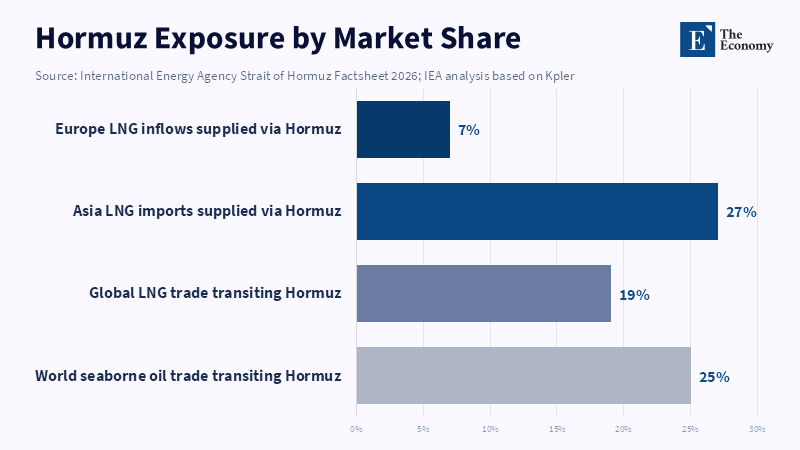
About twenty percent of the world's oil and LNG supply passes through Hormuz and it has been a lever before this war. This figure becomes relevant when discussing Iran's nuclear file. The core of the debate is no longer solely about pressuring Tehran to divest itself of uranium, centrifuges and hardened facilities, but about whether any Iranian leader can make a concession of these materials in exchange for sanctions relief that Washington can withdraw later. The fundamental Iran sanctions guarantee the problem. An unconditional bargain that one side can revoke after the other side disarms is not a deal; it is a demand for unilateral political suicide. The same principle guided North Korean talks after Singapore. Promises of security were made and sanctions remained. Trust eroded. In the Gulf today, the cost of that old mistake reverberates through tankers, budgets, regimes and energy prices.
This crisis can best be framed as a problem of commitment, not merely a test of leverage. Pressure can force adversaries into a room. It cannot provide leverage to make a promise credible once one party has sacrificed its primary asset. Iranian officials are aware that the uranium is an instrument of insurance against future policy reversal. Washington, on the other hand, recognizes that sanctions are the instrument of insurance against Iranian cheating. Each party wants the other to move first and neither can afford to be the first to do so. That is where Hormuz plays its role as a second lever to be moved in real time. The lever, however, will fail to provide its intended outcome unless attached to a robust Iran sanctions guarantee.
Time Inconsistency and the Iran Sanctions Guarantee
Time inconsistency is the concept that a deal, while feasible when negotiated, becomes impossible or unsustainable in retrospect. After dismantling Iran's uranium-enrichment facilities or lowering their enrichment levels, the nation cannot easily reverse this process without costly and difficult retooling, compared to the relatively simple legal instruments by which the United States can reimpose sanctions. The former is physical, not easily undone, while the latter is legal and readily adjustable.
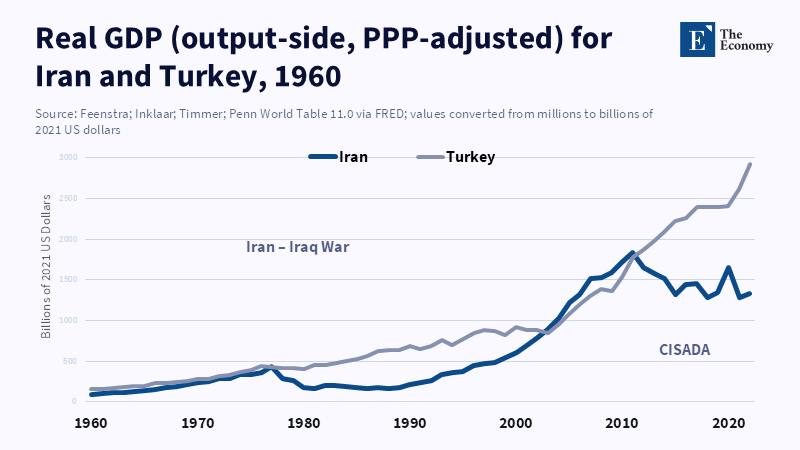
This disparity explains why a tiered arrangement cannot satisfy Tehran. An explicit timeline for either party or a number of years does not negate the fears that the eventual concession will be short, partial, or conditional on subsequent domestic political pressures. These fears are not unfounded: the JCPOA fixed Iran's enrichment at 3.67%, lowered stockpiles to 300 kg from a much larger baseline and led the U.S. exited the agreement, reimposing sanctions and causing Iran to resume enriched uranium above civilian needs. The lesson was stark: yield first and the prize vanishes.
Political Debt Overhang as the Second Barrier
The second obstacle, political debt overhang, involves the obligation leaders have to the loyalist factions, which enabled them to remain in power during hard times. Iranian leaders have a debt to the hardliners, security forces, relatives of martyrs and devastated populations that their concession not appear as capitulation. Israel wants Iran's nuclear program halted, enriched uranium removed or diluted, enrichment capped, and missile and proxy threats reduced. While the Gulf states want the Strait reopened, they do not want to appear to validate Iran as the custodian of the global energy supply. Such obligations tie up negotiations even before they begin.
Thus, a simple transaction of uranium for sanctions would not go far enough. The U.S. demands too much by requiring Iran to surrender its only leverage and demands too little of itself by allowing Iran to enter a contract that still presents significant security risks. An agreement larger in scope, not smaller in concession, must be considered. That agreement would encompass monitored nuclear restraints, staged sanctions relief, funding for post-confrontation reconstruction efforts, provisions for safe maritime passage and an "enforcement trigger" that cuts both ways. It should include an Iran sanctions guarantee so substantial that Tehran would feel compelled to defend it, yet so stringent that Washington would have an easy sell.
Hormuz: Synchronized Retreat Instead of Trust
A useful opportunity that the dual blockade presents to both Iran and the U.S. Is the ability to execute synchronized retreats so that no party will be perceived as making the initial sacrifice. As Iran begins the process of sanctions relief, it could lift its restrictions on passage through the Strait of Hormuz and as the U.S. Lifts sanctions incrementally, its naval blockade can be proportionally eased. The flows of commerce, finance and inspection personnel can proceed on the same timetable. This, rather than a demand for nuclear assets up front, would build trust by turning trust into an observable sequence of events.
However, synchronized retreat is not trustworthy and will buy time at best. The key dilemma of any agreement remains: What would happen if the United States reinstates sanctions after Iran has fully complied? An agreement requires the United States to pay an equal price for violating the terms of the deal. Possible guarantees would include funds in an escrow account, automated oil payment channels, UN guarantees, a clause specifying maritime consequences for unilateral sanctions re-imposition and Iranian access to continue applying pressure to Hormuz if Washington falters in its compliance. This compromise has always been the most difficult because Iran will demand the right to revert to pressuring Hormuz and Washington will reject the idea that a deal would legitimize coercion. It should be noted that without mutually assured costs, an Iran sanctions guarantee is just a press release.
From a policy perspective, the goal is practical rather than theoretical. Sanctions, nuclear verification and maritime flow cannot each be operated independently. They must be coordinated. Inspectors would be given clear directions on when to report nuclear progress, banks would make funds available on schedule, maritime authorities would publicize agreed rules on vessel movement and energy consumers would know when they could buy, when payment would be guaranteed and when energy would flow freely. Although tedious, such pragmatism minimizes the need for theatrics and turns the concessions into matched actions.
A Deal Substantial Enough to Survive Its Enemies
It could be argued that any deal would reward blackmail and the concerns about precedent cannot be ignored. No state should benefit from blocking a vital transit route, yet diplomacy must begin with the reality of the situation, not idealized ideals of pure moral rectitude. Alternatively, critics must answer a challenging question: What course of action would eliminate nuclear materials from Iran, reopen Hormuz, avoid war and still be viable within the context of Iranian domestic politics? Airstrikes are effective for destroying weapons. Naval blockade could manage traffic, but not rebuild trust after they are withdrawn. Maximum pressure would surely damage Iran but never inspire it to wager on a one-way bargain.
Other analysts might suggest that the United States should not relinquish its freedom to impose future sanctions, which is understood. Nonetheless, arms control agreements require both sides to bind future decisions; that is precisely the point of negotiating. The question at hand is not about the U.S. relinquishing all options eternally, but about which options it is willing to sacrifice for a safer region, lower risk for the global economy and greater accountability in Iran's nuclear program. Rather than releasing sanctions unconditionally, the deal should gradually withdraw them. Each gradual withdrawal would be tied to nuclear transparency, verifiable material accounting, containment of enrichment and safe transit through Hormuz. Should Iran betray the deal, sanctions would be re-imposed, while should Washington renege, pre-agreed concessions will automatically flow through protected channels and maritime restrictions will be reinstated.
The strongest version would also include reconstruction, but not as a gift. A battered energy system, port, grid, or civilian infrastructure has repercussions far beyond Iran: it impacts shipping, insurance, oil prices and regional prosperity. An assistance package could be funded by unblocked Iranian assets, Asian energy consumers, the Gulf states, multilateral institutions and the Chinese, who benefit from buying Gulf energy and have a relationship with Tehran. This would allow Trump to argue Iran is paying with its own money and that the United States is enforcing order, not writing a check, while the Iranians would claim they received sovereign relief and rebuilt without conceding.
The risks, of course, are theatre versus design from both sides. Iran could overplay Hormuz and turn its leverage into its own exclusion; Trump could overplay his threats and force any Iranian concession to look like capitulation in Tehran; rather than a face-saving climbdown. Israel could reject anything less than Iran's full dismantlement; the Gulf states will desire the restoration of shipping without the political risk of guarantor states. But the logic still applies: the Strait can enforce timing, not credibility alone. An agreement on sanctions must be automatic, painful to violate and guaranteed by something more than American discretion.
But the fact that persists is the final warning. Where nearly one-fifth of all oil and gas flows pass through a single, narrow strait, it becomes more than a transit route; it is the test of whether diplomacy can ever be tailored to match the structure of conflict. Hard nuclear leverage will not buy soft promises; hard sanctions will not buy vague assurances. What Iran will not do is surrender its leverage for trust. Washington will not concede sanctions relief on faith. The answer, therefore, lies in a design that can manage distrust. The Iran sanctions guarantee must sit at the center of any deal. Without it, the ceasefire will remain precarious, Hormuz will stay weaponized and every future round will return to the same question: what stops one side from declaring victory the moment the other side moves first?
The views expressed in this article are those of the author(s) and do not necessarily reflect the official position of The Economy or its affiliates.
References
Al Jazeera Staff and Reuters (2026) ‘What are US proposals to end war, and will Iran agree to them?’, Al Jazeera, 7 May.
Dunn, C. and Barden, J. (2025) ‘Amid regional conflict, the Strait of Hormuz remains critical oil chokepoint’, U.S. Energy Information Administration: Today in Energy, 16 June.
Fearon, J.D. (1995) ‘Rationalist explanations for war’, International Organization, 49(3), pp. 379–414.
Feast, L., Maclean, W., Russell, R. and Ali, I. (2026) ‘Trump says Iran ceasefire is “on life support” as hopes for a deal fade’, Reuters, 11 May.
Feenstra, R.C., Inklaar, R. and Timmer, M.P. (2025) Penn World Table version 11.0. Groningen: Groningen Growth and Development Centre.
Grossi, R.M. (2025) ‘IAEA Director General’s introductory statement to the Board of Governors’, International Atomic Energy Agency, 16 June.
International Atomic Energy Agency (2025) Verification and monitoring in the Islamic Republic of Iran in light of United Nations Security Council resolution 2231 (2015). Vienna: IAEA.
International Energy Agency (2026) Strait of Hormuz. Paris: IEA.
Jeyaretnam, M. (2026) ‘“Just a Love Tap”: Trump insists cease-fire with Iran is holding despite ongoing attacks traded’, TIME, 8 May.
Johnson, S. and Kermani, A. (2026) ‘A way out via the Strait of Hormuz’, VoxEU, Centre for Economic Policy Research, 7 May.
Kydd, A.H. (2005) Trust and Mistrust in International Relations. Princeton: Princeton University Press.
Powell, R. (2006) ‘War as a commitment problem’, International Organization, 60(1), pp. 169–203.
The White House (2018) ‘Joint statement of President Donald J. Trump of the United States of America and Chairman Kim Jong Un of the Democratic People’s Republic of Korea at the Singapore Summit’, 12 June.
United Nations Security Council (2015) Resolution 2231 (2015): Joint Comprehensive Plan of Action on the Islamic Republic of Iran’s Nuclear Programme. New York: United Nations.
Working across research, policy, and data-driven analysis, the Editorial Board ensures that published pieces reflect a consistent institutional perspective grounded in quantitative reasoning and long-term structural assessment.