[U.S.-China Summit] Xi Escalates Rhetoric on Taiwan While Trump Holds Back Remarks

Anne-Marie Nicholson is a fearless reporter covering international markets and global economic shifts. With a background in international relations, she provides a nuanced perspective on trade policies, foreign investments, and macroeconomic developments. Quick-witted and always on the move, she delivers hard-hitting stories that connect the dots in an ever-changing global economy.
Authored On
Modified
U.S. and Chinese leaders, changed from nine years ago
Xi publicly pressures Trump: “Mishandling Taiwan could trigger U.S.-China conflict”
Trump sends conciliatory message to Xi: “A great leader”
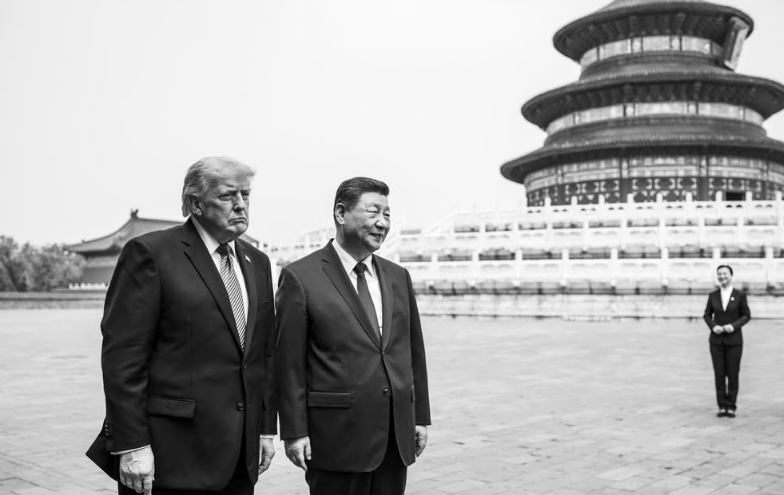
Chinese President Xi Jinping raised the Taiwan issue during his summit with U.S. President Donald Trump, warning that “if mishandled, the two countries could collide.” Xi’s direct reference to the possibility of U.S.-China conflict in front of Trump is viewed as a marked escalation from his previous remarks on Taiwan. The statement is interpreted as Beijing’s attempt to reaffirm the red line in U.S.-China relations through the summit and to strongly check Washington’s potential arms sales to Taiwan and support for pro-independence forces.
An Unusual Hardline Move: Taiwan Conflict Warning Delivered Face to Face with Trump
According to Chinese state broadcaster CCTV and Xinhua News Agency on the 14th local time, U.S. President Donald Trump and Chinese President Xi Jinping held a summit that morning at the Great Hall of the People in Beijing, with delegations from both countries in attendance. The two leaders faced each other directly over urgent issues including the trade war, the Iran-driven Middle East crisis and tensions in the Taiwan Strait. The summit proceeded outwardly in an atmosphere of reconciliation, but in substance it clearly exposed the sharp tension between the two countries over Taiwan.
On the first day of his visit to China, Trump adopted a conciliatory posture by emphasizing his personal rapport with Xi. In public, he praised Xi, saying, “You’re a great leader,” signaling respect for China’s governing style and leadership. This stood in stark contrast to his campaign rhetoric, in which he criticized China as a country that had taken American jobs and threatened U.S. national security. Trump focused on stressing bilateral cooperation and personal ties, seeking to foster an atmosphere of improving relations rather than confrontation.
Xi, however, delivered a different message. Immediately after the lavish welcoming ceremony prepared by China, he directly raised the Taiwan issue and focused on setting clear limits in U.S.-China relations. During the closed-door talks, Xi said, “The Taiwan issue is the most important issue in China-U.S. relations,” adding, “If this issue is handled well, bilateral relations can generally maintain stability, but if it is mishandled, the two countries will collide or clash, and China-U.S. relations could be driven into an extremely dangerous situation.” He continued, “‘Taiwan independence’ and ‘peace in the Taiwan Strait’ are as incompatible as water and fire,” stressing that “safeguarding peace and stability in the Taiwan Strait is the greatest common denominator between China and the United States.” The remarks are seen as pressure on Washington not to send the wrong signal to pro-independence forces in Taiwan.
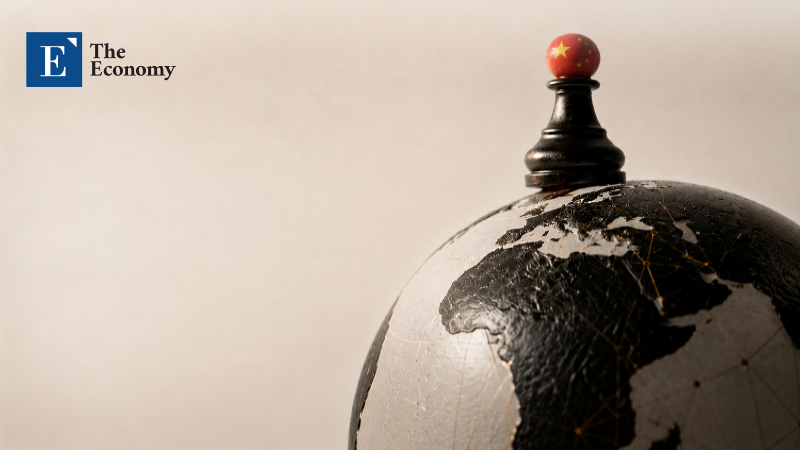
The statement came just minutes after Xi began his public remarks at the Great Hall of the People, the symbolic center of Chinese power. Xi’s direct warning in front of Trump, declaring that Taiwan is a core Chinese interest, represented a clear escalation compared with his past statements and posture. Among foreign-policy experts, the prevailing assessment is that China appeared to be demanding recognition as a peer hegemonic power, moving beyond mere competition with the United States. For Xi in particular, defining Taiwan as a red line from the very outset appears to have been the central objective. China, which adheres to the “One China” principle, has remained wary of U.S. moves to treat Taiwan as a separate state or use relations with Taiwan to contain China.
Xi also emphasized through other remarks that the two countries stand on equal footing. During the summit, Xi publicly mentioned the possibility that U.S.-China competition could lead to military conflict. He said the two countries must not fall into the “Thucydides Trap,” a theory of conflict between a rising power and an established hegemon, warning that if competition escalates into confrontation, “the entirety of U.S.-China relations will be placed in an extremely dangerous situation.” In recent years, the Chinese government has actively invoked this concept. Xi himself has mentioned the term several times while calling for cooperation with the United States. Xi’s reference to the Thucydides Trap after issuing a warning over Taiwan is seen as reaffirming China’s view that Taiwan is the central flashpoint in any U.S.-China conflict. It also reads as a clear signal that Xi, who emphasizes One China, has no intention of yielding even an inch on the Taiwan issue.
China’s Strong Opposition to U.S. Arms Sales and Military Contact with Taiwan
Even before Trump’s visit, the Chinese government had defined Taiwan as a red line and made clear its hardline response. The Chinese Embassy in the United States cited the “four red lines” in U.S.-China relations that Trump mentioned on X, formerly Twitter, on the 12th, stressing that Taiwan, democracy and human rights, development path and political system, and China’s right to development are non-negotiable. On Taiwan, China has made two demands of the United States. One is a change in diplomatic wording. The current U.S. position is that it opposes unilateral changes to the status quo in the Taiwan Strait and does not support Taiwan independence, but China’s goal is to push Washington to change this into a “declaratory policy” opposing Taiwan independence.
The other demand is that the United States stop selling weapons to Taiwan or reduce the volume of such sales. According to the U.S.-Taiwan Business Council, the Trump administration approved arms sales to Taiwan worth a record $11.1 billion last year. That far exceeded the $8.4 billion approved under the Joe Biden administration. The United States is also reportedly preparing an additional arms sales package worth at least $14 billion. The package includes Patriot interceptor missiles, missile-based air defense systems and counter-drone equipment.
The Trump administration is currently facing bipartisan pressure from Congress to maintain military support for Taiwan despite China’s opposition. Eight Republican and Democratic senators sent a letter to Trump on the 11th urging him to sell $14 billion in weapons to Taiwan. Congress had granted prior approval for a Taiwan arms sales package in January, but the administration’s final work to deliver the weapons has been stalled for five months. That is because the Trump administration has delayed the final submission of related documents to Congress.
Major foreign media outlets including The New York Times raised the possibility that the White House had temporarily halted the work ahead of Trump’s visit to China to avoid displeasing Xi. Earlier, China stated its opposition to arms transactions between the United States and Taiwan just hours before Trump’s arrival in China. A spokesperson for China’s Taiwan Affairs Office under the State Council said on the 13th, “The United States must stop arms sales to Taiwan and must not send the wrong signal to separatist forces advocating Taiwan independence.”
Trump, Still Without an Exit from the Iran War, May Seek a Grand Bargain with Xi in Exchange for Concessions on Taiwan Arms Sales
As if responding to that pressure, Trump openly stated before his China visit that he would raise the issue in the summit, despite Washington’s decades-long diplomatic practice of not consulting China on arms exports to Taiwan. Trump said he planned to discuss U.S. arms exports to Taiwan with Xi, adding, “President Xi would like us not to do that, and I will have that discussion.” After the meeting on the 14th, Trump did not answer reporters’ questions on whether Taiwan had been discussed, but given that Xi raised the warning level to the point of mentioning “U.S.-China conflict,” it is widely assessed that the issue was very likely addressed.
Some observers also raise the possibility that Trump may pursue some form of “grand bargain” with Xi. The implication is that the Trump administration, unable to find an exit from the Iran war, may make partial concessions on Taiwan in exchange for cooperation from China, which is close to Iran. The Wall Street Journal also commented that the “trap” Xi is setting for Trump is Taiwan. Earlier, on the 11th, Trump said China also receives 40% of the oil it needs through the Strait of Hormuz, the oil transport route currently being blockaded by Iran, and suggested that “President Xi also wants a quick end to the war.”
In fact, the United States views China’s purchases of Iranian oil and economic cooperation with Iran as channels for sanctions evasion and placed them on the agenda as key points of pressure at the Beijing summit. Just before the meeting, U.S. authorities announced sanctions targeting Iran-related oil transactions linked to China, and the Trump administration publicly stated that it planned to raise China’s purchases of Iranian oil with Xi. At this juncture, Taiwan and Iran have room to become linked within a single transactional framework. The United States could demand that China reduce support for Iran and help manage stability in the Strait of Hormuz, while China could demand that the United States adjust arms sales to Taiwan and handle the Taiwan issue prudently.
In the end, the Beijing summit is being viewed less as a venue for restoring economic cooperation and more as a meeting that reaffirmed the strategic tension between Washington and Beijing over Taiwan and the possibility of hegemonic confrontation. One international politics expert said, “Given President Trump’s characteristic transaction-centered approach, there is ample possibility that issues such as arms sales to Taiwan could be used as bargaining chips,” while adding, “A conflict in the Taiwan Strait goes beyond a regional dispute and is directly tied to the preservation of U.S. hegemony, so the possibility that Washington would accept a strategic disadvantage is limited.” The expert continued, “The point to watch in this summit is that Xi publicly pressed China’s warning message over Taiwan at a far stronger level than expected,” adding, “Trump, for his part, appears to have chosen not to confront it head-on, taking into account the atmosphere of the summit and the negotiation framework.”
Anne-Marie Nicholson is a fearless reporter covering international markets and global economic shifts. With a background in international relations, she provides a nuanced perspective on trade policies, foreign investments, and macroeconomic developments. Quick-witted and always on the move, she delivers hard-hitting stories that connect the dots in an ever-changing global economy.
- Previous F&B Assets Pile Up, but Buyers Are Nowhere to Be Found: Triple Pressure from Profitability Erosion, Franchise Disputes and Reputational Risk
- Next [GLP-1] “Obesity Drugs Redraw America’s Consumption Landscape” Appetite-Suppressed Americans Cut Dining Out and Shift Toward Nutrition Management
Similar Post