“China Accelerates While America Chokes on Bottlenecks” — Deepening ‘Arteriosclerosis’ in the U.S. Power Grid Traps American Hegemony in Infrastructure Paralysis

Siobhán Delaney is a Dublin-based writer for The Economy, focusing on culture, education, and international affairs. With a background in media and communication from University College Dublin, she contributes to cross-regional coverage and translation-based commentary. Her work emphasizes clarity and balance, especially in contexts shaped by cultural difference and policy translation.
Authored On
Modified
Power shortages stall data center projects
Transformer raw material constraints hinder short-term output expansion
America’s fragile future amid industrial infrastructure decline raises parallels with Britain’s historical downfall
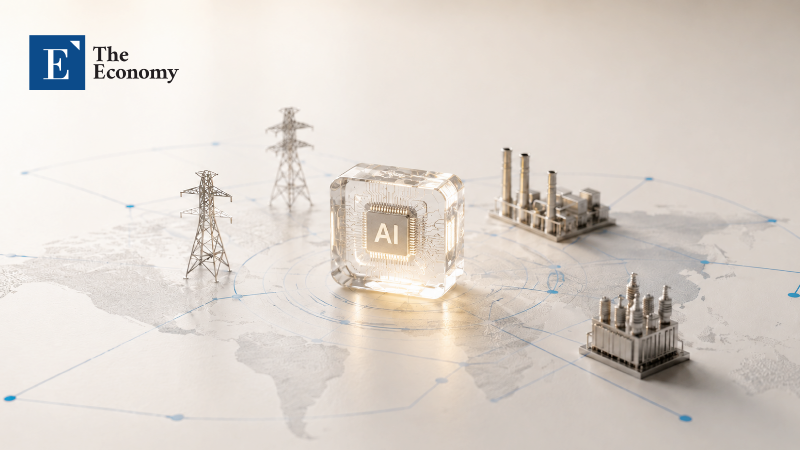
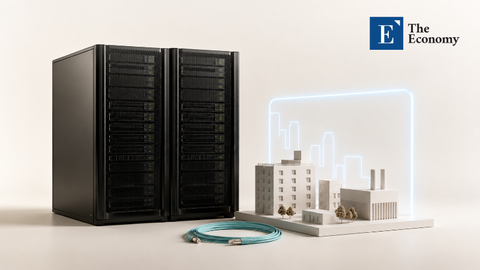
A worsening shortage of transformers, the core equipment underpinning the U.S. power grid, has triggered alarm across the artificial intelligence (AI) data center industry. Surging demand has collided with aging infrastructure, highly complex customized manufacturing processes, and unstable raw material supply chains, pushing delivery lead times out by several years. China, meanwhile, is rapidly securing the physical foundations of the AI industry through a state-driven expansion of generation and transmission infrastructure, effectively constructing an “electricity superhighway.” The trajectory increasingly mirrors Britain’s late-19th century decline, when failure to adapt industrial infrastructure ultimately led to the transfer of global hegemony to the United States.
Escalating Supply Crisis in Core Power Grid Equipment
According to U.S. energy industry outlet PV Magazine on May 13 local time, the American power transformer market is now facing severe supply constraints. Lead times for major equipment have stretched to as long as four years. The current supply-demand imbalance in the U.S. transformer market has reached unprecedented levels, particularly for large ultra-high-voltage transformers and substation infrastructure, where delivery frequently takes years after orders are placed. The phenomenon is closely tied to the global AI boom and the resulting surge in data center construction. Consulting firm Wood Mackenzie estimates that demand for generator step-up transformers soared 274% between 2019 and last year, while demand for substation transformers climbed 116% over the same period.
The core problem lies in the pace of AI data center expansion vastly outstripping the investment cycle of the existing power grid. Bloomberg recently projected that as many as half of all AI data center projects scheduled in the U.S. this year could face delays or cancellations. The primary bottlenecks include shortages of transformers, switchgear, batteries, and other critical power infrastructure equipment. Ultra-high-voltage transformers are regarded as foundational infrastructure for the grid itself. Their manufacturing processes are highly complex, while supplies of critical raw materials—including grain-oriented electrical steel (GOES), copper, and insulating materials—remain severely constrained, making rapid production expansion extremely difficult.
Supply shortages have also fueled a sharp escalation in prices. Michael Noveb, an analyst at Burns & McDonnell, one of America’s largest transmission infrastructure contractors, stated that prices for essential components have risen roughly 80% over the past five years. The situation has become so severe that power developers are now paying enormous premiums to secure manufacturing slots before finalizing project sites. Whereas capital procurement and regulatory approvals once represented the primary obstacles to infrastructure projects, equipment procurement itself has now emerged as the decisive variable determining commercial viability.
Britain’s Historical Path of Decline
The reasons supply has failed to keep pace with demand are multifaceted. First, procurement of GOES and copper—the key materials used in transformer cores—remains highly constrained. High-efficiency electrical steel in particular requires advanced manufacturing capabilities, leaving U.S. domestic production unable to satisfy current demand. Global corporations have increased investment in American manufacturing facilities, yet meaningful output remains years away. Hitachi Energy is currently building a $1 billion factory in South Boston, though operations are not expected to begin until 2028. Siemens has likewise begun construction on a $421 million facility in Charlotte, North Carolina, but production is also scheduled for early 2028. Persistent shortages of skilled labor have compounded the challenge.
The transformer shortage extends far beyond a simple production deficit. Structural inefficiencies are magnifying the crisis. The United States currently utilizes tens of thousands of transformer variations, with project-specific specifications differing widely. Heavy reliance on customized production has made mass manufacturing difficult while adding further complexity to production processes. This structure slows output and drives costs even higher. At the same time, dependence on specific parts and materials has heightened supply chain vulnerability. Ultimately, the American transformer industry—long operated on a model closer to bespoke manufacturing than economies of scale—has exposed critical weaknesses amid the sudden explosion in demand.
The pattern increasingly resembles Britain’s industrial decline in the late 19th century. Britain, which dominated steel, shipbuilding, finance, and maritime shipping through the 1870s, gradually lost leadership as U.S. labor productivity surpassed it in the 1890s and Germany’s heavy chemical industries surged in the early 1900s. While the United States and Germany rapidly expanded productive capacity through cheap iron ore, vast domestic markets, and concentrated investment in electricity, railways, and steelmaking facilities, Britain remained trapped by aging infrastructure, high transition costs, and entrenched industrial interests. The essence of the historical power transition lay less in military reversal than in the inversion of industrial infrastructure indicators such as steel, electricity, machinery, and chemicals—the foundational muscle of industrial civilization itself. Today, the United States still maintains overwhelming dominance in AI software and capital competitiveness, yet bottlenecks continue to accumulate in the expansion of the very power grids, transformers, and transmission infrastructure required to operate AI data centers.
China Builds an Electricity Superhighway While America’s 50 States Fend for Themselves
China, by contrast, has rapidly expanded the physical foundations of its AI industry through a state-directed investment system and aggressive power plant construction. Through 15 consecutive Five-Year Plans, the Chinese Communist Party has repeatedly established national electricity generation targets every five years and built infrastructure accordingly. During crises such as the 2008 global financial crisis and the 2020 COVID-19 pandemic, Beijing consistently deployed power infrastructure expansion as a key economic stimulus mechanism. China has also pursued a pragmatic “black cat, white cat” strategy, utilizing renewable energy, nuclear power, and thermal generation interchangeably according to necessity. Last year alone, China either launched or resumed construction of 94.5 gigawatts (GW) of new thermal power plants, marking the highest level in a decade.
China now surpasses the United States not only in total electricity generation but also in transmission infrastructure. According to People’s Daily, China had constructed 46 ultra-high-voltage direct current (HVDC) transmission lines exceeding 800 kilovolts (kV) as of last year, spanning more than 40,000 kilometers in total—enough to circle the Earth. HVDC lines enable electricity generated at power plants to be transmitted rapidly across ultra-long distances while minimizing power losses relative to conventional alternating current (AC) transmission lines. Chinese authorities claim that electricity generated at the Baihetan Dam in Chongqing can be transmitted 2,080 kilometers to Jiangsu Province in just 7 milliseconds.
Behind China’s nationwide power grid expansion lies its “West-to-East Power Transmission” strategy. The core objective involves channeling electricity generated in resource-rich western regions—including Inner Mongolia’s solar-intensive desert zones and Chongqing’s hydropower base—toward eastern industrial centers. More recently, Beijing has shifted toward its “Eastern Data, Western Computing” strategy, relocating data centers into western regions in an effort to reduce regional imbalances.
The United States, meanwhile, has largely relied on private corporations to lead power plant and transmission grid construction, responding reactively rather than proactively forecasting demand. As a result, HVDC infrastructure exceeding 765kV remains extremely limited outside corridors such as Washington-California, California-Nevada, Montana-North Dakota, Montana-South Dakota, and the eastern New York line. Transmission projects require approvals from every state along the route, creating complex regulatory procedures and intense regional opposition.
The consequences have already reached operational paralysis. Digital Realty Trust’s “SJC37” and Stack Infrastructure’s “SVY02A” data centers were completed years ago but remain idle because they cannot secure the 100 megawatts (MW) of electricity required for operations. Of the roughly 12GW of AI data center capacity planned in the United States this year, only about one-third has actually entered the construction phase. A substantial portion of the remaining projects continues to face delays stemming from grid connection constraints and shortages of critical power equipment.
Siobhán Delaney is a Dublin-based writer for The Economy, focusing on culture, education, and international affairs. With a background in media and communication from University College Dublin, she contributes to cross-regional coverage and translation-based commentary. Her work emphasizes clarity and balance, especially in contexts shaped by cultural difference and policy translation.
Similar Post