U.S. Alarm Grows Over Chinese Component Dependence as Congress, Industry Maintain Pressure Ahead of Summit

Authored On
Modified
U.S. Automakers Deeply Reliant on Chinese Parts as Major Brands Struggle to Decouple
Chinese EVs Emerging as Security and Economic Threat Amid Expanding Regulatory Barriers
Trump’s Remark Urging Chinese Carmakers to Enter U.S. Market Sparks Bipartisan Backlash
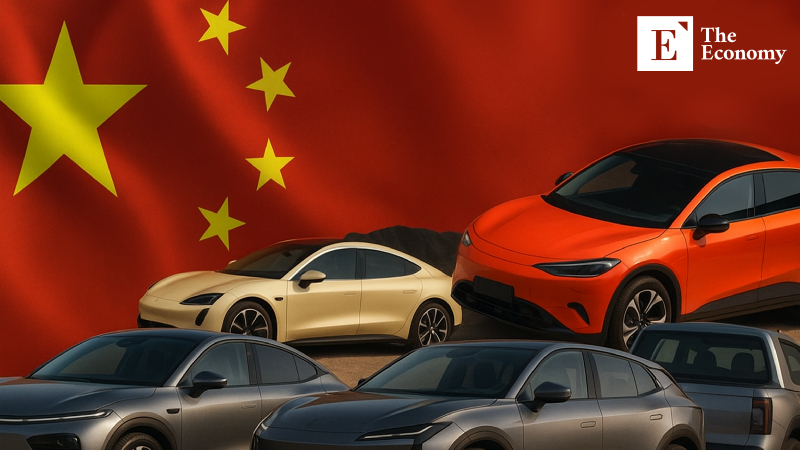
China’s influence over the U.S. automotive supply chain is steadily deepening. American automakers already depend heavily on Chinese suppliers for core components and battery supply chains, while Chinese capital has increasingly moved to acquire stakes in U.S. parts manufacturers, accelerating its local market push. In response, U.S. lawmakers and industry groups are escalating pressure on Chinese automakers and parts suppliers, framing their market penetration as a direct threat to national security and industrial competitiveness.
Chinese Auto Parts Tightening Grip on U.S. Market
According to major foreign media outlets including The Wall Street Journal on Sunday, Chinese companies have recently accelerated acquisitions of equity stakes in automotive parts partners across the United States. Data from global consulting firm AlixPartners shows that roughly 10,000 automotive parts suppliers currently operate in the U.S., with more than 60 already owned by Chinese companies. These firms are not concentrated in low-value consumables, but in critical safety-related segments including airbags, automotive glass and steering systems.
The trend represents a significant challenge for the U.S. auto industry. America’s manufacturing structure, which relies heavily on overseas production bases for large portions of the supply chain, has already created substantial dependence on Chinese-made components. Data submitted by automakers to the National Highway Traffic Safety Administration (NHTSA) indicates that at least 40 vehicle models currently sold in North America contain Chinese-made parts at levels requiring disclosure. Ford’s latest Mustang GT sources its critical six-speed manual transmission from China, while General Motors’ popular Chevrolet Trax and strategic next-generation EV model Blazer reportedly contain Chinese component ratios approaching 20%.
A similar pattern has emerged in the EV sector. Tesla vehicles sold in the United States have long relied on China’s CATL as a key battery supplier. Tesla has recently been building its own LFP cell plant at its Nevada Gigafactory in an effort to reduce dependence on Chinese batteries, though industry observers say the project is far from fully independent technologically. One market source noted that Tesla’s LFP facility remains in the production ramp-up phase, adding that the plant directly imports CATL manufacturing equipment while Tesla oversees operations itself, prompting criticism that the site effectively functions as an indirect CATL factory.
Chinese EVs Treated as Strategic Flashpoint in U.S.
Chinese-made vehicles are increasingly viewed as a strategic risk in the American market, particularly in the EV sector. Many U.S. consumers remain hesitant to purchase EVs due to elevated prices. Industry concerns center on the possibility that Chinese automakers such as BYD could rapidly overturn the competitive landscape by entering the U.S. market with low-cost models. The issue extends beyond manufacturing alone, as EVs represent a strategic industry integrating batteries, vehicle software, data systems and charging infrastructure. Once a specific automaker’s vehicles and operating ecosystem become entrenched in the market, consumers could become effectively locked into that platform, leaving domestic manufacturers struggling to maintain market share.
The U.S. government has steadily expanded regulatory barriers against Chinese vehicles in response to such risks. The Biden administration, in particular, treated Chinese connected vehicles as a national security threat rather than simply imported automobiles. Washington concluded that allowing Chinese-made vehicle components and operating software onto American roads could heighten risks involving data leakage and external system control. Connected vehicles generally collect location data, travel routes, driving behavior, surrounding video feeds and mobile phone connectivity information through network-linked systems.
Under that framework, the Biden administration raised tariffs on Chinese EVs to 100% in 2024, citing the need to counter China’s unfair trade practices. The Connected Vehicles Final Rule announced by the Commerce Department’s Bureau of Industry and Security in January last year also emerged under the Biden administration. The rule restricts imports of vehicle connectivity system (VCS) hardware produced by companies closely linked to China or Russia, while prohibiting the import and sale of connected vehicles equipped with VCS or autonomous driving system (ADS) software developed by such firms. Software restrictions will begin with 2027 model-year vehicles, followed by hardware restrictions for 2030 model-year vehicles.
Political and Industry Resistance Intensifying
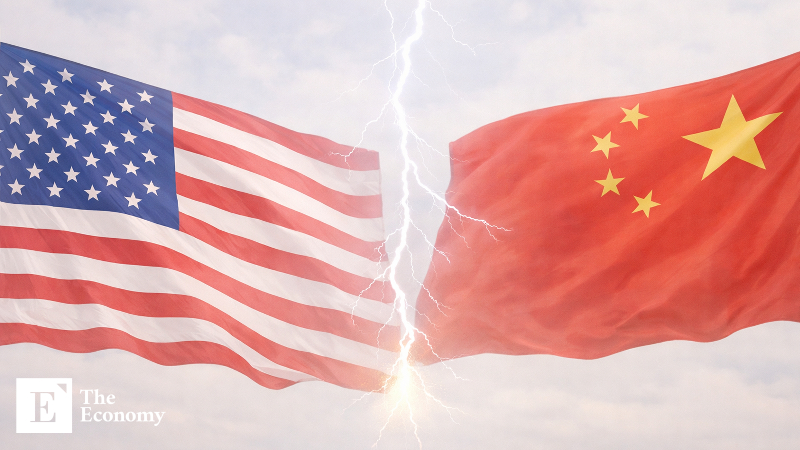
Such concerns within the United States continue to intensify. With a summit between President Donald Trump and Chinese President Xi Jinping approaching, calls are once again mounting domestically to block Chinese automakers from entering the U.S. market. The renewed backlash follows conciliatory remarks previously made by Trump. During a speech at the Detroit Economic Club in January, Trump stated that “it would be great” if Chinese automakers built factories and hired American workers in the United States, adding that “China and Japan should be allowed to come in.”
Democratic Senator Elissa Slotkin recently responded at a Detroit forum by urging Trump not to “make a bad deal,” warning that no agreement should allow Chinese-brand vehicles into the U.S. dealership network. Slotkin, alongside Republican Senator Bernie Moreno of Ohio, is spearheading legislation aimed at restricting Chinese connected vehicles. Their proposed Connected Vehicle Security Act would codify the Biden administration’s Connected Vehicles Final Rule into federal law while potentially broadening its scope further. A bipartisan companion bill has also been introduced in the House of Representatives. In a joint statement, Democratic Representative Debbie Dingell and Republican Representative John Moolenaar, who co-sponsored the House bill, argued that every vehicle on American roads functions as “a moving data collection device” capable of gathering real-time information on locations, movement, individuals and infrastructure, stressing that Chinese vehicles or components must not be allowed to become part of that system.
Industry groups have also reacted sharply to the issue. Associations representing U.S. automakers, dealers and parts manufacturers submitted opinions to the administration in March warning that China’s attempts to dominate the automotive industry pose a direct threat to America’s global competitiveness, national security and industrial foundation. The steel industry and the Information Technology and Innovation Foundation have likewise expressed support for legislation banning Chinese vehicles. Ford CEO Jim Farley said in an interview with Fox News last month that Chinese automakers “should not be allowed into the United States,” warning that surrendering America’s manufacturing base — “the heart and soul” of the country — to a wave of Chinese exports would prove devastating. Farley further argued that Chinese automakers could secure unfair competitive advantages in the U.S. market by drastically lowering prices through what he described as “massive direct support” from the Chinese government.
- Previous "Chinese Shipbuilders Absorb Middle East-Driven VLCC Demand" — China Dominates General-Purpose Shipbuilding Market as South Korea Responds With High-Value Vessels and U.S. Cooperation
- Next Partial Relief From Deflationary Pressures Amid Iran War, Yet Export Reliance and Defense Spending Risks Persist
Similar Post