[Indonesia’s Military Buildup] Indonesia Extends Reach Beyond Korea’s KF-21 to Türkiye’s KAAN, Accelerating Arms Procurement Amid South China Sea Tensions

Aoife Brennan is a contributing writer for The Economy, with a focus on education, youth, and societal change. Based in Limerick, she holds a degree in political communication from Queen’s University Belfast. Aoife’s work draws connections between cultural narratives and public discourse in Europe and Asia.
Authored On
Modified
Indonesia Pursues Türkiye’s KAAN Fighter While Maintaining KF-21 Cooperation With Korea
Wide Gap in Deployment Timelines Between KF-21 and KAAN Drives Two-Track Supply Diversification Strategy
China-Indonesia Tensions Persist Over Natuna Sea Disputes
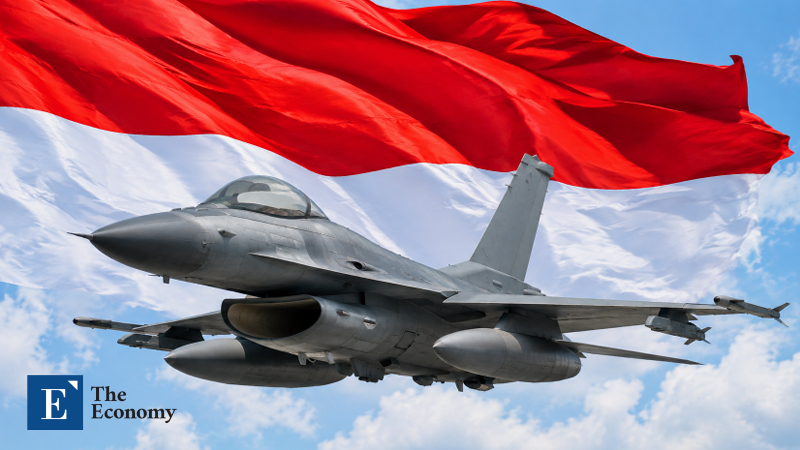
Indonesia has been confirmed to have placed a pre-order for Türkiye’s domestically developed fifth-generation stealth fighter, the KAAN. The move signals Jakarta’s push to diversify its defense procurement channels despite the steady progress of its planned acquisition of South Korea’s next-generation KF-21 fighter. Analysts point to the prolonged diplomatic and military tensions with China around the Natuna Sea as the key driver behind Indonesia’s aggressive effort to secure advanced weapon systems.
Indonesia Eyes Türkiye’s Fighter Program
According to a report by Polish defense outlet Defence24 on the 11th local time, Türkiye’s state-run aerospace company TAI recently received the first mass-production order for the KAAN Block 10 variant from the Turkish Air Force. The development underscores Ankara’s ambition to establish an independent ecosystem within the U.S.-dominated stealth fighter market. Indonesia reinforced that vision last spring by ordering 48 KAAN fighters. However, the aircraft’s operational timeline remains uncertain due to delays in developing the indigenous TF35000 engine intended for the production model.
South Korea’s defense industry has struggled to conceal its unease over Indonesia’s latest move. Indonesia has long been regarded as both a joint development partner and a key prospective customer for the KF-21 fighter program. The bilateral KF-21 co-development project officially commenced in 2015 with a target completion date set for this year. Total project costs stood at approximately $5.9 billion. Under the framework, the South Korean government covers 60% of the cost, Korea Aerospace Industries (KAI) contributes 20%, and Indonesia is responsible for the remaining 20%. In return for its contribution, Indonesia was set to receive one prototype aircraft alongside partial technology transfer and local production rights, enabling Jakarta to develop its own IF-X fighter platform.
Indonesia, however, paid only part of its contribution in 2016 before postponing additional payments for years, citing fiscal constraints. In 2019, Jakarta proposed compensating part of the payment through Indonesian-made defense products and other in-kind assets, while also requesting an extension of the payment deadline to 2034. As concerns mounted over potential disruption to the project, Seoul last year agreed to sharply reduce Indonesia’s contribution from approximately $1.2 billion to around $440 million. The revised agreement allowed Indonesia to retain its status as a joint development partner in the KF-21 program, though the scope of technology transfer and co-production rights was partially scaled back.
KF-21 Cooperation Enters Concrete Phase
Indonesia has currently paid about $394 million out of the revised $440 million contribution and has presented a plan to complete the remaining payment by June. As a result, tangible progress has emerged in KF-21-related negotiations. Indonesia is reportedly in discussions with the South Korean government and KAI regarding the purchase of 16 KF-21 fighters. The two sides are coordinating detailed conditions including aircraft pricing, the scope of technology transfer, establishment of local maintenance, repair and overhaul (MRO) infrastructure, and Indonesia’s participation in assembly and production. If finalized, the deal would mark the KF-21’s first export contract.
In addition, the two countries completed a working-level agreement in February regarding the transfer of a KF-21 prototype aircraft. The transfer package was valued at approximately $440 million, matching Indonesia’s revised contribution level. The breakdown includes around $257 million for the transfer of the fifth KF-21 prototype, approximately $128 million for technology transfer and compensation for local research personnel, and roughly $56 million for development data provision. The aircraft selected for transfer is the fifth single-seat prototype, which successfully completed its maiden flight in May 2023 and has since been deployed for testing of key avionics systems including the active electronically scanned array (AESA) radar and aerial refueling capabilities. South Korea’s Defense Acquisition Program Administration plans to finalize the timeline for technology and data transfer once Indonesia’s full payment is confirmed.
Indonesia’s KAAN purchase emerged as an unexpected variable at a time when defense cooperation with South Korea had entered a more stable phase. Even so, analysts largely dismiss the possibility of Indonesia fully replacing the KF-21 with the Turkish platform. The KF-21 has already advanced into flight testing and weapons integration stages, while its mass-production roadmap has become increasingly concrete. By contrast, the KAAN remains in the early testing phase amid unresolved technical hurdles. In terms of near-term deployment prospects and overall project stability, the KF-21 currently holds a clear advantage. One diplomatic expert stated, “Indonesia appears to be pursuing a two-track strategy — securing immediately deployable capabilities through the KF-21 while simultaneously leaving open the possibility of deeper long-term cooperation with Türkiye. Amid instability in the South China Sea and the strategic calculations of middle powers, Jakarta is seeking to minimize risk through supply-chain diversification.”
Diplomatic and Military Frictions Between China and Indonesia
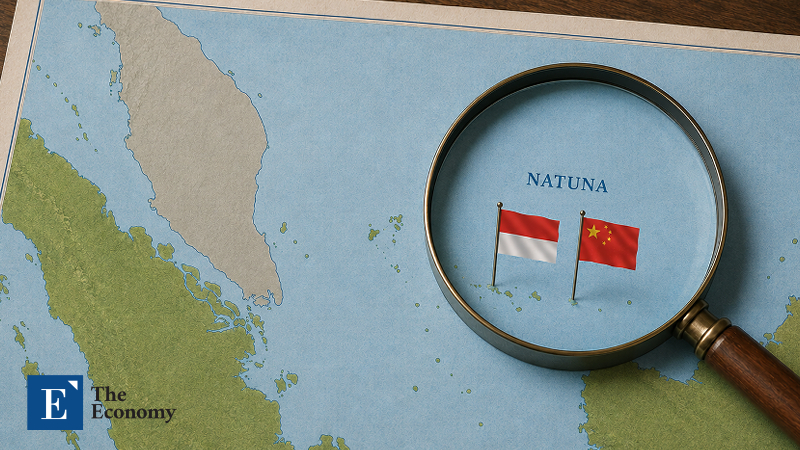
Indonesia’s accelerated military modernization is rooted in its territorial dispute with China in the South China Sea. Clashes between the two countries have primarily centered around waters near the Natuna Islands — specifically the area Indonesia officially renamed the North Natuna Sea in 2017. China claims sovereignty over most of the South China Sea based on its “nine-dash line,” a self-defined maritime boundary that overlaps in part with Indonesia’s exclusive economic zone (EEZ). The waters are considered economically valuable due to their abundant fishing grounds and natural gas reserves.
Indonesia largely avoided direct sovereignty disputes with China during the early and mid-2010s, largely because China was one of Jakarta’s largest investors and trading partners. The fragile equilibrium began to fracture in 2016. At the time, the Indonesian Navy fired warning shots at Chinese fishing vessels suspected of illegal operations near the Natuna Islands, prompting fierce protests from Beijing, which claimed it was protecting Chinese fishermen. Indonesia subsequently escalated its response by deploying additional fighter aircraft and naval assets to the Natuna region. Tensions surged again in 2021 when Chinese coast guard vessels remained for an extended period near offshore resource exploration activities conducted by Indonesia’s state-owned energy company. Indonesia dispatched coast guard and naval vessels in an attempt to expel the Chinese ships, while Beijing insisted the waters fell within its traditional fishing grounds.
Following multiple confrontations, the two countries are now maintaining what analysts describe as a state of “managed tension,” refraining from direct military escalation while preserving strategic pressure. During a visit to China in 2024, Indonesian President Prabowo Subianto signed a maritime cooperation agreement with Beijing that included provisions for the joint development of “overlapping claims” near the Natuna Islands. The agreement effectively reflected China’s longstanding argument that joint development should take precedence over territorial disputes. Even so, Indonesia has shown no intention of slowing its military buildup despite expanding bilateral cooperation with China. The Indonesian Navy and Air Force have intensified patrol operations around the Natuna Islands while simultaneously advancing procurement plans for KF-21 fighters, French Rafale jets, long-range radar systems, and naval warships.
Aoife Brennan is a contributing writer for The Economy, with a focus on education, youth, and societal change. Based in Limerick, she holds a degree in political communication from Queen’s University Belfast. Aoife’s work draws connections between cultural narratives and public discourse in Europe and Asia.
Similar Post