“From Weapons Manufacturing to Battlefield Deployment” Warfare Doctrine Rewritten Around Unmanned Systems as Drones and AI Move to the Forefront

As one of the youngest members of the team, Tyler Hansbrough is a rising star in financial journalism. His fresh perspective and analytical approach bring a modern edge to business reporting. Whether he’s covering stock market trends or dissecting corporate earnings, his sharp insights resonate with the new generation of investors.
Authored On
Modified
China boosts production efficiency of J-20 stealth fighter jets through dark factories
Unmanned strikes spreading across the globe as drones reshape the balance of warfare
“Human intervention shrinking” as AI tracks targets and operates combat platforms on the battlefield
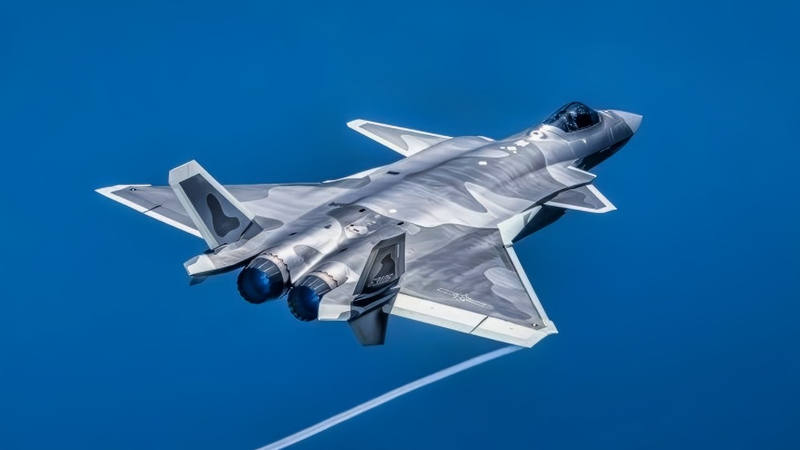
China has sharply accelerated mass production of its fifth-generation stealth fighter J-20, known as the Mighty Dragon. The country has begun full-scale deployment of so-called “dark factories” — fully automated unmanned manufacturing facilities integrating artificial intelligence (AI) and robotics technologies — in a push toward complete automation of the production process. This shift toward unmanned systems is extending well beyond weapons manufacturing and is becoming increasingly visible across battlefields worldwide. As drones and AI become standard military assets, the very doctrine of modern warfare is being fundamentally rewritten.
Rapid Expansion of China’s Fighter Jet Manufacturing Capacity
On July 12 local time, the South China Morning Post (SCMP) reported that China recently improved J-20 production efficiency by 150% compared with previous levels. The J-20 is China’s first domestically developed fifth-generation stealth fighter and was first unveiled at the 2016 Zhuhai Airshow before entering operational deployment with the Chinese People’s Liberation Army Air Force (PLAAF) in 2017. The aircraft’s key strengths include long-range operational capability, internal weapons bays, stealth-oriented design, and advanced data fusion capability. More recently, China also introduced a twin-seat variant, the J-20S, capable of carrying two pilots.
China’s J-20 production pace has risen dramatically over the past several years. Only 24 aircraft were produced between the start of initial mass production in 2017 and 2021. However, at the China International Aviation and Aerospace Exhibition held in Zhuhai in November 2022, it was confirmed that the total number of aircraft had surged to 208 units. In July 2023, observers also identified J-20 fighters carrying serial numbers in the 300 range. Roughly 180 J-20s were manufactured between 2021 and 2022 alone, followed by another 100 aircraft produced within just eight months. Analysts point to China’s localization of jet engine production as a key driver behind the rapid increase in output. China, which had long depended on imported engines, began equipping the J-20 with its domestically developed WS-10C engine in 2020 and introduced the WS-15 engine beginning in 2023. The engines are widely viewed as having substantially resolved longstanding weaknesses associated with Chinese-made powerplants, particularly durability limitations and insufficient thrust performance.
More recently, China further strengthened production capacity by introducing dark factory-based unmanned manufacturing processes designed to minimize human intervention. The J-20 production facility operated by Chengdu Aircraft Corporation, a subsidiary of state-owned Aviation Industry Corporation of China (AVIC), manufactures fighter jet frames and core components requiring extreme precision around the clock without interruption. Skilled workers previously deployed in three rotating shifts to monitor machinery have been replaced by intelligent scanning systems and automated transport robots. Western military media outlets and intelligence agencies assess that, given the current production trajectory, China could expand its operational fleet of fifth-generation fighters to approximately 1,000 aircraft by 2030.
Drones Emerging as the Core of Modern Warfare
This transition toward unmanned systems has become increasingly visible not only in weapons manufacturing but also on actual battlefields. Drones represent the clearest example. Following the end of World War II in 1945 and throughout the Cold War era, drones were largely limited to reconnaissance and intelligence-gathering missions against rival blocs. However, improvements in communications systems, battery performance, and payload capability transformed drones in the 21st century into platforms capable of carrying small munitions and conducting direct attacks in place of ground forces. During this evolution, the concept of drones expanded beyond unmanned aerial vehicles (UAVs) to encompass unmanned ground vehicles (UGVs), unmanned surface vessels (USVs), and unmanned underwater vehicles (UUVs) across the broader spectrum of autonomous military systems.
The clearest demonstration of this transformation is the Ukraine-Russia war, the largest full-scale conflict in Europe in the 21st century. From the early stages of the war, Ukraine urged civilians to use commercial drones to scout and report Russian troop movements while deploying Turkish-made Bayraktar TB2 armed drones to strike and destroy Russian military columns. As the conflict intensified, unmanned robots were used to transport wounded soldiers and supplies across the battlefield, while explosive-laden unmanned surface vessels targeted Russian naval ships. Last year, Ukraine also equipped drones with air-to-air missiles to shoot down Russian helicopters and fighter jets, while explosive-bearing unmanned underwater vehicles were deployed in attacks against the Crimean Bridge linking Crimea to mainland Russia.
Drones have also played an increasingly prominent role in the war involving the United States, Israel, and Iran that erupted in February. Iran has been using Shahed-136 series suicide drones and reconnaissance drones to pressure US military bases and air defense networks across the Gulf region. According to the US Department of Defense and Middle Eastern authorities, Iranian or Iran-backed forces have deployed thousands of drones across the Middle East in recent months. More recently, Hezbollah — a core member of the Iran-backed regional militant network known as the “Axis of Resistance” — adopted Ukraine war-style fiber-optic first-person-view (FPV) drones, resulting in casualties among Israeli forces.
AI Accelerating the Unmanned Transformation of Warfare
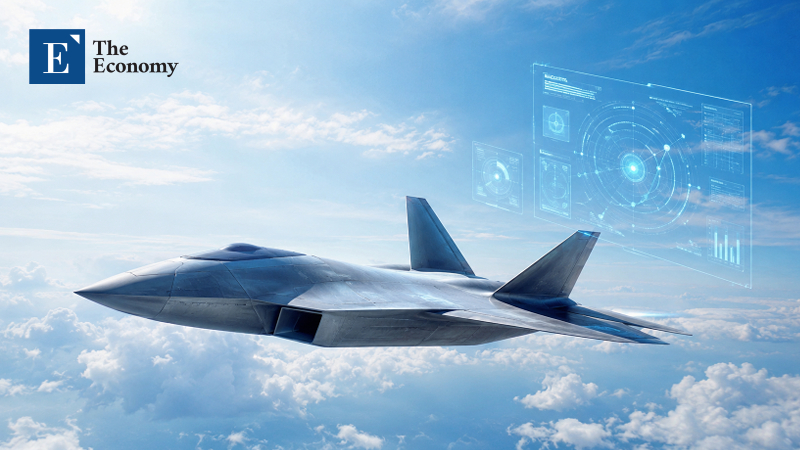
AI is also rapidly replacing battlefield roles traditionally performed by humans, including piloting, operational control, and tactical decision-making. On the Ukrainian battlefield, for instance, “terminal guidance” technology using AI to autonomously direct FPV drones during the final phase of flight has begun spreading in earnest. According to a report published last year by French media outlet Le Monde, the Ukrainian military used an AI guidance system known as TFL-1 that enabled drones to independently track targets during the final 500-meter segment, where communications links are highly vulnerable to disruption. The technology effectively automated portions of the drone’s final approach, tracking, and strike phases.
Major military powers are also rapidly restructuring their weapons systems around AI-centered doctrines. In 2023, the US Department of Defense announced the Replicator Initiative, establishing a goal of deploying thousands of low-cost, expendable unmanned autonomous systems. The strategy aims to move away from military structures centered on expensive manned platforms requiring pilots and toward the large-scale deployment of attritable autonomous systems capable of operating across air, maritime, and ground domains. Under this policy framework, development of the US Air Force’s Collaborative Combat Aircraft (CCA) program has accelerated. The CCA is an unmanned combat aircraft designed to fly alongside manned fighter jets while carrying out reconnaissance, electronic warfare, and air-to-air combat missions, and it is currently undergoing test flights and evaluation. The battlefield era in which AI moves beyond merely assisting pilots and begins directly sharing operational responsibilities with manned fighters is rapidly approaching.
China is likewise positioning its AI-centered “intelligentized warfare” strategy as a central pillar of military modernization. In its 2024 report on Chinese military power, the US Department of Defense assessed that “the Chinese military is building systems that integrate reconnaissance, command and control, target selection, and strike operations into a unified autonomous network using AI, big data, and quantum technologies.” In practice, the Chinese military is developing a “Multi-Domain Precision Warfare” concept that uses AI to integrate and analyze satellite, drone, and electronic surveillance data in real time to generate target prioritization. At the same time, China is restructuring its military forces around the simultaneous operation of numerous unmanned platforms, including unmanned ground vehicles, unmanned surface vessels, and unmanned underwater vehicles.
As one of the youngest members of the team, Tyler Hansbrough is a rising star in financial journalism. His fresh perspective and analytical approach bring a modern edge to business reporting. Whether he’s covering stock market trends or dissecting corporate earnings, his sharp insights resonate with the new generation of investors.
Similar Post