[GLP-1] “Obesity Drugs Redraw America’s Consumption Landscape” Appetite-Suppressed Americans Cut Dining Out and Shift Toward Nutrition Management

Matthew Reuter is a senior economic correspondent at The Economy, where he covers global financial markets, emerging technologies, and cross-border trade dynamics. With over a decade of experience reporting from major financial hubs—including London, New York, and Hong Kong—Matthew has developed a reputation for breaking complex economic stories into sharp, accessible narratives. Before joining The Economy, he worked at a leading European financial daily, where his investigative reporting on post-crisis banking reforms earned him recognition from the European Press Association. A graduate of the London School of Economics, Matthew holds dual degrees in economics and international relations. He is particularly interested in how data science and AI are reshaping market analysis and policymaking, often blending quantitative insights into his articles. Outside journalism, Matthew frequently moderates panels at global finance summits and guest lectures on financial journalism at top universities.
Authored On
Modified
Soaring popularity of obesity drugs drives sharp decline in restaurant spending
Small-portion meals launched to target appetite-suppressed consumers
Sales of products aimed at preventing side effects such as hair loss also climb

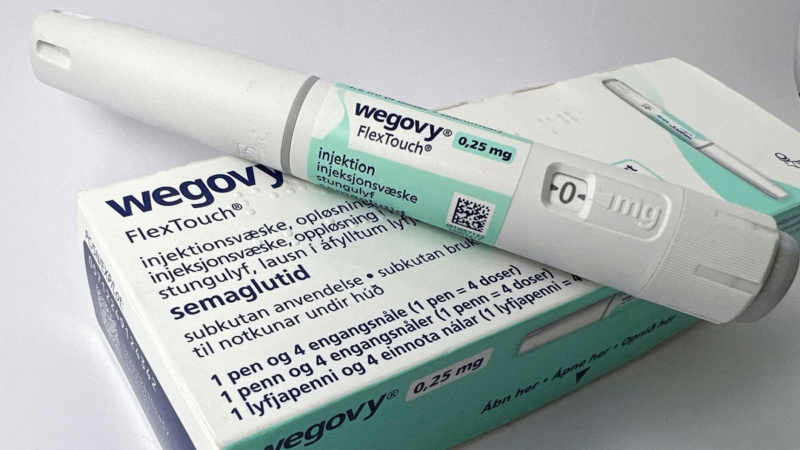
The rapid spread of glucagon-like peptide-1 (GLP-1) drugs such as Mounjaro and Wegovy across the United States is delivering a direct blow to the American restaurant industry. Analysts say the country’s long-standing culture of oversized dining portions — once symbolic of the “big-eating American consumer” — is beginning to fracture as users of the medications reduce not only meal sizes but also the frequency of eating out. At the same time, protein-enriched foods, nutritional supplements, and hair-loss and healthcare products have emerged as new beneficiaries. The GLP-1 boom is increasingly reshaping Americans’ consumption habits and altering the profit structures of the food, restaurant, beauty, and wellness industries.
GLP-1 Users Losing Appetite, Restaurant Spending Falls 8%
According to The Wall Street Journal (WSJ) on May 14, multiple recent studies have confirmed that GLP-1 users are visiting restaurants less frequently and ordering substantially smaller portions even when dining out. A Gallup survey found that more than 12% of Americans had used GLP-1 medications for weight loss purposes as of last autumn, double the 6% recorded in early 2024. A Cornell University study also found that households including GLP-1 users reduced spending at fast-food chains, coffee shops, and quick-service restaurants by an average of 8% within six months of beginning treatment. The longer the medication use continued, the more pronounced the spending decline became. Consumption of processed foods and snack items, including pastries and baked goods, also fell significantly, affecting related industries.
Kay Coleman, a nurse from Wisconsin, told WSJ that after she and her husband began GLP-1 treatment earlier this year, the number of times they ate out was cut in half. She said she previously ordered a 20-ounce ribeye steak at Texas Roadhouse but now eats only an 8-ounce portion. Her husband also sharply reduced his order sizes, having once purchased three soft tacos and a large soda at Taco Bell.
Studies further showed that average calorie intake among GLP-1 users declined by approximately 21%, while grocery spending fell by roughly one-third. Snack consumption showed the steepest decline. According to research by UBS Evidence Lab, nearly 70% of users who reduced calorie intake said they had also cut back on snacks.
Should access to the drugs expand further into lower-income demographics, fast-food operators are expected to face mounting pressure. Sara Senatore, an analyst at Bank of America (BofA), said, “GLP-1 has the greatest impact on impulsive snack purchases,” adding that stores functioning primarily as “calorie refueling stations” would bear the brunt of the shift. Investment banks estimate that if the trend persists, annual U.S. food and beverage industry revenue could decline by as much as $30 billion to $55 billion by 2030.
Restaurant Industry Shifts From Supersized Meals to Smaller Portions
GLP-1 medications work by slowing digestion and suppressing appetite, thereby increasing feelings of fullness. Roughly one in eight American adults is currently taking GLP-1 drugs, while the figure rises to 18% when including past users. User numbers are expected to climb further as Novo Nordisk prepares to launch an oral version of Wegovy and Eli Lilly introduces new products. JPMorgan projects the number of GLP-1 users in the United States will rise from roughly 10 million this year to 30 million by 2030.
The American restaurant industry has already begun adjusting. Domino’s Pizza Chief Executive Officer Russell Weiner recently said in an interview, “Eating habits themselves are changing,” adding that businesses “must face reality and adapt.” McDonald’s has recently begun aggressively promoting the protein content of its menu items, reflecting rising demand among GLP-1 users seeking to prevent muscle loss through higher protein intake. KFC is also pushing “high-protein chicken” and “snack-sized menus” to the forefront.
Efforts to reduce portion sizes are spreading across the industry. Olive Garden, known for its unlimited breadsticks, introduced a new configuration this year offering seven existing menu items in smaller portions across its 900 U.S. locations. Seafood chain Angry Crab Shack launched lunch menus featuring smaller baskets containing fried cod, cheeseburger bites, lobster roll fritters, and fries. Tucci, an upscale Italian restaurant in New York, introduced an “Ozempic menu” that cuts both serving size and price by one-third. Founder Max Tucci explained that the goal was not to promote obesity drugs but to allow appetite-suppressed customers to order more comfortably. Major restaurant groups are also responding. Yum Brands, the parent company of KFC, Pizza Hut, and Taco Bell, said KFC is adjusting portion sizes across its 4,000 U.S. stores.
The American food industry steadily increased serving sizes throughout the 20th century amid post-World War II industrialization and falling grain and meat prices. As a result, “supersizing” became a defining symbol of U.S. dining culture. According to a paper published in the academic journal Foods in 2024, standard American portion sizes are 13% larger than those in France. However, the emergence of obesity drugs that actively suppress overall consumption is forcing the food industry to rethink its strategies. JP Frossard, a consumer foods analyst at Rabobank, said, “Reducing portion sizes is the clearest answer,” adding that lowering prices could help bring customers back while also responding to changing demand patterns driven by the spread of obesity medications.
Protein-Enriched Foods and Hair-Loss Prevention Products Become New Beneficiaries
At the same time, growing GLP-1 usage is creating new opportunities for restaurant and food companies. Consulting firm EY-Parthenon said companies are adapting to market changes through strategies such as GLP-1-friendly labeling, reduced serving sizes, protein-focused marketing, and enhanced hydration products. As consumption of high-carbohydrate and high-fat snacks declines, consumer demand is increasingly shifting toward healthier options such as yogurt, nuts, and fruit.
For GLP-1 users, whose overall calorie intake declines sharply, improving nutritional quality despite eating less has become increasingly important. As a result, expanding product lines enriched with protein and dietary fiber has emerged as a core strategy among food companies. Nestlé, for example, launched a frozen meal brand tailored specifically for GLP-1 users, while PepsiCo introduced protein-enhanced snacks and dietary fiber products. Major supermarket chain Morrisons partnered with high-protein brand Applied Nutrition to release ready-made meals designed for GLP-1 users, while global consumer cooperative Co-op launched its “Good Fuel Mini Meal” small-portion line for GLP-1 dieters in January.
Products designed to mitigate side effects associated with GLP-1 treatments are also benefiting from the trend. Among the most notable are hair-loss-related products targeting users who experience rapid weight-loss-induced shedding. CNBC reported on May 2 that the hair-loss treatment market is expanding alongside growth in GLP-1 obesity medications. Haircare companies including ULTA and Redken are seeing rising sales of anti-hair-loss treatment products. Larissa Jensen, a beauty industry adviser at market research firm Circana, said, “As use of GLP-1 drugs increases, hair-loss management continues to become a growing category within the haircare market,” adding that many GLP-1 users report experiencing temporary hair loss, driving higher demand for at-home hair-growth treatments, scalp serums, and supplements. Circana estimates that GLP-1 users spend approximately 30% more on beauty products than non-users.
Matthew Reuter is a senior economic correspondent at The Economy, where he covers global financial markets, emerging technologies, and cross-border trade dynamics. With over a decade of experience reporting from major financial hubs—including London, New York, and Hong Kong—Matthew has developed a reputation for breaking complex economic stories into sharp, accessible narratives. Before joining The Economy, he worked at a leading European financial daily, where his investigative reporting on post-crisis banking reforms earned him recognition from the European Press Association. A graduate of the London School of Economics, Matthew holds dual degrees in economics and international relations. He is particularly interested in how data science and AI are reshaping market analysis and policymaking, often blending quantitative insights into his articles. Outside journalism, Matthew frequently moderates panels at global finance summits and guest lectures on financial journalism at top universities.
Similar Post