Despite U.S.-China Tensions, Apple to “Increase Investment in China” — Accelerating Supply Chain Diversification Beyond China

Authored On
Modified
China remains Apple’s largest market outside the United States and a key production hub
Despite President Donald Trump’s tariff warnings, Apple continues to cooperate locally
The company’s strategy: maintaining investment in China while diversifying its supply chain
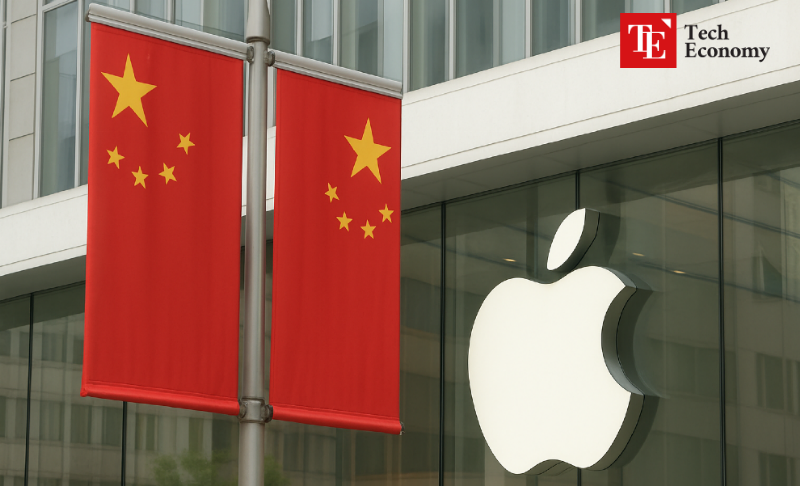
Apple CEO Tim Cook has pledged to continue investing in China during his visit to the country. Despite the heightened tensions between Washington and Beijing under President Donald Trump’s ongoing tariff war, Apple appears to be maintaining this stance in recognition of the strategic importance of China’s market and supply network. However, analysts note that behind the company’s ostensibly pro-China gestures lies a complex strategy aimed at mitigating geopolitical risks by simultaneously diversifying production across India and the United States.
Cook meets Chinese industry chief
On October 15 (local time), Reuters reported, citing an official meeting record, that Cook met with Li Licheng, China’s Minister of Industry and Information Technology, during his visit to the country. Cook reportedly stated that Apple would continue to invest in China. Expressing gratitude for the ministry’s support of Apple’s growth in the country, Cook said, “We will continue to expand our investment in China and further enhance cooperation to achieve mutually beneficial development.” He did not, however, disclose the specific scale of the investment.
Minister Li urged Cook to strengthen Apple’s partnerships with local component suppliers, emphasizing that China hopes Apple will continue to explore the Chinese market and grow alongside domestic partners. He added that Beijing is committed to fostering a favorable business environment for foreign enterprises.
Apple continues to rely heavily on China for iPhone production. Its primary contractors remain local partners such as Foxconn (Hon Hai Precision Industry) and Luxshare. Industry analysts point out that China still accounts for the vast majority of Apple’s product manufacturing. According to market research firm TrendForce, more than 80% of iPhones worldwide are still produced in China.
China also remains one of Apple’s largest consumer markets. Data from IDC show that Apple’s shipments in China reached 10.8 million units in the third quarter, up 0.6% year-on-year, largely driven by the newly launched iPhone 17 series. Among China’s top three smartphone makers, Apple was the only brand to post sales growth in the third quarter.

iPhone 17 series production in India — part of Apple’s effort to reduce dependence on China
Apple’s latest moves are widely viewed as an attempt to strike a balance amid intensifying rivalry between the world’s two largest economies. In August, Apple announced an additional investment of about $9.6 million in China. Earlier in March, Cook also unveiled a $136 million clean energy fund during his previous visit to China.
However, most analysts caution against interpreting these actions as a pro-China shift. Instead, they view Apple’s engagement with Beijing as a buffer mechanism to mitigate tariff and trade risks. In practice, Apple has relocated most of its export-oriented iPhone production out of China and, for the first time, decided to manufacture all new iPhone 17 models—including the high-end Pro version—in India. Previously, Apple had only produced select models in India during initial launches.
According to Bloomberg, the share of iPhones manufactured in India is expected to reach 50% within two years. From April to July alone, India exported iPhones worth $7.5 billion at factory prices—already outpacing last year’s performance. In the previous fiscal year, Apple’s total exports from India reached $17 billion, a figure that will be significantly surpassed this year based on current trends. Reports suggest that Apple has already begun preparing for iPhone 18 production in India, with initial manufacturing expected to start within the coming weeks.
Apple’s supply chain relocation to the United States gains traction
At the same time, Apple is expanding production outside China to counter the Trump administration’s high-tariff policies on Chinese-made goods. The company expects tariff-related costs to reach $1.1 billion this quarter alone. To mitigate this burden, Apple is also ramping up domestic investment within the United States.
In August, Apple announced that it would allocate an additional $7 million to its U.S. manufacturing facilities beyond previously announced commitments. The move aims to avoid steep tariffs on iPhones imported from China and India. Earlier in February, Apple pledged to invest $500 billion in the United States over the next four years. This massive investment package includes building an AI server facility in Texas, establishing a supplier academy in Michigan, expanding partnerships with domestic component suppliers, and creating more than 20,000 new R&D jobs nationwide.
Apple’s expanded investment plan also involves relocating a greater portion of its production programs to the United States, including manufacturing critical components domestically. The plan covers everything from sourcing parts from U.S. suppliers to producing TV shows and films for Apple TV+ within the United States. In essence, while Apple maintains its public image as a loyal partner to China, the company is simultaneously accelerating a de-Sinicization strategy—testing alternative hubs such as India and expanding domestic manufacturing to reinforce supply chain resilience.
Similar Post