OpenAI Buys Nvidia Chips with Nvidia Money: ‘Circular Deals’ Ignite ‘AI Bubble’ Debate

Authored On
Modified
Funds from OpenAI’s investors flow back into chip purchases
A vast financial web linking Nvidia and SoftBank
‘Virtuous growth cycle’ vs. ‘inflated demand fueling the bubble’
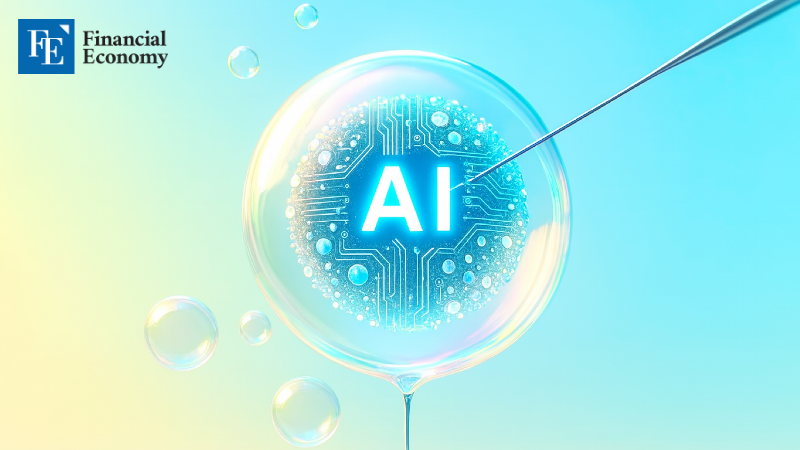
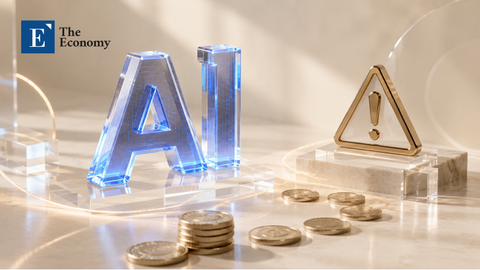
The financial interplay among leading players in the global artificial intelligence (AI) industry is reigniting the debate over an emerging AI bubble. Industry observers point to a pattern of “give-and-take” transactions between OpenAI—the developer of GPT models—and semiconductor giants such as Nvidia and AMD, suggesting these arrangements may be artificially inflating revenues and valuations. Others, however, argue that such capital circulation represents a natural stage in scaling innovation rather than speculative excess.
OpenAI’s Mega Partnerships: Essentially ‘Revolving Investments’
According to U.S. tech industry sources on October 15, OpenAI’s market influence is now said to rival that of Apple. Bloomberg reported that “each time OpenAI mentioned its new partners—Figma, Canva, and Expedia—during its recent developer conference, the companies’ shares surged,” adding that this mirrors the reaction often seen during Apple product launches. The report noted that OpenAI now wields enormous influence not only across the AI sector but also within global financial markets.
Each time OpenAI announces major partnerships with big tech firms like Nvidia under its stated goal of investing “trillions of dollars” in AI infrastructure, semiconductor and AI-related stocks soar and global indices fluctuate accordingly.
Yet, as optimism grows, so too does concern over what critics call “circular deals.” OpenAI recently signed a $100 billion investment agreement with Nvidia and a GPU supply contract with AMD. Both arrangements bear the hallmarks of vendor financing—where an infrastructure company provides funding to its client, which then uses that same money to purchase the company’s products. Though such deals appear to boost sales on paper, they essentially circulate capital within a closed network of related entities.
For instance, under the Nvidia arrangement, Nvidia’s $100 billion investment in OpenAI is expected to be funneled largely into purchases of Nvidia GPUs. These funds, in turn, ripple across other interconnected transactions. OpenAI reportedly pays $22.4 billion to CoreWeave for AI data center leasing, while Nvidia buys back excess computing capacity from CoreWeave—completing the loop. Additionally, OpenAI has a $300 billion contract with Oracle to supply U.S.-based computing power, while Oracle itself is spending billions more on Nvidia AI chips for the project.
A $500 Billion Valuation Despite Unproven Profitability
Such circular financing has significantly inflated OpenAI’s valuation. According to investment advisory firm Sevens Report, OpenAI has recently been valued at $500 billion—making it the most valuable startup in the world. That figure marks a sharp increase from the $300 billion valuation it received earlier this year when SoftBank invested in the company, and represents nearly 25 times OpenAI’s projected annual revenue.
However, OpenAI remains unprofitable, raising concerns that its rapid ascent rests on a fragile web of partnerships. The company recorded $7.8 billion in operating losses during the first half of this year and is not expected to turn a profit before 2029.
The company’s aggressive expansion could also reshape its governance. OpenAI, which began as a nonprofit in 2015, is now negotiating with its largest backer, Microsoft (MS), to transition into a Public Benefit Corporation (PBC). Under this structure, the nonprofit entity would retain control while distributing equity among major investors.
Once converted, Microsoft—having invested over $13 billion and holding roughly 30 percent—will likely emerge as the largest shareholder. Employees are expected to own around 25 percent, while OpenAI’s nonprofit parent retains 27 percent. The remainder will be divided among investors including SoftBank.
Still, Nvidia’s phased investment plan may further complicate ownership. Nvidia intends to invest its $100 billion commitment in $1 billion tranches over several years, acquiring OpenAI equity at each stage’s prevailing valuation. The Financial Times noted that additional fundraising could dilute existing stakes held by Microsoft, SoftBank, and Thrive Capital.
“AI Bubble or Catalyst for Innovation?”
Economists warn that such opaque financial loops distort true demand, increasing systemic risk in the AI sector. Morgan Stanley analyst Todd Castagno observed, “For this investment cycle to be sustainable, AI must generate recurring cash flows that justify the massive capital being deployed.”
Bloomberg similarly cautioned that “investors are pouring vast sums into realizing AI’s grand promise, but no one knows yet how—or if—those investments will translate into profit.” The implication: unprecedented capital inflows are chasing unproven business models.
Even OpenAI has acknowledged the possibility of a bubble. At the company’s Dev Day 2025 event in San Francisco on October 7, CEO Sam Altman said, “I think there’s a lot that feels like a kind of AI bubble right now. People are overinvesting and paying insane prices for foolish companies. There will be many bubbles and corrections ahead.”
Others, however, argue that the market’s exuberance reflects not a bubble but an “AI boom.” Market strategist Ed Yardeni wrote in a recent report that “fear of the bubble is itself a bubble,” suggesting that such caution indicates the market has not yet reached speculative extremes. “This isn’t mania,” he concluded. Bank of America’s chief strategist Michael Hartnett echoed that view, noting that “market bubbles only burst when central banks tighten liquidity—and there are no such signs yet.”
Some go further, arguing that bubbles can play a constructive role in technological revolutions. Amazon founder Jeff Bezos remarked, “Industry bubbles can be positive—once the dust settles and winners emerge, society reaps the benefits.” Altman likewise maintained, “The AI bubble is simply how new technological revolutions unfold.”
Similar Post