Breakthrough in Stalled U.S.–Korea Tariff Talks? Washington Floats “Invest in Won” Proposal

Anne-Marie Nicholson is a fearless reporter covering international markets and global economic shifts. With a background in international relations, she provides a nuanced perspective on trade policies, foreign investments, and macroeconomic developments. Quick-witted and always on the move, she delivers hard-hitting stories that connect the dots in an ever-changing global economy.
Authored On
Modified
Divergence Over $350 Billion Investment Structure
Discussions on Phased Execution and Alternative Mechanisms
High Likelihood of Final Signing Before APEC Summit
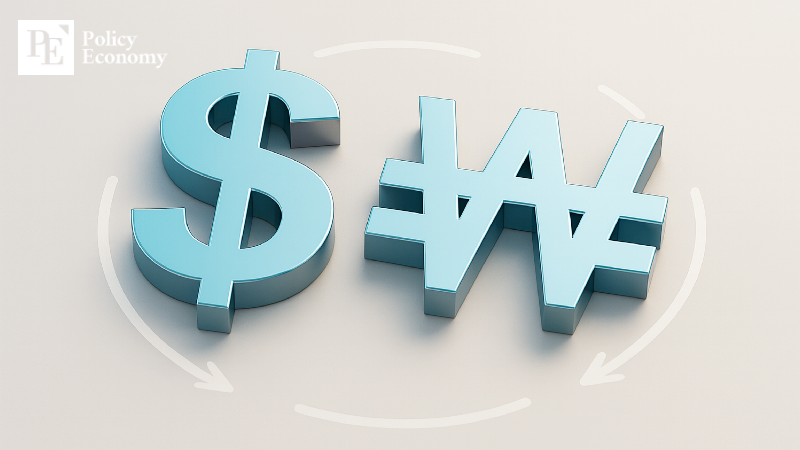
With just two weeks remaining before the Asia-Pacific Economic Cooperation (APEC) summit, a breakthrough in U.S.–Korea trade negotiations appears increasingly within reach. The central sticking point—how to finance the pledged $350 billion in investments—has prompted a novel proposal: channeling U.S.-bound investments through funds denominated in Korean won. This approach, facilitated via a currency swap between the U.S. Treasury and the Bank of Korea, is designed to avert a sharp depletion of Seoul’s foreign-exchange reserves. However, as the plan effectively entails deploying dollars secured by won collateral, critics warn it could heighten long-term currency instability and fiscal strain.
Final Adjustments Over Up-Front Payment Dispute
According to government officials on the 17th, Seoul is discussing with Washington a won-based investment fund structure to cushion any potential shocks to Korea’s foreign-exchange market arising from the implementation of the U.S.-bound investment package. Korea’s foreign-exchange reserves stood at $422.02 billion as of late September, making it impossible to provide the full $350 billion “up front” as demanded by President Donald Trump. Negotiations are currently focused on the scale and operational details of the proposed swap arrangement.
Kim Yong-beom, Policy Director at the Presidential Office, who departed for Washington on the 16th to lead the negotiations, said at Incheon International Airport that he was “optimistic” about the outcome. Industry Minister Kim Jung-gwan, traveling with him, added that “many of the misunderstandings and gaps related to Korea’s foreign-exchange market have been narrowed.” Finance Minister Koo Yoon-cheol and Trade Minister Yeo Han-koo, who left a day earlier, are scheduled to meet with Treasury Secretary Scott Besant and USTR Chief Jamieson Greer. The Korean delegation is also expected to visit the White House Office of Management and Budget (OMB) to finalize the language of the memorandum of understanding (MOU) governing the investment fund.
Both sides have informally set the APEC summit in Gyeongju as their de facto target for concluding the tariff negotiations. When asked on October 15 whether an additional trade deal might be announced during President Trump’s Asia tour, Secretary Besant replied, “Yes. President Trump will travel from Japan to Korea to attend the APEC meeting, where he will meet with heads of state.” On the same day, Kim Yong-beom confirmed, “There is no fixed deadline, but given how rarely the two leaders meet, APEC effectively serves as our main target.” A government source noted, “Once there’s mutual understanding on the financial framework, the follow-up talks will accelerate.”
Concerns Over Market Impact of Won-Denominated U.S. Investment
The currently discussed “won-account investment” is a U.S.-devised variant of the swap framework initially proposed by Seoul. Unlike a direct currency swap between central banks at a fixed rate, this mechanism would allow the Korean government to open a won account in the United States, deposit won equivalent to the investment amount, and have Washington supply the corresponding dollar funds for U.S. projects. The concept—reportedly suggested by Commerce Secretary Howard Lutnick and supported by Secretary Besant—represents a creative detour around conventional swap models.
The key objective is to mobilize dollars from the Exchange Stabilization Fund (ESF) for U.S. investment initiatives such as the MASGA (“Make American Shipbuilding Great Again”) project, thereby minimizing dollar outflows from Korea’s foreign-exchange market. A similar structure was used earlier this month when the United States signed a $20 billion swap agreement with Argentina, not between the two central banks but directly between Argentina’s central bank and the U.S. Treasury—with Washington even purchasing Argentine pesos as part of the arrangement.
Still, experts say it would be virtually impossible for Seoul to finance the entire $350 billion through a won swap. The U.S. Treasury’s ESF held $210.8 billion in assets as of February, meaning any Korean facility would likely be limited to tens of billions rather than hundreds. Even if the two sides reach an agreement, substantial challenges remain. A won-based U.S. investment of this scale could destabilize Korea’s foreign-exchange and fiscal positions. Direct dollar investments would drive up dollar demand and could push the won–dollar exchange rate higher, reminiscent of the 1997 Asian financial crisis.
Conversely, large won outflows could weaken the currency and similarly trigger an exchange-rate spike. Korea’s national debt, already $1.26 trillion as of August, would inevitably rise further; the proposed $350 billion represents 68.3% of next year’s $728 billion budget plan. Issuing dollar-denominated stabilization bonds has also been floated, but that too would rely on sovereign borrowing and thus offers limited relief.
National Security Advisor Wi Sung-lak cautioned on the 16th that expectations around the swap should remain tempered: “Korea proposed the swap, but it is not unlimited, nor is it something the United States automatically activates. Even if signed, it would be only a necessary condition, not a sufficient one—and we’ve seen no real progress on that front.”
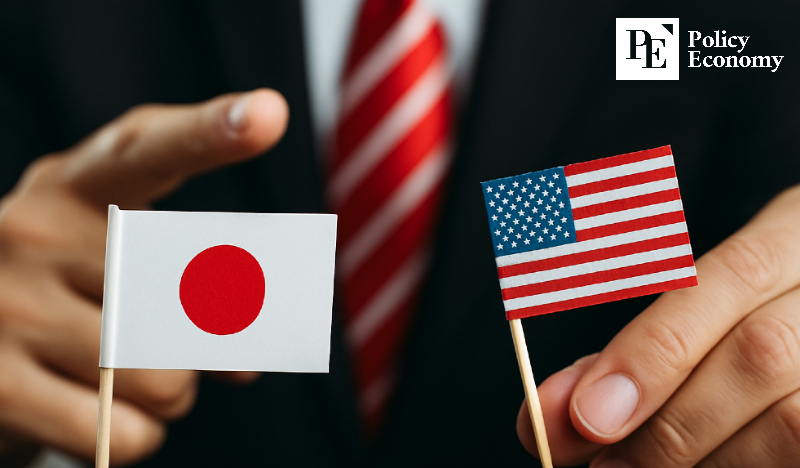
Japan’s Example: Only 1–2% of Pledged $550 Billion Was Actual Investment
Meanwhile, some observers believe Seoul and Washington have found tentative common ground on the cash component of the U.S. investment fund. Though exact figures remain undisclosed, the share of cash may exceed the initial 5% Korea had envisioned. Aligning with Japan’s precedent is one possible compromise: Tokyo’s pledged $550 billion amounts to 42% of its reserves, versus 84% in Korea’s case. Matching Japan’s ratio would translate to roughly $170–180 billion in effective commitments.
In Japan’s deal, however, only 1–2% of the $550 billion represented direct capital investment, with the remainder classified as loans or guarantees. Washington and Tokyo reached their trade accord on July 22, agreeing to lower auto tariffs, but interpretive disputes soon arose. Japan ultimately conceded on October 4, after which President Trump signed an executive order, and Secretaries Lutnick and Ryosei Akazawa formalized the understanding in an MOU.
The document, according to the Hudson Institute, contained several provisions disadvantageous to Japan, obliging it to allocate the $550 billion during the Trump administration’s term. “In the past we weren’t treated fairly, but now we’re doing great,” Trump said at the White House on September 25, citing the inflows from the EU, Japan, and Korea as “up front payments.”
Foreign outlets later clarified that Japan’s Economic Revitalization Minister Akazawa had dismissed any notion of disagreement: “There is no inconsistency between the sides.” The signed MOU, they noted, never mentioned “up front” payments; instead, it specified that funds would be provided “from time to time.” Akazawa further explained that the MOU was “an administrative document with no treaty status or legal binding force—simply a statement of mutual understanding shared by both governments.”
If Japan’s account is accurate, Trump’s insistence that Korea also provide its $350 billion investment entirely up front loses ground. Analysts say this discrepancy could become a pivotal turning point in the U.S.–Korea tariff negotiations.
Anne-Marie Nicholson is a fearless reporter covering international markets and global economic shifts. With a background in international relations, she provides a nuanced perspective on trade policies, foreign investments, and macroeconomic developments. Quick-witted and always on the move, she delivers hard-hitting stories that connect the dots in an ever-changing global economy.
Similar Post