Indonesia Buying Chinese Weapons While Defaulting on Korean Payments, Diplomatic Credibility Plunges Amid Pro-China Tilt

Authored On
Modified
Indonesia purchases Chinese J-10 fighter jets
Neglects commitment to develop Korea’s KF-21 “Boramae”
Prabowo administration accelerates pro-China foreign policy
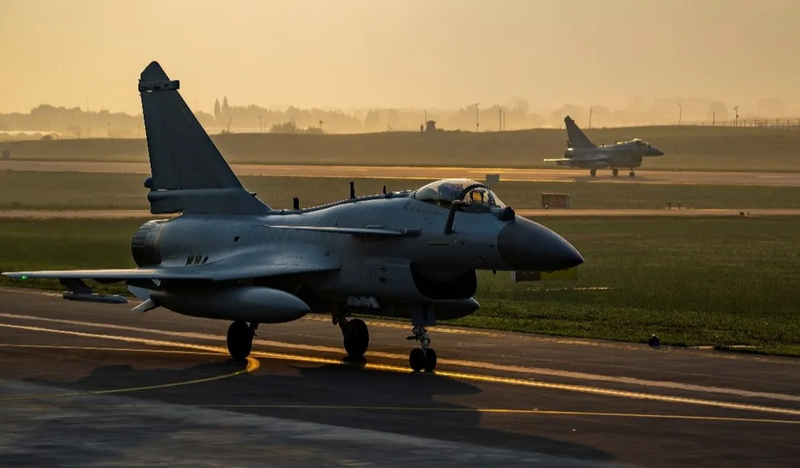
Indonesia is rapidly overhauling its diplomatic and security policy, allocating massive funds to procure Chinese-made weapons. While defaulting on its cost-sharing obligations for the co-development of Korea’s KF-21 “Boramae” fighter jet, Jakarta is aggressively purchasing Chinese fighter jets, submarines, missiles, and destroyers. Behind the decision to favor Chinese weapons—often criticized for their questionable quality—lies the Prabowo administration’s pro-Beijing orientation, which analysts warn could not only fracture alliances but also undermine Indonesia’s international credibility.
Indonesia Finalizes Purchase of 42 Chinese J-10C Fighters
According to Indonesian media outlet Tempo on the 27th (local time), the Indonesian government has finalized a deal to procure 42 Chinese J-10C fighter jets—its first-ever purchase of combat aircraft from a non-Western nation. Indonesian Finance Minister Purbaya Yudi said, “Over $9 billion in funding has been approved for the acquisition of Chinese fighter jets,” adding, “Preparations for delivery are complete, but the exact timeline for the aircraft’s arrival in Jakarta from China remains to be confirmed.”
The J-10C procurement plan was first mentioned last month by Defense Ministry spokesperson Praga Wenas, after which the Indonesian Air Force began evaluating the model’s operational feasibility and combat capability. Indonesia has been reviewing the purchase of Chinese fighter jets since the first half of this year. In response, China sought to penetrate the Indonesian market by offering not only J-10 jets but also warships, weapons, and escort vessels as part of a package deal. While Indonesia’s air force currently operates aircraft from the U.S., Russia, and the U.K., many of these models have become outdated, necessitating replacement or upgrades.
Indonesia is also negotiating to acquire Chinese-made submarines and air-defense destroyers. According to the Financial Times (FT), Chinese shipbuilding executives visited Jakarta last year to brief the Indonesian Defense Ministry and discuss how the submarines and destroyers could be customized to meet Indonesia’s requirements.
Defaulting on $8 Billion Obligation While Buying Questionable Chinese Arms
The controversy stems from Indonesia’s decision to import Chinese weapons while simultaneously co-developing Korea’s KF-21 supersonic fighter jet. More troubling is Jakarta’s failure to pay its pledged share of the KF-21 development cost, even as it spends heavily on weapons from other countries. According to Tempo, President Prabowo Subianto’s administration spent at least $4.31 billion on arms purchases in its first year alone after his inauguration in October last year. Beyond the Chinese J-10 jets, Indonesia allocated $1.71 billion for Türkiye’s KAAN fighter jets, $1.56 billion for Türkiye’s I-class frigates, and $640 million for Italy’s Garibaldi-class aircraft carrier.
While the Indonesian government defends the spending as part of its military modernization initiative, the international community largely views it as a betrayal of trust among allies. Jakarta has a track record of similar reversals—such as canceling its contract for Ukraine’s Neptune missiles and switching to China’s YJ-12E. One military diplomacy expert said, “From Korea’s perspective, Indonesia has become an unreliable partner. It is highly regrettable that Jakarta appears committed to the KF-21 project on the surface while secretly importing Chinese arms. This kind of double game undermines the very foundation of Korea–Indonesia defense cooperation.”
Even more perplexing is Jakarta’s decision to prioritize Chinese weaponry—long dogged by quality and performance issues—over Korea’s globally recognized aerospace systems. Although China’s state-run Global Times claimed Indonesia’s purchase was driven by the J-10C’s “superior performance,” skepticism remains rife within the global defense industry over the reliability and effectiveness of Chinese military hardware.
China’s own fifth-generation stealth fighters, the J-20 and FC-31, developed at enormous cost, illustrate the problem. These aircraft, intended as symbols of China’s “aerospace rise” and tools for asserting air superiority in Northeast Asia, have faced growing doubts about their stealth capabilities. In recent months, South Korea’s next-generation detection network has effectively neutralized China’s stealth strategy through a combination of E-7 early warning aircraft, indigenous multi-function radar, passive coherent location (PCL) systems, and FM-based surveillance technologies. This multilayered detection system can track stealth aircraft in real time by analyzing multiple frequency bands, effectively dismantling China’s stealth advantage.
Prabowo: A Hardline Pro-China Figure
Adding to the international puzzlement is that Indonesia’s territorial dispute with China remains unresolved. Since 2020, China has increased military activity around Indonesia’s Natuna Islands in the South China Sea, prompting Jakarta to bolster its defense posture in the area. Against this backdrop, Indonesia’s move to buy weapons from its own territorial rival is baffling.
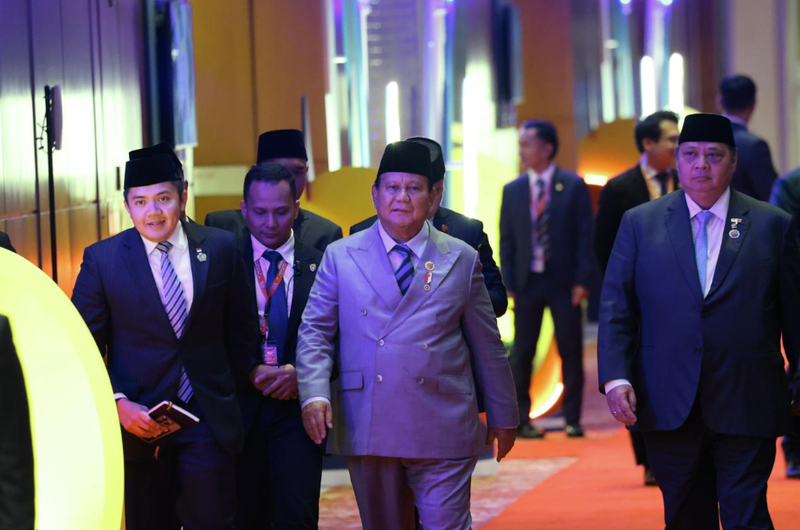
Experts trace these decisions to President Prabowo’s openly pro-China policy line. Prabowo Subianto is considered an even more hardline pro-Beijing figure than former President Joko Widodo, who had aligned closely with China through the Belt and Road Initiative. Prabowo’s first overseas trip after winning the presidency last year was to China.
Although he was still serving as defense minister at the time, he was accorded head-of-state-level treatment, including a meeting with Chinese President Xi Jinping, during which he vowed to deepen defense cooperation. “China is a key partner in ensuring regional peace and stability,” Prabowo declared. Xi, in turn, described Prabowo as “a long-time friend of the Chinese people,” underscoring his close ties to Beijing. Diplomatic circles at the time even speculated that Prabowo’s election campaign may have benefited from Chinese financial backing.
By importing weapons from a country it disputes territory with—and deploying them in those same contested waters—Indonesia is signaling a wholesale realignment of its diplomatic and security posture toward Beijing.
Similar Post