China Expands Yuan Influence with BRICS and Saudi — Signals Long Game Against Dollar Dominance

Authored On
Modified
BRICS Nations Bolster Yuan’s Global Role as China Pushes Currency Internationalization
Saudi Arabia’s Alignment with Beijing Puts ‘Petrodollar’ System Under Pressure
Digital Yuan Gains Ground in Global Trade Networks
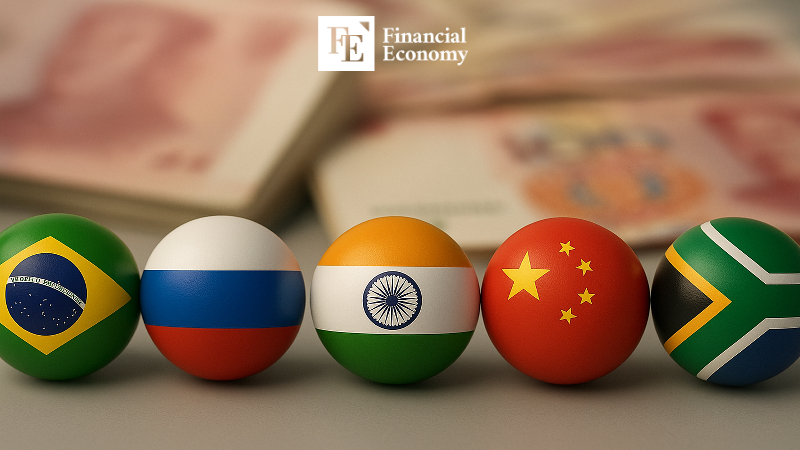
BRICS nations have emerged as a central pillar of the yuan bloc. As China advances policies to expand the yuan’s influence and challenge the dominance of the U.S. dollar, member countries seeking to move away from dollar dependence are increasingly aligning with Beijing’s efforts. However, experts say a shift in global reserve currency power toward China is unlikely to occur in the near term.
BRICS Moves to Break Away from the Dollar
According to Bloomberg on the 26th (local time), the People’s Bank of China (PBOC) announced during a meeting led by Governor Pan Gongsheng on the 24th that it would “actively promote the internationalization of the yuan and expand its use in trade.” Analysts noted that the PBOC’s latest statement omitted the usual phrase “prudent and steady,” signaling greater confidence in the yuan’s growing role within the global monetary system.
BRICS nations have been key supporters of China’s push to strengthen the yuan’s position. As the bloc pursues de-dollarization policies and seeks to reduce dependence on the U.S. currency, its members have increasingly aligned with Beijing’s ambitions. In particular, the Trump administration’s renewed push for aggressive tariffs this year has further solidified economic cooperation and anti-dollar sentiment among BRICS members.
Trade settlements within the bloc are now frequently conducted in currencies other than the dollar, with the yuan reportedly used in nearly half of intra-BRICS transactions. Given that the group accounts for roughly 37.3% of global GDP, this trend poses a potential challenge to U.S. financial dominance. China, meanwhile, is expanding its network of bilateral currency swap agreements across BRICS nations to further entrench the yuan’s presence.
Saudi Arabia and China Build Gradual Partnership
China’s de-dollarization campaign is gaining support beyond the BRICS bloc — most notably from Saudi Arabia. In September last year, Saudi Industry and Mineral Resources Minister Bandar Alkhorayef said in an interview with the South China Morning Post that the kingdom was open to settling oil transactions in yuan. When asked whether Saudi Arabia would consider using the Chinese currency for crude trade, he replied, “Saudi Arabia will always try new things,” adding that such a deal “could be reached freely between suppliers and customers if it serves the national interest.”
The shift could undermine the U.S.-led petrodollar system that has underpinned dollar dominance for decades. After abandoning the gold standard in 1971, the U.S. cemented its currency’s global role through a 1974 agreement with Saudi Arabia that mandated oil sales in dollars — the foundation of the “petrodollar” regime. In return, Riyadh reinvested its oil revenues into U.S. Treasuries and military equipment.
China’s growing economic and financial ties with Saudi Arabia now pose a potential threat to that system. In March 2023, China National Offshore Oil Corporation completed its first-ever yuan-denominated liquefied natural gas (LNG) purchase — buying 65,000 tons from the UAE via the Shanghai Petroleum and Natural Gas Exchange. Later that year, in November, China and Saudi Arabia signed a three-year currency swap deal worth 50 billion yuan (about $6.9 billion), deepening their financial cooperation and reinforcing Beijing’s push toward a yuan-based global trade network.

Digital Yuan Expands Its Reach Across Global Trade
China’s push to secure payment sovereignty is emerging as another challenge to U.S. dollar dominance. In 2012, Washington exposed the true extent of its financial power by cutting Iran off from the SWIFT global payment network — a move that sent shockwaves through international markets. In response, China launched its own cross-border settlement system, the Cross-Border Interbank Payment System (CIPS), in 2015. Unlike SWIFT, which only transmits payment messages, CIPS provides a full-fledged infrastructure for both messaging and actual settlement.
By integrating the digital yuan into CIPS, Beijing has dramatically increased efficiency in cross-border digital trade and boosted the use of its currency worldwide. In 2023, the yuan accounted for 48.3% of China’s total trade and capital transactions, up from nearly zero just a decade earlier. Ninety percent of trade between China and Russia is now settled directly in yuan and rubles, while Thailand has already conducted oil transactions using the digital yuan. Over the same period, the dollar’s share of Chinese transactions has fallen sharply from 83% to 46.7%.
Despite this rapid progress, analysts caution that the yuan is still far from overtaking the dollar’s role as the world’s reserve currency. Shifts in global monetary hegemony, they note, typically unfold over decades. “It’s never an overnight process,” one market expert said, pointing out that “even after World War I, when the U.S. controlled nearly half of the global economy, the British pound remained dominant until after World War II.” The expert added that “China’s yuan internationalization is a long-term strategy — not a short campaign — and it will take years before any real power shift occurs.”
Similar Post