China’s State-Backed HBM Ambition Rises — From CXMT to Huawei, Beijing Bets Big to Catch Up with Korea

As one of the youngest members of the team, Tyler Hansbrough is a rising star in financial journalism. His fresh perspective and analytical approach bring a modern edge to business reporting. Whether he’s covering stock market trends or dissecting corporate earnings, his sharp insights resonate with the new generation of investors.
Authored On
Modified
Chinese memory chipmaker CXMT begins full-scale supply of HBM3 samples to Huawei
Huawei and YMTC accelerate their own HBM development
SK hynix and Samsung Electronics face a long-term challenge to their dominance
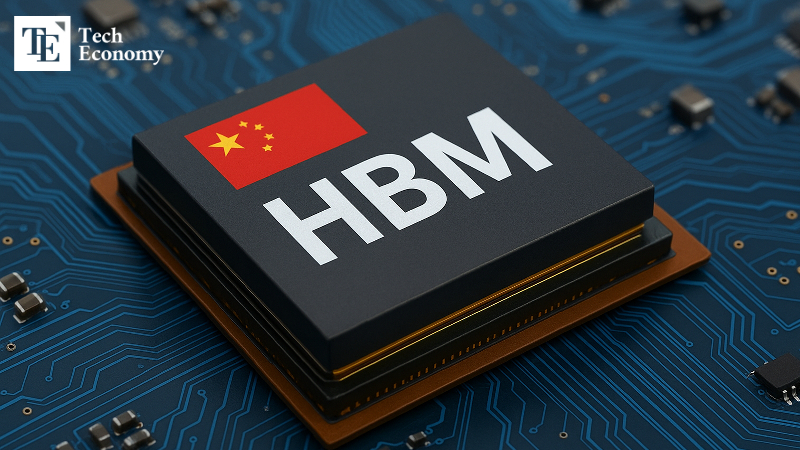
China’s presence in the high-bandwidth memory (HBM) market is expanding noticeably. Leading Chinese memory manufacturer CXMT, along with major IT player Huawei and the country’s largest NAND flash producer YMTC, are all entering the HBM arena. Backed by strong government support, these companies are rapidly advancing their technology, prompting warnings that Korea — the traditional leader in the market — should remain vigilant.
CXMT Nears Mass Production of HBM3
According to multiple news outlets including DigiTimes on the 27th (local time), CXMT has recently begun supplying samples of its fourth-generation HBM3 to Huawei. For CXMT — a latecomer that had previously focused on lower-spec, general-purpose semiconductors — this marks a significant technological leap. The product is manufactured using a 16-nanometer process and is expected to enter mass production as early as the end of this year or early next year.
CXMT’s HBM3 supply could serve as a timely relief for China’s tech industry, which has been struggling with a shortage of HBM chips. The U.S. government currently restricts China from importing HBM products from SK hynix, Samsung Electronics, and Micron, which are essential for AI semiconductors. Because HBM production requires advanced technology and China has relied heavily on foreign imports, companies such as Huawei have faced prolonged disruptions in AI chip manufacturing. If CXMT succeeds in mass-producing HBM3 and establishing a domestic HBM supply chain, the pressure from U.S. export restrictions would be significantly reduced.
Reports also indicate that CXMT aims to commercialize fifth-generation HBM3E by 2027 and supply it to Chinese clients. This version is the same type of memory used in Nvidia’s latest AI chips. Tech outlet WCCFTech commented, “CXMT has secured sufficient DRAM manufacturing capacity for this goal,” adding that “HBM3E production is a critical step for China to achieve an independent HBM supply chain.”
Chinese Companies Rush into the HBM Market
CXMT is not the only Chinese company focusing on in-house HBM production. Last month, Huawei officially announced that its upcoming AI chip, the Ascend 950PR—scheduled for release in the first quarter of next year—will feature its self-developed HBM, named HiBL 1.0. According to Huawei, the chip will have a capacity of 128GB and deliver bandwidth of up to 1.6TB/s, surpassing on paper the fifth-generation 12-layer HBM3E (1.2TB/s) from Samsung and SK hynix.
However, industry experts expect the actual performance of HiBL 1.0 to be closer to that of HBM3. So far, Chinese companies have typically lagged one to two generations behind global memory makers in technological capability. Still, some observers warn that the very fact China has developed its own HBM product to support AI semiconductors marks a significant shift. By addressing its long-standing bottleneck—having “chips but no memory”—China is accelerating its move toward a self-reliant AI ecosystem.
China’s largest NAND flash manufacturer, YMTC, is also reportedly expanding into the HBM business. The company is said to be devoting significant resources to mastering through-silicon via (TSV) technology—an advanced packaging process that stacks DRAM chips by drilling microscopic holes and connecting them with electrodes to achieve high capacity and bandwidth. Some analysts believe YMTC may collaborate with CXMT, which began HBM development earlier, to advance its technology.
Impact of China’s Pursuit on Korea’s Market Dominance
China’s rapid progress in memory technology and its entry into the high-bandwidth memory (HBM) market have been driven by aggressive government support. Last year, the Chinese government launched the third phase of its National Integrated Circuit Industry Investment Fund (ICF, or “Big Fund”), investing about 69.5 billion dollars in the semiconductor sector. This marks a sharp increase compared to the first phase in 2014 (28 billion dollars) and the second in 2022 (41 billion dollars). Most of the funding is reportedly directed toward memory and AI semiconductor development.
Such progress poses a potential threat to Korea, which currently dominates the global HBM market. According to Counterpoint Research, as of the second quarter of this year, global HBM market share by shipment stood at 62% for SK hynix, 21% for Micron, and 17% for Samsung Electronics. Combined, SK hynix and Samsung account for nearly 79% of the total — meaning eight out of ten HBM chips are produced by Korean firms. Counterpoint projects that the launch of HBM4 later this year will further strengthen their market dominance.
The challenge, however, lies in Korea’s relatively weak government support compared to its rivals, as well as its heavy reliance on exports rather than domestic demand. In the long term, this could narrow the gap between Korea and competitors like the United States and China. A semiconductor industry official noted, “Amid ongoing trade tensions, both the U.S. and Chinese governments are expected to intensify investments in their domestic HBM capabilities. Korea, too, needs strong government-level support in addition to private-sector efforts.”
As one of the youngest members of the team, Tyler Hansbrough is a rising star in financial journalism. His fresh perspective and analytical approach bring a modern edge to business reporting. Whether he’s covering stock market trends or dissecting corporate earnings, his sharp insights resonate with the new generation of investors.
Similar Post