PBOC Resumes Government Bond Purchases, Signaling a Shift in Monetary Policy

Stefan Schneider brings a dynamic energy to The Economy’s tech desk. With a background in data science, he covers AI, blockchain, and emerging technologies with a skeptical yet open mind. His investigative pieces expose the reality behind tech hype, making him a must-read for business leaders navigating the digital landscape.
Authored On
Modified
Economic Worries Deepen Despite Policy Support
After Last Year’s Failed Attempt, Beijing Tries Again
Hints of a Broader Turn in China’s Policy Portfolio
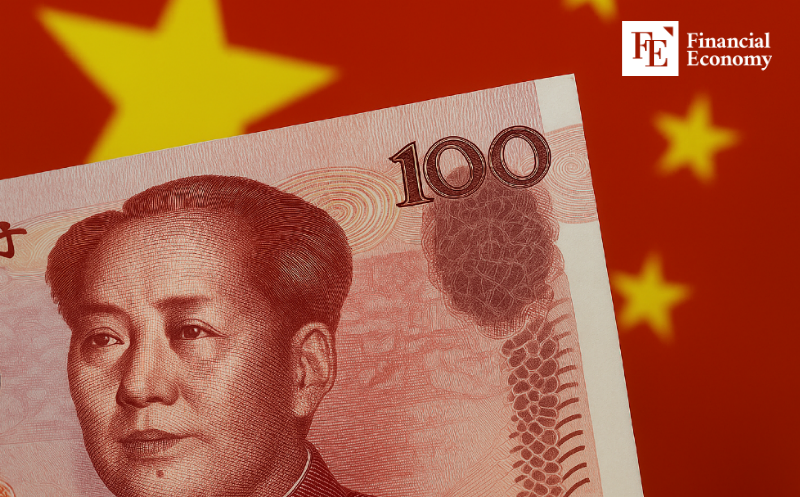
China’s central bank has announced it will resume buying government bonds in the open market, signaling a renewed push toward monetary easing. The move comes nearly a year after the People’s Bank of China (PBOC) made its first bond purchases in two decades—an effort that backfired amid currency volatility and yield distortions. This time, the central bank is expected to combine bond purchases with additional measures, such as interest rate cuts, as part of a broader strategy to shore up economic momentum. Analysts view the decision not simply as a liquidity injection but as a shift in the PBOC’s overall policy portfolio aimed at countering deflationary pressure.
Liquidity Wall Against Deflationary Pressures
According to China’s state-run Xinhua News Agency on the 28th, the heads of major financial authorities, including the PBOC, gathered in Beijing for the annual “2025 Financial Street Forum,” where they discussed a wide range of issues such as cryptocurrency regulation, stock and foreign exchange markets, digital yuan operations, and household credit recovery. During the meeting, PBOC Governor Pan Gongsheng stated that “China’s bond market is operating smoothly overall” and confirmed that the central bank would resume government bond purchases through open-market operations. “We will continue to maintain a supportive monetary stance and implement appropriately accommodative policies,” he said, adding that the PBOC would “comprehensively employ multiple monetary tools to provide short-, medium-, and long-term liquidity.”
The decision reflects more than short-term market volatility; it stems from broader macroeconomic concerns. Since late June, yields on China’s 10-year government bonds have risen about 25 basis points, while 30-year yields have climbed to around 2.1%, driving up long-term borrowing costs and straining fiscal budgets. The bond-buying plan is therefore seen as an attempt to keep yields within a manageable range and sustain the government’s spending capacity.
This move also ties directly to deflation risks. China’s economy is cooling under the combined weight of a property slump, weak private investment, and sluggish consumer spending. The PBOC’s pledge to “maintain an appropriately loose monetary policy” and inject liquidity on a regular basis reflects a broader strategy: not just to stabilize market sentiment through short-term funding, but to keep fiscal outlays and bank lending from seizing up. In practice, the renewed bond purchases serve as a mechanism to slow the pace of economic descent as deflationary forces deepen.
Last Year’s Failure: Inflation Stalled, Yields Surged
China’s last experiment with open-market bond purchases came only late last year. That move—the first since the early 2000s—was widely described as “historic.” At an October 2023 Central Financial Work Conference, President Xi Jinping had called for “enriching the monetary policy toolkit” and “gradually expanding government bond trading through open-market operations.” Direct bond purchases by the PBOC are highly unusual, as China’s monetary policy has traditionally relied on indirect tools such as reserve requirement ratio (RRR) cuts and relending programs. But as growth momentum faltered, Beijing sought to fuse fiscal and monetary tools to revive activity.
The outcome, however, fell short of expectations. While the PBOC pursued bond purchases for several months, liquidity failed to spread broadly. Instead, bond prices soared, yields fell sharply, and the yuan weakened—fueling capital outflow concerns. In January, the central bank abruptly suspended bond purchases, citing “excess demand in the market.” The Wall Street Journal described the decision as “a sign of discomfort over plunging yields and renewed depreciation pressure on the yuan.”
The episode exposed the limits of Beijing’s monetary toolkit. Rather than stimulating the real economy, the move distorted asset markets and heightened foreign-exchange risk. Some observers even warned of “monetized fiscal deficits,” raising doubts among global investors. Critics argued the PBOC’s actions resembled Western-style quantitative easing (QE), while internal caution grew that excessive liquidity could inflate new asset bubbles. Deputy Governor Xuan Changneng underscored the divide, remarking that “the existing mix of relending and credit quotas remains more effective for liquidity management.”
Possible Rate Cut on the Table
Despite these setbacks, the PBOC’s latest signal of renewed bond purchases has revived speculation over an accompanying benchmark rate adjustment. Goldman Sachs recently projected that the central bank could lower the loan prime rate (LPR) by 0.10 percentage point and cut the reserve requirement ratio by 0.50 percentage point during the fourth quarter. With China’s growth expected to slow to the low 4% range this year, analysts see a need for a more comprehensive policy mix to counter downward pressure. The South China Morning Post similarly reported rising market expectations for easing ahead of the upcoming Politburo meeting.
The rationale lies in China’s prolonged economic malaise and faltering domestic demand. Though GDP grew 5.3% in the first half, much of that was a one-off rebound driven by base effects. In the second half, both manufacturing and property investment have slowed again, intensifying the drag. S&P Global recently trimmed its 2025 growth forecast to 4.6%, warning that “deflation and mounting debt are weighing on recovery.” Mounting local-government debt and stalled property projects have tightened private credit conditions, reducing the effectiveness of monetary policy alone. This is why the PBOC now aims to supply long-term liquidity through bond purchases while easing short-term funding costs through rate cuts—to soften what analysts call a “total demand cliff.”
Opinions differ on whether this policy mix will work. Combined bond purchases and rate cuts could improve liquidity circulation in the short run but risk reigniting yuan weakness and renewed capital outflows. “The real goal is not just short-term stimulus but restoring confidence in the financial system,” said one economist. “This experimental blend of monetary and fiscal measures will test the market’s trust in China’s policy credibility over the coming months.” Whether the PBOC’s latest intervention stabilizes assets and boosts domestic demand—or triggers another cycle of falling yields and currency volatility—will be a key test for Beijing’s economic managers in the months ahead.
Stefan Schneider brings a dynamic energy to The Economy’s tech desk. With a background in data science, he covers AI, blockchain, and emerging technologies with a skeptical yet open mind. His investigative pieces expose the reality behind tech hype, making him a must-read for business leaders navigating the digital landscape.
Similar Post