“Collapse of an Oil Power”: Venezuela’s Hyperinflation Becomes Reality

Authored On
Modified
From South America’s Wealthiest Nation to One of Its Poorest in a Decade
U.S. Rejects Maduro’s “Gradual Exit” Proposal
Nation Nears Flashpoint as Military Tensions Escalate
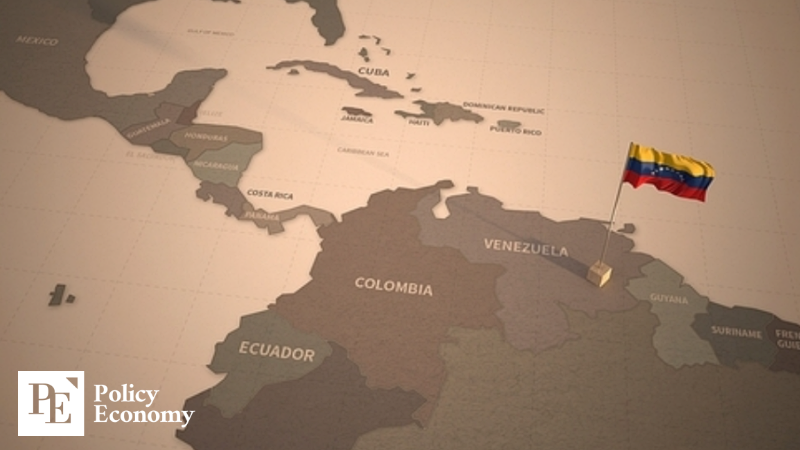
Venezuela’s economy has entered a state of near-total collapse within the past decade. A toxic combination of oil dependence, government corruption, and U.S. sanctions has wrecked the country’s finances, driving inflation to a projected 600% this year. Despite desperate efforts to secure foreign currency, the bolívar’s near-worthless value and runaway price growth show no signs of stabilizing. Global financial institutions uniformly predict continued contraction, calling Venezuela a stark example of how the “resource curse” can devolve into hyperinflation.
A Paralysis Fueled by Oil Dependence and Corruption
According to the New York Times on the 27th, economists around the world now expect Venezuela’s inflation rate to surge more than twelvefold this year. The International Monetary Fund (IMF) projects the country’s growth rate to fall into negative territory, around –3% next year. Francisco Rodríguez, a Venezuelan economist, remarked, “Venezuela is a country where even economic collapse doesn’t bring political change. The poorer the economy gets, the stronger the government becomes.” His comment underscores how populist survival tactics have obliterated the country’s economic foundations.
Despite holding the world’s largest oil reserves, Venezuela’s annual inflation is forecast to exceed 600%, adding weight to those criticisms. The IMF estimates the nation’s cumulative inflation over the past decade at over 60,000%, effectively rendering its currency useless. Once sustained by oil exports, Venezuela’s foreign exchange inflows dried up amid sanctions and graft, paralyzing monetary policy. The bolívar has since degenerated into a speculative token whose value fluctuates multiple times a day. Per-capita GDP, which stood at $12,700 in 2012, collapsed by 88% to $1,600 by 2020.
The destruction of the economic base has devastated daily life. When inflation hit 65,000% in 2018, studies found that Venezuelans lost an average of 19 kilograms in two years due to food shortages. The monthly average income, around $250, covered less than half the cost of basic groceries, while utility hikes, blackouts, and medicine shortages triggered a mass exodus—about 7.7 million people, or 30% of the population, fled the country. Along the Colombian border, families continue to cross en masse, and reports abound of children and teenagers resorting to begging or sex work to survive.
Venezuela’s downfall illustrates how an oil-based economy can turn into a textbook “resource curse.” Under former President Hugo Chávez and his successor Nicolás Maduro, state oil revenues from PDVSA were diverted to populist welfare spending while industrial diversification and infrastructure investment were neglected. Oil facilities fell into disrepair, and exports plunged to less than half their 2013 level. Once the wealthiest nation in Latin America, Venezuela has become a global symbol of hyperinflation, famine, and mass displacement.
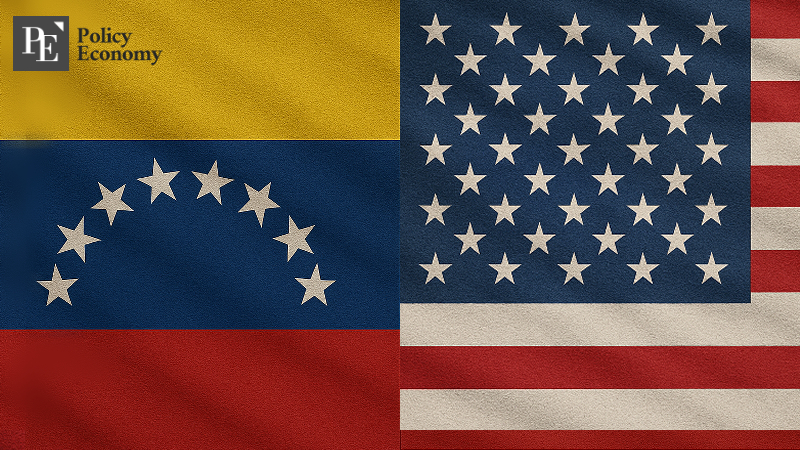
Washington Rejects Maduro’s Exit Proposal
Recently, the United States has formally demanded Maduro’s removal. The Trump administration labeled his long-running rule a “narco-regime” and escalated diplomatic, economic, and military pressure. According to the Associated Press, Maduro’s government proposed a “gradual exit plan” to ease sanctions, but the White House flatly rejected it. The proposal reportedly offered a three-year timeline for Maduro to transfer power to Vice President Delcy Rodríguez in exchange for political immunity. Washington, however, insisted on “a complete transfer of power with no guarantees of immunity,” effectively ending talks.
Most analysts view Caracas’s proposal as a stalling tactic. The country’s military and PDVSA elites, facing the threat of international sanctions, appear intent on delaying the transition to preserve their interests. The Trump administration, convinced that Maduro has no intention of relinquishing real control, imposed secondary sanctions blocking Venezuela’s oil exports and transactions involving its state oil company. As a result, PDVSA’s foreign payment channels and dollar accounts were frozen, slashing hard-currency inflows and shrinking reserves by more than 20% in just one month.
The sanctions have deepened Venezuela’s global isolation. Maduro dismissed reports of his resignation as “fake news,” accusing Washington of waging a “psychological war to divide the people.” Yet with foreign capital shut off and domestic finances exhausted, his grip on power appears increasingly fragile. The U.S. and the European Union have frozen the assets of dozens of Venezuelan officials accused of corruption and human-rights abuses, while Washington imposed additional tariffs on buyers representing 70% of Venezuela’s oil exports. With no viable political settlement in sight, Maduro’s government has tightened internal controls, worsening the spiral of economic collapse and social unrest.
Rising Military Tensions Raise Specter of Ground Operations
In response, the Trump administration has steadily raised military pressure, signaling potential intervention. The Wall Street Journal reported that two U.S. B-1 Lancer strategic bombers took off from Dyess Air Force Base in Texas on the 23rd and flew over the Caribbean near Venezuela—a show of force seen as a warning that any escalation could quickly lead to ground operations. “We are not satisfied with Venezuela for many reasons,” President Trump said, refusing to rule out a military option.
The U.S. Navy has already sunk several Venezuelan shipping vessels near the Caribbean since August, and in September, B-52 bombers and F-35B fighters joined joint drills described by the Pentagon as an “exercise of assault.” Officials warned that “further declarations are unnecessary” and that drug traffickers intercepted during upcoming operations would be “eliminated on sight.” Although critics in Washington have questioned the legal basis for such actions, Republican control of both chambers of Congress leaves little room for restraint.
Maduro, for his part, has declared a wartime footing and vowed to “fight to the end.” In August, he ordered the mobilization of 4.5 million militia members and announced on the 22nd that 5,000 Russian-made Igla-S portable surface-to-air missiles had been deployed to key air defense sites. At the same time, his government has intensified domestic surveillance. According to Spain’s El País, Maduro recently instructed the military to develop a mobile app enabling citizens to “report everything they see and hear in real time.” Officially framed as a “public security initiative,” the program is widely viewed as an attempt to suppress dissent through a digital surveillance state.
Similar Post