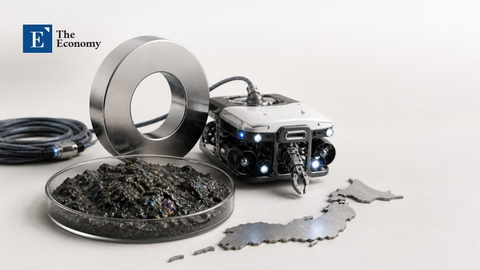
Trump Secures Trade Wins with ASEAN and Japan, but Talks with Korea Remain Stalled

Aoife Brennan is a contributing writer for The Economy, with a focus on education, youth, and societal change. Based in Limerick, she holds a degree in political communication from Queen’s University Belfast. Aoife’s work draws connections between cultural narratives and public discourse in Europe and Asia.
Authored On
Modified
Trump Pushes to Secure Critical Minerals Supply Chain at ASEAN Summit
Japan’s New Prime Minister Sanae Takaichi Aligns with Trump’s Demands
Korea-U.S. Tariff Talks Stall, No Breakthrough at Leaders’ Meeting
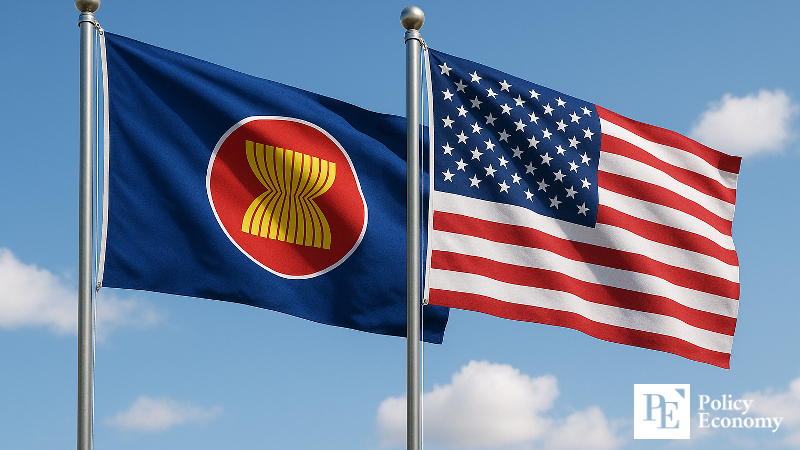
U.S. President Donald Trump demonstrated his strong influence at the ASEAN multilateral summit, achieving notable diplomatic gains such as securing critical mineral supply chains in exchange for tariff reductions. Following smooth trade agreements with both ASEAN nations and Japan, global attention is now focused on the still-unresolved trade negotiations between South Korea and the United States.
U.S. Signs Series of Trade Deals with ASEAN Nations
On the 26th (local time), President Donald Trump attended the ASEAN multilateral summit — marking the first visit by a sitting U.S. president since 2017. During the meeting, he joined Thai Prime Minister Anutin Charnvirakul, Cambodian Prime Minister Hun Manet, and Malaysian Prime Minister and ASEAN Chair Anwar Ibrahim in signing a ceasefire agreement. Under the “Kuala Lumpur Peace Accord,” Thailand and Cambodia agreed to end all hostilities, withdraw heavy weapons from their border regions, and cooperate on landmine removal.
Through a new partnership with Malaysia, Trump also secured a supply chain for critical minerals. As China tightens export controls on rare earth elements and other strategic resources, the U.S. has identified Malaysia — home to the world’s largest rare earth processing capacity outside China — as an alternative supplier. According to the Nikkei, “Trump’s visit led to Malaysia partnering with U.S. companies to accelerate development in the critical minerals and rare earth sectors,” with both sides pledging not to impose restrictions on rare earth magnet exports.
In return, the U.S. agreed to lower tariffs on Malaysian goods. The Straits Times reported that Malaysia secured zero-tariff status for key export items such as semiconductors and pharmaceuticals. Previously, the U.S. had imposed a 19% reciprocal tariff on Malaysian exports as of late August. In addition, Washington reached an agreement with Thailand on critical mineral trade, signed a trade pact with Cambodia, and established trade frameworks with both Vietnam and Thailand.
U.S.-Japan Trade Talks Progress Smoothly
After President Donald Trump secured a series of successful trade agreements across ASEAN, Japan also entered negotiations with Washington. On the 28th, just a week after taking office, Japanese Prime Minister Sanae Takaichi held her first summit with President Trump, reaffirming the bilateral investment commitments established in July. Tokyo withdrew its earlier stance that the deal could be revisited. During the meeting, 21 potential investment projects worth about 400 billion dollars were selected, with several companies signing documents to confirm their investments in the U.S.
The two leaders also signed a joint framework agreement to strengthen cooperation on securing and stabilizing the supply of critical minerals, including rare earth elements. According to the White House, the document—titled “U.S.-Japan Framework: Securing Strategic Minerals and Rare Earth Supply through Mining and Processing”—outlines plans to accelerate joint efforts for stable resource supply and to hold a ministerial meeting on mineral and metal investment within 180 days. The move is widely seen as part of a broader strategy to counter China’s dominance over the global rare earth supply chain.
Korea-U.S. Trade Negotiations Still at a Standstill
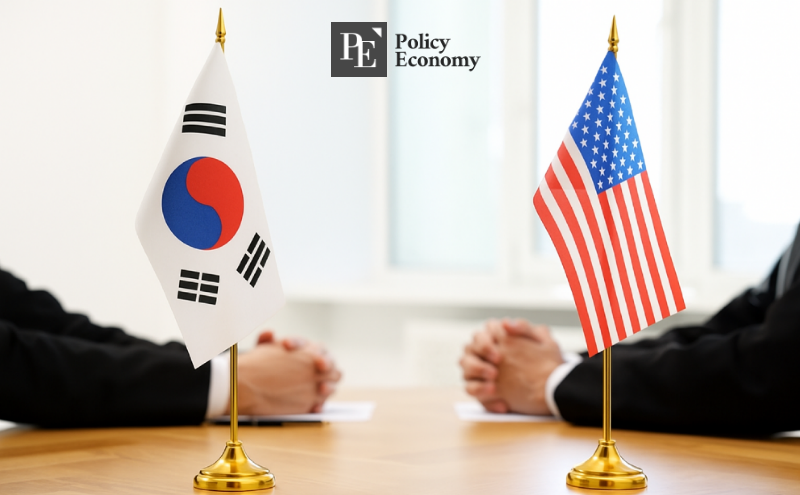
Unlike the smooth progress of U.S.-Japan trade talks, negotiations between South Korea and the United States remain deadlocked. Since July, the two sides have discussed a framework under which Washington would lower tariffs on Korean exports in exchange for Seoul carrying out roughly 350 billion dollars in investments in the U.S. However, the agreement has yet to be formalized in writing, as Korea’s limited foreign reserves make large-scale cash investments difficult.
As of the end of last year, Korea’s nominal GDP stood at 1.87 trillion dollars, while foreign reserves totaled 416 billion dollars — only 22.2% of GDP, significantly lower than other major Asian economies. Seoul reportedly requested an unlimited currency swap as a precondition for the investment, but Washington rejected the proposal, instead demanding a “blank-check” investment similar to Japan’s recent deal with the U.S.
Markets had expected progress during the Korea-U.S. summit on the 29th, but no joint press conference or briefing followed, signaling that no deal had been reached. During preliminary talks, the U.S. proposed a revised plan for Korea to invest 25 billion dollars annually over eight years. Given that Korea can realistically raise only 15–20 billion dollars a year in foreign currency without destabilizing its FX market, analysts view Washington’s proposal as virtually unattainable.
With disagreements persisting, experts say Korea now finds itself in a weaker bargaining position than before. The U.S. recently hinted at shipbuilding cooperation with Japan, narrowing Seoul’s leverage at the negotiating table. On the 28th, Washington and Tokyo signed a Memorandum of Cooperation (MOC) on shipbuilding — a nonbinding but formal agreement signaling intent to strengthen cooperation.
Under the MOC, the two countries agreed to establish a “U.S.-Japan Shipbuilding Working Group,” which will hold its first meeting later this year to discuss shipyard modernization and joint technology development. The agreement outlines five key areas of collaboration: expanding shipbuilding capacity, promoting investment in the U.S. maritime industry, clarifying demand for strategically important vessels, developing shipbuilding talent, and advancing innovation through AI and robotics. The document also includes plans to encourage Japanese investment in the U.S. and pursue unified vessel design standards between the two nations.
Aoife Brennan is a contributing writer for The Economy, with a focus on education, youth, and societal change. Based in Limerick, she holds a degree in political communication from Queen’s University Belfast. Aoife’s work draws connections between cultural narratives and public discourse in Europe and Asia.
Similar Post