G-Star Losing Ground to AGF and Global Rivals — Time to Go Global?

As one of the youngest members of the team, Tyler Hansbrough is a rising star in financial journalism. His fresh perspective and analytical approach bring a modern edge to business reporting. Whether he’s covering stock market trends or dissecting corporate earnings, his sharp insights resonate with the new generation of investors.
Authored On
Modified
Korea’s Game Festival G-Star 2025 Faces Major Publisher Withdrawals
“Is It Just an Indie Showcase Now?” Calls Grow to Change the Venue
AGF Rises on Subculture Game Boom, Poised for Another Strong Year
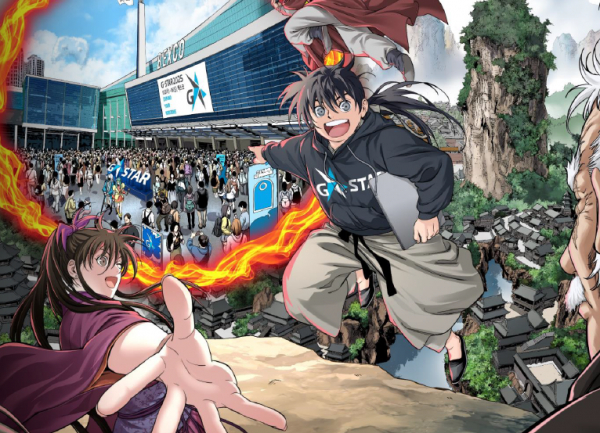
Korea’s largest game exhibition, G-Star, is gradually losing ground. The number of major domestic game companies participating in the event has sharply declined, shrinking its scale and casting doubt on its success. As a result, many in the industry argue that G-Star should consider changing its venue or format to reclaim its original vision as a “global game exhibition.”
Major Game Companies Skip G-Star
According to industry sources on the 30th, G-Star 2025, scheduled for November 13–14, will feature a total of 3,010 booths. Of these, 2,016 booths will be in the BTC (Business to Consumer) section for general visitors. NCSOFT will serve as the main sponsor, joined by Krafton, Netmarble, Neowiz, Gravity, Webzen, Wemade Connect, and Google Korea. The B2B (Business to Business) section will host 904 booths, with participants including Smilegate, Samsung Electronics, and Tencent Korea.
Industry sentiment suggests a grim outlook for this year’s event, as the overall booth count has dropped more than 10% from last year’s 3,359. The absence of several major Korean developers has also raised concerns. Nexon — last year’s main sponsor — along with Pearl Abyss, Lionheart Studio, and HYBE IM, have opted out of G-Star this year. Instead, they are focusing on international showcases such as Gamescom in Germany, ChinaJoy in China, and the Tokyo Game Show (TGS) in Japan, viewing G-Star as offering limited marketing value relative to cost.
As a result, the gap between G-Star and other major global game exhibitions continues to widen. This year’s Gamescom hosted a record 1,568 exhibitors from 72 countries, while TGS expanded 28% year-on-year to 4,159 booths. ChinaJoy also set a new record with participation from 313 companies. In contrast, G-Star continues to struggle to attract major global publishers, diminishing its presence in the international gaming market.
Has G-Star Lost Its Original Purpose?
Some industry observers say G-Star is increasingly becoming a platform for promoting indie games developed by individuals or small teams rather than major studios. Indeed, the event has steadily expanded its indie game section since the COVID-19 pandemic. At last year’s G-Star, many indie developers with titles already listed—or preparing to list—on Steam showcased improved versions of their games based on player feedback.
Smaller developers are also using G-Star as a chance for creative marketing. EpiD Games, the studio behind “Trickcal: Rebirth,” chose not to set up a booth last year; instead, its CEO and vice president drove a campaign vehicle converted from an election truck to meet players directly. The move stood in stark contrast to the “truck protests” that players have used to criticize large studios for poor communication—highlighting a more open, player-focused approach.
However, experts warn that G-Star risks being reduced to a mere indie showcase. They argue it should return to its founding goal as a truly global gaming exhibition and take proactive steps to do so. One industry insider noted, “Although G-Star was launched as an international event, it remains focused mainly on Korean studios rather than global publishers.” The insider added, “The biggest obstacle to globalization is its location—foreign buyers landing at Incheon Airport must take another train to Busan, which makes the venue itself a barrier to the event’s core purpose.”
AGF’s Rapid Growth
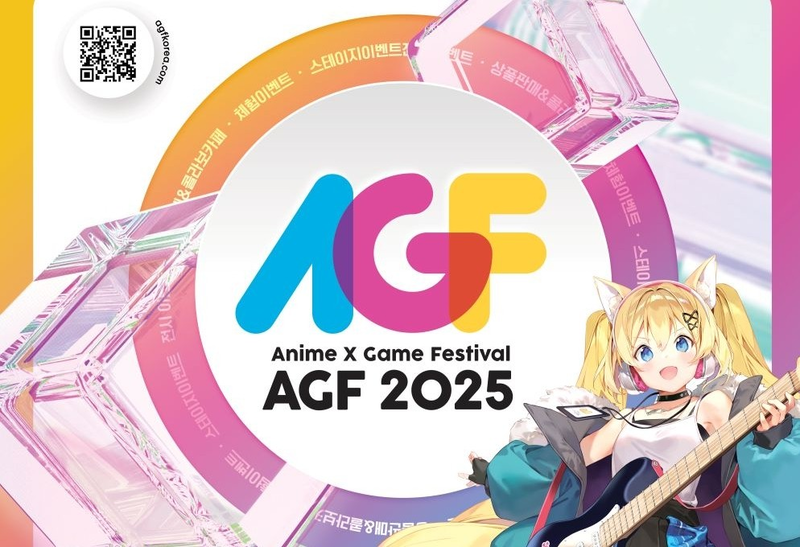
While G-Star’s prominence continues to fade, the Anime X Game Festival (AGF) held at KINTEX in Ilsan is gaining remarkable momentum. First launched in 2018 as an anime-centered subculture event, AGF significantly expanded its gaming presence in 2023 when HoYoverse’s Genshin Impact joined as the main sponsor. AGF 2025 will take place from December 5 to 7, with Smilegate returning as the main sponsor for the second consecutive year. Other official sponsors include Grifline, Studio B-Side, Galaxy Store, and Megabox.
AGF 2024 attracted a record 72,081 visitors, according to the organizing committee, marking its most successful edition to date. With this year’s event extended to three days and more exhibitors participating, attendance is expected to surpass 100,000. Smilegate will showcase its “Kazena” brand with large-scale booths featuring Chaos Zero Nightmare and Future Vision: The Invisible Tomorrow. Studio B-Side will present its new title Star Savior, Hypergryph will feature Arknights: Endfield, while Netmarble, Shift Up, and Neowiz will return with Fate/Grand Order, Goddess of Victory: Nikke, and Brown Dust 2, respectively.
AGF’s success is attributed to its distinctly different purpose from G-Star. While G-Star traditionally serves as a B2C showcase for unveiling new titles, AGF functions as an experiential fan festival focused on existing games and their communities. The event’s cost structure also favors smaller developers. Although booth rental fees are similar to G-Star’s, AGF exhibitors face far lower operational expenses since elaborate booth construction, lighting, and staffing are not required.
As a result, AGF has earned a reputation among indie studios and merchandise vendors as a “small but efficient” festival. Many participants can even recover costs through on-site merchandise sales and fan events. Given the subculture community’s strong enthusiasm for character goods, some exhibitors reportedly earn tens of thousands of dollars in sales during the event. In contrast to G-Star’s marketing-heavy showcase format, AGF has evolved into a “revenue-generating festival” that combines fan engagement with direct commercial success.
As one of the youngest members of the team, Tyler Hansbrough is a rising star in financial journalism. His fresh perspective and analytical approach bring a modern edge to business reporting. Whether he’s covering stock market trends or dissecting corporate earnings, his sharp insights resonate with the new generation of investors.
Similar Post