Vietnam Accelerates $67 Billion North–South High-Speed Rail, Triggering a China–Japan Bidding War

Niamh O’Sullivan is an Irish editor at The Economy, covering global policy and institutional reform. She studied sociology and European studies at Trinity College Dublin, and brings experience in translating academic and policy content for wider audiences. Her editorial work supports multilingual accessibility and contextual reporting.
Authored On
Modified
Streamlined Procedures Draw Foreign Interest
China Pushes a “Railway Alliance” Approach
Japan Counters With High-Quality, Shinkansen-Based Model
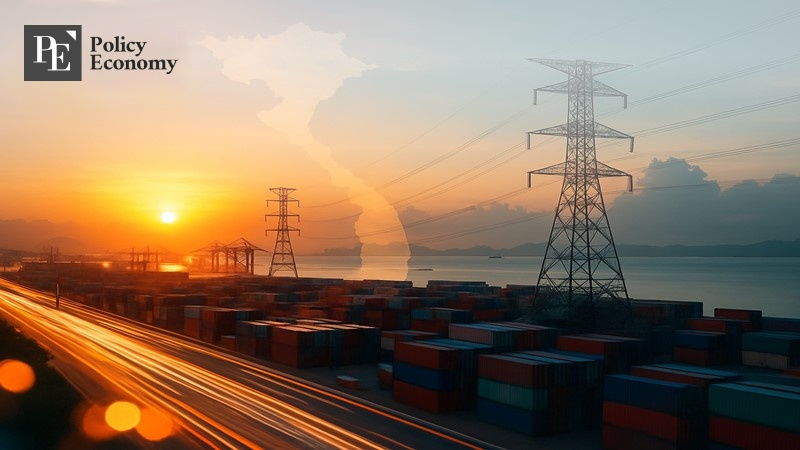
Vietnam is fast-tracking construction of its $67 billion North–South high-speed railway, marking the launch of Southeast Asia’s largest infrastructure project. Originally slated to begin in 2027, the project has been moved up to next year as Hanoi overhauls administrative and financing frameworks. With the government now taking direct control, China is leading the race through its state-owned rail companies, offering integrated financing and construction packages, while Japan is competing with a high-quality model combining Shinkansen technology and official development assistance (ODA)—a contest of speed versus quality.
State-Led Framework With Private-Sector Support
According to Vietnamese business outlet Cafef.vn, the government secured parliamentary approval in November for the $67 billion project and is rapidly advancing preparations. The 1,541 km line will connect Hanoi and Ho Chi Minh City, passing through 20 provinces and including 23 passenger and five freight stations. Designed for speeds up to 350 km/h, the railway will reduce travel time from over 30 hours to roughly five. The government has classified the project as one of “national strategic importance,” pledging to accelerate the process by consolidating administrative, fiscal, and legal approvals.
Initially, construction was set for 2027, with technical standards, financing, and bidding procedures developed in stages. But Prime Minister Pham Minh Chinh formally advanced the groundbreaking to late next year, introducing a nomination-based tender system for key design and supervision contracts and securing full parliamentary approval in May. The Ministry of Justice streamlined review procedures, while the Ministry of Transport aligned the project with the expansion of northern railway networks to maximize schedule efficiency. Analysts view this as part of Hanoi’s push to sustain economic growth through infrastructure-led investment.
Funding arrangements have also taken shape. Up to 30 percent of total costs will be financed through foreign borrowing, with the remainder covered by domestic public investment and local government contributions. Provincial authorities have been tasked with offsetting costs through station-area development and industrial zone projects. Early environmental and social impact assessments are underway to address land acquisition and resettlement, and portions of the defense budget may be tapped for dual-use logistics purposes. The government’s aim is to turn the high-speed line into a catalyst for industrial modernization.
Private capital has entered the picture as well. Vingroup, Vietnam’s largest private conglomerate, established a subsidiary, VinSpeed, in May and proposed completing the line within five years. VinSpeed criticized the limits of a purely state-led model and suggested a hybrid approach combining private financing and technology management. However, the plan lacks specifics on funding, suppliers, and partnerships with international lenders. The government categorized VinSpeed’s proposal as a “supplementary option” but plans to integrate its efficiency-focused framework into the national plan.
China Leverages Political Alignment
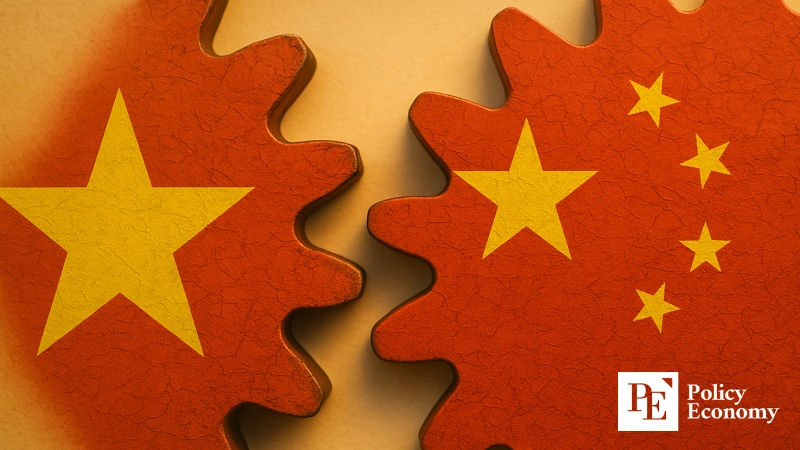
The most likely scenario now under discussion envisions Vietnam leading construction domestically while turning to China for financing and technical support. Multiple Chinese state enterprises have submitted all-in-one packages covering investment, construction, and equipment supply, while Vietnam has opened northern rail links to the Chinese border. Beyond shared socialist governance, the two countries have collaborated on various Belt and Road projects, and observers note that Hanoi sees Beijing’s involvement as a way to secure both stable capital and political backing.
China has pressed its case even at international events. During the Summer Davos Forum, executives from CRRC proposed a long-term partnership spanning high-speed rail, metro, and energy infrastructure, including local manufacturing of rail equipment in Vietnam. Senior officials from CCCC, CREC, and CRCC have since met with the Vietnamese prime minister, publicly expressing intent to participate in the project. Analysts see this as part of Beijing’s broader push to standardize Southeast Asia’s overland transport systems around Chinese specifications.
Vietnam’s parliament has already approved a China-linked railway connecting Hai Phong, Hanoi, and Lao Cai—391 km of track financed partly through Chinese loans. When completed, the line will link China, Vietnam, and ASEAN’s logistics network. Designed to the 1,435 mm gauge and capable of 160 km/h, the route is technically compatible with the planned high-speed system, suggesting a coordinated strategy to integrate both.
Japan Bets on “Quality Infrastructure”
Japan, however, is equally determined to secure the project, promoting its Shinkansen experience as the world’s first commercial high-speed rail. Tokyo argues that adopting a dual-track model—high-speed for passengers and conventional for freight—would give Vietnam both efficiency and cost control. While China emphasizes speed, financing, and political alignment, Japan is positioning safety, quality, and operational expertise as its advantages.
Japan’s approach goes beyond technology transfer, offering bundled ODA loans and technical consulting. This structure allows Vietnam to diversify away from Chinese financing while adopting Japanese standards for rolling stock, signaling, and maintenance. The Shinkansen-based system provides integrated design from braking mechanisms to tunnel engineering—an appealing alternative to fragmented, multi-contractor models.
Within Vietnam’s policymaking circles, some fear that awarding both the northern and main north–south corridors to China could create excessive dependence on a single country for financing, technology, and operations. A partial adoption of Japan’s higher-cost but higher-quality model would preserve flexibility for future metro and airport-linked projects using European or Japanese systems.
Still, Japan’s proposal faces limits. Tokyo’s stricter environmental and social impact requirements could slow ground-breaking, while China continues to court Hanoi with speed, capital, and comprehensive connectivity linking ports, airports, and urban transit. The outcome, analysts say, will hinge less on “who has the better technology” than on “how far Vietnam is willing to diversify from Chinese influence.”
Niamh O’Sullivan is an Irish editor at The Economy, covering global policy and institutional reform. She studied sociology and European studies at Trinity College Dublin, and brings experience in translating academic and policy content for wider audiences. Her editorial work supports multilingual accessibility and contextual reporting.
Similar Post