“Confident in HBM4 Sellout,” Samsung Aims to Expand Market Share Through Aggressive Pricing

Authored On
Modified
Post-Earnings Call Reveals Progress in HBM4 Shipments
Mass Production of Samples Highlights Strengths and Risks of 1c DRAM
Aggressive Pricing Expected Within Limits of Loss Minimization
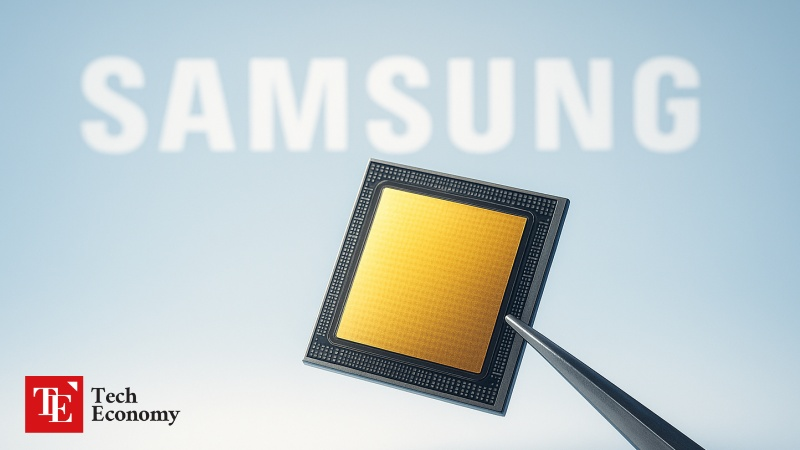
Samsung Electronics has officially confirmed that it has shipped samples of its next-generation High Bandwidth Memory (HBM4), raising expectations across the semiconductor market. During its third-quarter earnings call, the company acknowledged lowering prices for HBM3E and hinted at adopting a similar strategy for HBM4. Analysts said Samsung’s advanced process yield has recently stabilized, giving it the pricing flexibility to compete more aggressively.
Dispelling Rumors of HBM4 Rejection
According to the semiconductor industry, Kim Jae-jun, Executive Vice President of Samsung Electronics’ Device Solutions (DS) Memory Division, said during a Q&A session following the company’s third-quarter earnings call on October 30 that “HBM4 samples have been shipped to all customers, and we have completed preparations for mass production in line with their project schedules.” He added, “Our 2025 HBM production plan has been set at a significantly higher level than this year, with confirmed demand already secured and additional orders continuing to come in. We are internally reviewing the possibility of expanding production capacity.”
In the same earnings call, Samsung discussed market reactions to both the HBM3E and HBM4 product lines. The company revealed it is supplying 12-layer HBM3E at roughly 30% lower prices than competitor SK hynix and stated that “HBM4 will follow a similar large-volume pricing strategy.” Industry observers believe that if Samsung secures HBM4 supply contracts next year, it could distribute shipments between Nvidia and AMD, challenging SK hynix’s dominance in the AI memory segment.
The announcement also helped calm market jitters. Just three days earlier, an online outlet reported that Samsung had “failed Nvidia’s HBM4 qualification test,” sending its stock price down to about $71 in after-hours trading. The article was deleted within minutes, but the damage to investor sentiment was already visible. Following Samsung’s confirmation that HBM4 samples had been shipped, shares rebounded sharply — closing at $74.36 on October 30, up 3.58% from the previous day, and adding another 3.27% the following session.
By officially confirming shipments, Samsung effectively quashed the HBM4 rejection rumors while reinforcing both its technological credibility and supply reliability. Kim said, “HBM4 was developed from the start based on customer performance requirements and meets all targets, including speeds above 11 Gbps and low power consumption.” Analysts interpreted this as a signal that Samsung’s HBM4 samples for Nvidia match or exceed SK hynix’s HBM3E in performance. Given soaring demand for AI accelerators and high-performance computing (HPC) GPUs, HBM4 is expected to become a key growth driver for Samsung’s DS division.
Balancing Technical Risk and Quality Assurance
This optimistic tone contrasts sharply with the skepticism that surrounded Samsung just a month ago. In early September, reports surfaced that the company was mass-producing roughly 10,000 HBM4 wafers — an unusually large sample batch. While multiple customers require varied specifications for voltage and packaging, many saw the volume as an indication that yields were still unstable. Analysts said the scale reflected Samsung’s attempt to “produce enough wafers to secure a sufficient number of qualified dies.”
The core issue centered on process choice. Unlike SK hynix and Micron, which are building HBM4 on proven 1b DRAM used for HBM3E, Samsung opted to use the newer 1c DRAM as the front die. While 1b has already been validated for mass production, 1c remains in an early stage, making it less favorable for stacking and back-end processes. The large sample batch was seen as a hedge against this disadvantage — an effort to ensure that enough high-quality parts could be selected for customer evaluations.
This led to speculation that Samsung might be reviving its familiar “price war” strategy. Because HBM4 carries higher base-die costs and manufacturing complexity, it is inherently expensive. Some analysts suggested Samsung could slash its price premium by up to 20% to gain a foothold in Nvidia’s supply chain. Such a move would turn the HBM4 market into a contest not only of technology but also of endurance — a battle of margins and manufacturing scale.
Low-Price Strategy Possible for HBM4
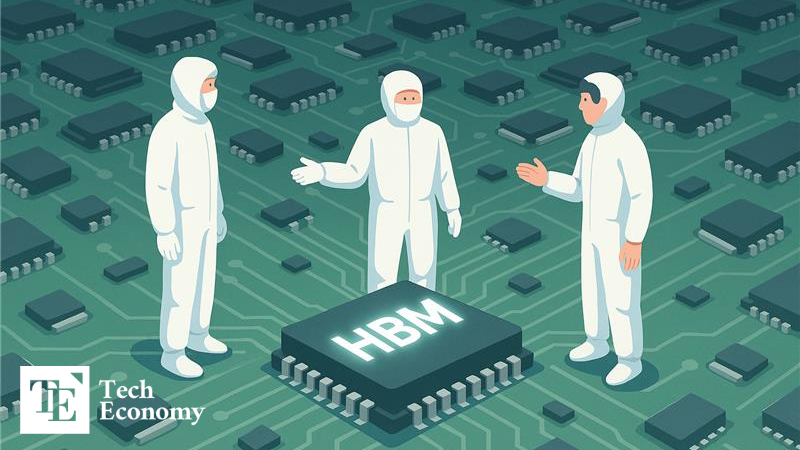
Samsung added weight to those projections when Kim stated during the earnings call that “HBM3E is being supplied at about 30% below previous pricing levels.” This signaled a shift in priority from short-term profit to market-share expansion. As the AI chip boom drives unprecedented HBM demand, Nvidia’s dominant bargaining power has intensified price competition among memory suppliers. With yields now stabilizing, analysts believe Samsung is better positioned to adopt an assertive pricing approach.
At the Semiconductor Exhibition (SEDEX) 2025 in Seoul earlier this month, Samsung showcased a working HBM4 unit and revealed that its logic-die yield had reached 90%. Considering that the industry typically views yields in the 60% range as viable for mass production, Samsung’s process maturity now appears highly competitive. With 11 Gbps pin speeds, a data pathway doubled to 2,048 connections, a 1c DRAM process, and a proprietary 4 nm foundry base die, the company has built the technical foundation to maintain performance while cutting costs. Lower wafer costs, in turn, could allow HBM4 to achieve the same price advantage that made HBM3E so disruptive.
Beyond pricing, Samsung’s approach reflects a broader bid to reshape market leadership. Industry forecasts project the HBM market to reach as much as $50 billion next year, with Samsung’s share potentially rising from 17% to around 30%. Still, analysts urge caution. Goldman Sachs expects intensified competition to drive overall HBM prices down by roughly 10% in 2025, warning that “a larger market does not necessarily mean higher margins.” The firm added that pricing power is “shifting from manufacturers to buyers such as Nvidia,” suggesting that Samsung’s discount strategy may be less about chasing short-term profits and more about securing leverage in future negotiations.
Similar Post