“China’s CXMT Takes Aim at South Korea: SK Hynix-Level DRAM Performance Signals Market Disruption”

Authored On
Modified
Rapid transition to DDR5–LPDDR5–LPDDR5X
Government backing fuels talent shifts and industrial momentum
IPO seeks self-reliance in AI memory manufacturing
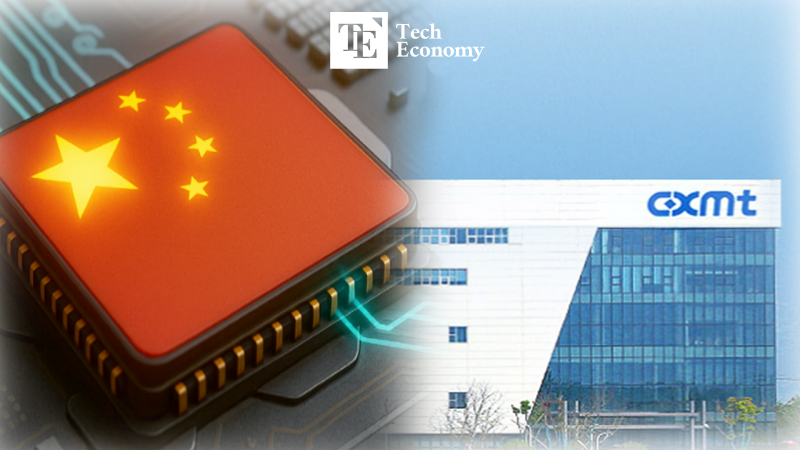
China’s Changxin Memory Technologies (CXMT) has declared the successful development of a low-power DDR5X DRAM on par with SK Hynix, sending shockwaves through the global memory market. The new module—boasting up to 30% higher power efficiency—represents a leap from China’s LPDDR4-dominant framework to a high-performance, low-power ecosystem. The announcement has rattled the long-standing triopoly of Samsung, SK Hynix, and Micron, with analysts suggesting that “once speed parity is reached, the gap becomes largely symbolic.” The industry increasingly views China’s technological catch-up as a matter of time.
AI-driven demand accelerates memory realignment
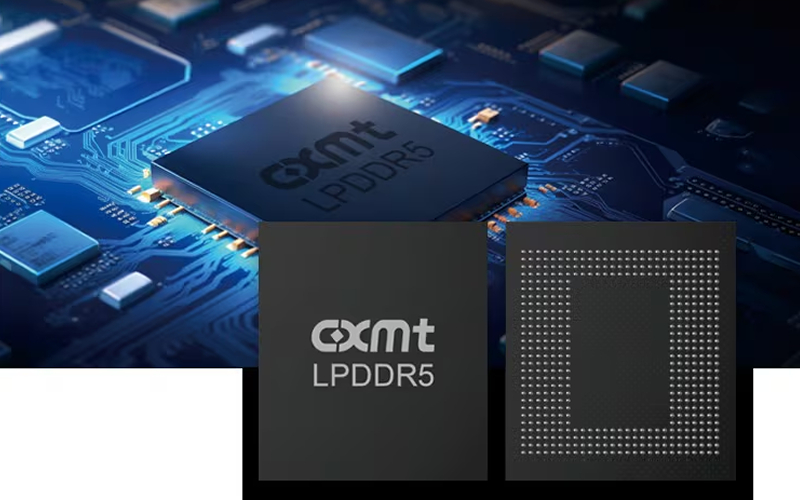
According to DigiTimes on the 3rd, CXMT announced at the IEEE ASIC Conference 2025 in Kunming that its latest LPDDR5X module achieved a transfer speed of 10,667 Mbps—matching SK Hynix’s flagship mobile DRAM launched in October 2024. Following the mass production of 8,533 Mbps and 9,600 Mbps models earlier this year, CXMT has now completed a full lineup including 12Gb and 16Gb dies, 12GB–24GB chip solutions, and 16GB–32GB LPCAMM modules.
Although CXMT has not disclosed production yields or shipment volumes, the company has long supplied memory chips to domestic smartphone giants such as Xiaomi and Huawei, making it likely that LPDDR5X chips will follow the same distribution channel. The emergence of a high-end, domestically produced DRAM alternative is especially significant for China’s AI and premium mobile sectors, where U.S. export controls have made foreign chip procurement uncertain.
This milestone signals CXMT’s transition from commodity DRAM into the premium mobile memory segment. Market research firm Counterpoint predicts the company’s global market share will rise from 3% in 2024 to 5% this year and reach 10% by 2027. If Chinese flagship devices adopt LPDDR5X by year-end, the traditional triopoly of Samsung, SK Hynix, and Micron could evolve into a “3+1” competitive landscape. Analysts now expect China’s rapid progress in low-power DRAM to accelerate broader market restructuring.
Yet challenges remain. CXMT must still obtain JEDEC standard certification, secure approvals for mobile SoC integration, and stabilize production yields before joining the global supply chain. Nonetheless, by publicly presenting its 10,667 Mbps figure, China has already narrowed what had long been seen as an unbridgeable performance gap. Korean chipmakers now face renewed pressure to widen the lead through LPDDR6 and next-generation HBM3E development, while CXMT prepares to leverage this breakthrough to expand its global footprint.
China’s “Semiconductor Rise” gains visible results
Opinions differ over the true extent of CXMT’s technological progress. Skeptics argue the announcement focuses more on speed metrics than verified mass-production data. Most information released so far relates to transfer rates, capacities, and product configurations, while production stability remains unclear. They also note that incidents like the 2023 Samsung design leak suggest that some of CXMT’s gains may have been externally assisted, cautioning against declaring the technology gap closed.
Others counter that China’s catch-up is already on track—and that its approach can be summarized as one of “money and time.” CXMT’s rise is seen as a direct product of Beijing’s “semiconductor revival” initiative, under which central and local governments co-fund R&D and expansion through state-backed investment vehicles. Subsidies have supported the addition of HBM lines in Hefei and Beijing and the construction of new packaging facilities in Shanghai, reflecting a state-driven “scale-over-innovation” strategy designed to win through capacity and speed.
Such capital infusion accelerates progress far faster than organic technology accumulation. Because government subsidies absorb production costs and depreciation, CXMT can operate facilities at a loss while maintaining market presence. The state effectively shoulders R&D risk, allowing new models to reach the market before yield optimization. This “public capital + technical manpower” model enables China to release new products at a faster cadence regardless of profitability.
CXMT’s growth thus reflects the synergy between massive funding and industrial policy. The central government designates semiconductors as a strategic sector, local governments offer land and tax incentives for fab construction, and state banks finance R&D while private investors anticipate IPO gains. The resulting capital ecosystem attracts talent and accelerates technology diffusion, placing Korean chipmakers—long the global leaders—back on a competitive proving ground defined by scale and policy coordination.
IPO momentum and looming DRAM oversupply
Riding this momentum, CXMT is now preparing to enter China’s capital market. The company has selected China International Capital Corporation (CICC) and CITIC Securities as lead underwriters and plans to list on the Shanghai Stock Exchange as early as the first quarter of next year, seeking to raise up to $5.6 billion. Proceeds will fund expansion of its AI memory and HBM lines. According to the China Securities Regulatory Commission, CXMT recently completed its employee representative election and finalized its state shareholder restructuring, entering the final stage of the IPO process.
The listing is viewed as more than a fundraising event—it is a strategic move toward “AI memory sovereignty.” As U.S. export restrictions squeeze Chinese tech giants such as Huawei, Alibaba, and Baidu, CXMT aims to localize advanced DRAM and HBM production. The company has already supplied Huawei with HBM3 and plans to commercialize HBM3E by 2027, positioning China for full memory self-sufficiency in the AI semiconductor supply chain.
This vision has strengthened CXMT’s investment capacity. Market research firm TechInsights estimates its 2023–2024 capital expenditures at $6–7 billion, with spending expected to rise another 5% this year. Once listed, CXMT would complete China’s vertically integrated semiconductor chain—spanning R&D, design, packaging, mass production, and financing—potentially shifting part of global price-setting power toward Beijing.
That prospect explains growing concern over a DRAM supply glut next year. While AI-related chip demand has kept prices elevated through late 2025, CXMT’s capacity expansion could trigger oversupply in 2026. The company’s strategy prioritizes market share over profitability, and its willingness to undercut prices poses a direct threat to the premium DRAM margins long dominated by Samsung and SK Hynix. Analysts see the upcoming IPO as China’s declaration of intent: to challenge Korea’s technological leadership through the combined force of capital and state-backed policy.
Similar Post