Crisis in Indian Agriculture Stalls U.S.-India Trade Talks: “To Cut 50% Tariff, India Must Open Its Agricultural Market”

Authored On
Modified
Stalled U.S.-India Trade Negotiations
Disputes Over Russian Oil Imports and Agricultural Market Access
Agriculture: A Politically Symbolic and Highly Sensitive Sector
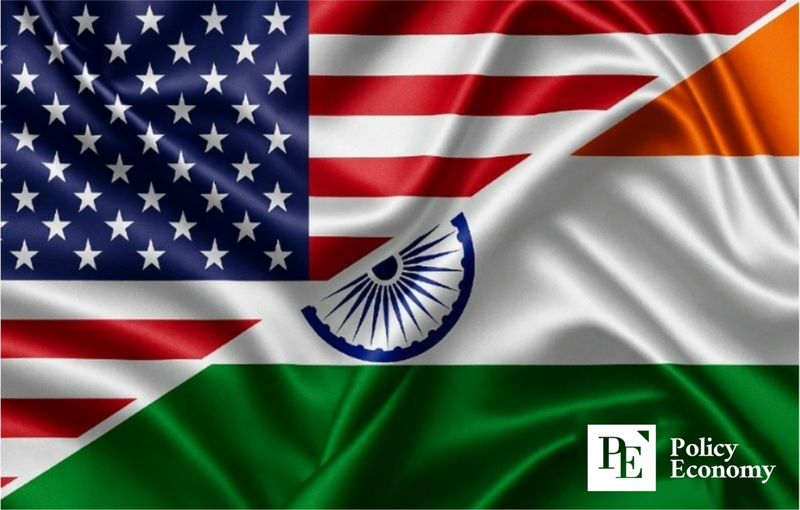
India’s agricultural sector is taking a direct hit from climate change and market stagnation. Prices of key crops have collapsed amid repeated production crises, driving farmers’ discontent to a breaking point. For the Indian government, currently engaged in tariff negotiations with the United States, this presents a dilemma between “protecting domestic agriculture” and “ensuring trade survival.” Yet, to avoid steep tariffs, New Delhi may have little choice but to make the politically charged decision of opening its agricultural market to American products.
Soybean Output Falls but Prices Still Drop, Saffron Farming in Crisis
The Trump administration has made clear that reducing the 50% tariff would require India to halt Russian oil imports and lower trade barriers on U.S. agricultural goods such as soybeans, corn, and dairy products. Soybeans, in particular, have become a priority since China—formerly the largest foreign buyer of U.S. crops—shifted purchases to South America earlier this year. Yet, opening India’s farm market is easier said than done. Despite successive poor harvests, wholesale soybean prices in government-supported Indian markets have fallen by more than 10% since mid-August. Some analysts warn that if India concedes to U.S. demands to cut import duties or relax its ban on genetically modified soybeans as part of a trade agreement, domestic prices could plunge even further.
Saffron farming faces a similar plight. Production of saffron—the world’s most expensive spice—has sharply declined due to climate change, devastating traditional farming communities. Kashmir, the world’s second-largest saffron-producing region after Iran, accounts for 90% of India’s output. However, cultivation area has shrunk from 5,700 hectares in the mid-1990s to 2,400 hectares in 2019, while annual production has dropped from 16 tons to 2.6 tons. In some regions, harvests have plunged to just 30% of normal levels, triggering a wave of bankruptcies among saffron growers. Under these conditions, opening the market to U.S. agricultural products would likely provoke intense backlash from farmers, heighten social costs, and trigger a chain reaction of regional economic downturns.
Deepening Dilemma Over Agricultural Market Liberalization
India also remains adamant about not yielding on dairy products, the sector the U.S. has most aggressively targeted for liberalization. Washington has demanded full market access for American dairy and agricultural goods, but New Delhi has staunchly refused. Moreover, India requires stringent veterinary certification for imported U.S. milk—mandating proof that it does not come from cows fed with meat, blood, or other animal-based feed. India insists this condition stems from Hindu religious and cultural norms, describing it as a “non-negotiable red line.”
Economically, India is in no position to liberalize its dairy sector. The State Bank of India (SBI) estimates that opening the market to U.S. dairy products could inflict annual losses of about $123 billion, with domestic milk prices falling by at least 15%, effectively pushing small dairy farmers out of business.
According to India’s Ministry of Commerce and Industry, agriculture—including dairy—accounts for 16% of the nation’s GDP. With roughly 70% of the population directly or indirectly dependent on farming, the political stakes tied to the “farmer vote” remain extremely high. In September 2020, the Bharatiya Janata Party (BJP) passed a sweeping agricultural reform law aimed at liberalizing crop trading, price guarantees, and essential food management. However, facing massive farmer protests, Prime Minister Modi was forced to repeal the law just 14 months later. The reform had sought to shift government-controlled distribution and price-setting mechanisms to a market-based system, but intense resistance from farmers left Modi with no choice but to capitulate.
Experts: “India’s Agricultural Market Opening Inevitable”
Although fierce opposition from Indian farmers suggests that mutually acceptable terms may take time, many experts believe India will ultimately have to liberalize agricultural imports. Analysts argue that New Delhi’s deliberate delay stems from its recognition that Washington views India as an essential counterbalance to China in the Indo-Pacific region. From the U.S. perspective, India is vital both as a military partner against China and as a potential manufacturing alternative to it. Within the BRICS bloc—comprising Brazil, Russia, India, China, and other emerging economies—India continues to vie with China for leadership.
However, given the United States’ overwhelming military and economic leverage, many expect India will eventually concede, as Washington has repeatedly used such leverage to secure its national interests. The pressure tactics that forced key U.S. allies—including South Korea, Japan, and the European Union—to make massive investments, expand market access, and adopt U.S.-friendly policies in digital industries are cited as precedents.
According to Indian media outlet Mint, ongoing negotiations now center on reducing U.S. tariffs on Indian goods from the current 50% to around 15–16%. In exchange, India is reportedly considering increased imports of non-genetically modified U.S. corn and soybeans. Both sides are also discussing the establishment of a mechanism to periodically review tariff levels and market access. Despite the potential political backlash, New Delhi appears to be stepping back.
There is also growing speculation that India may agree to gradually scale down its imports of Russian crude. Diplomatic sources say President Trump has reaffirmed Prime Minister Modi’s pledge to curb purchases of Russian oil. On October 21 (local time), during a Diwali celebration at the White House, Trump told reporters he had received a “firm commitment” from Modi to phase out Russian oil imports—reiterating Modi’s earlier assurance, made in a phone call on October 15, that India would halt purchases of Russian crude.
Similar Post