Surging Power Bills Squeeze U.S. Consumers: Data Center Expansion and Aging Grids Fuel “Electricity Inflation”

Authored On
Modified
Electricity rates in New Jersey rise 19% year-on-year
Power bills soar in neighborhoods near data centers
Aging transmission networks add to the burden
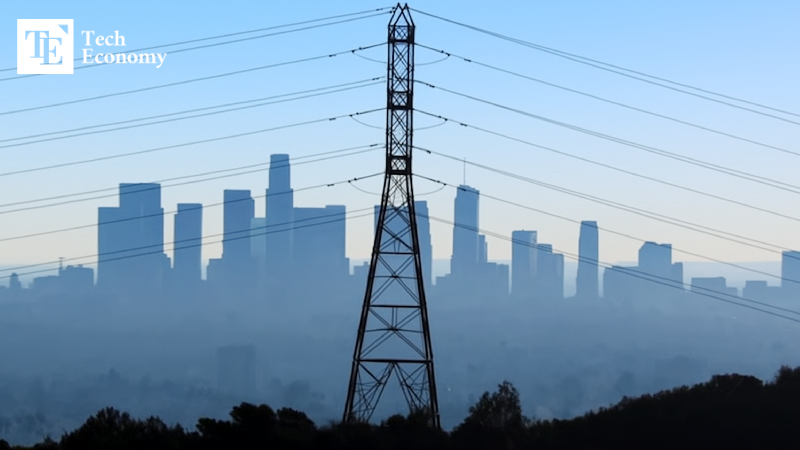
Electricity costs across the United States are climbing steeply. The surging power demand from artificial intelligence (AI) data centers has become a direct driver of higher utility bills, while the aging transmission and distribution infrastructure is amplifying cost pressures. Together, these factors are exerting strain on industrial competitiveness and the broader inflation structure, emerging as a new source of instability for the real economy.
Sharp Rise in Power Bills Across Key U.S. Regions
According to the Wall Street Journal (WSJ) on November 2 (local time), electricity rates in major U.S. regions have risen sharply, with New Jersey’s average retail electricity rate in August jumping 19% from a year earlier—far above the national average of 6%. In particular, wholesale electricity prices in the eastern region managed by the grid operator PJM Interconnection have climbed significantly, raising the likelihood that these costs will soon be passed on to consumers once state regulators approve rate adjustments. Meredith Pauly, an energy economist at the University of California, Berkeley, noted, “Electricity has almost no substitutes, leaving consumers with little choice.”
The spike in power bills is rippling through households, businesses, and even the political arena. The National Energy Assistance Directors Association (NEADA) projects that electricity shutoffs due to unpaid bills will reach 4 million cases this year, up 33% from 2023. The issue has become a flashpoint in the New Jersey gubernatorial race: Republican candidate Jack Ciattarelli has pledged to lower costs by withdrawing from the state’s carbon reduction program, while Democratic candidate Mikie Sherrill has vowed to declare an electricity emergency and freeze rates. The WSJ reported, “The electricity price crisis is significantly reshaping voter perceptions in this election.”
AI Reshapes the U.S. Electricity Landscape
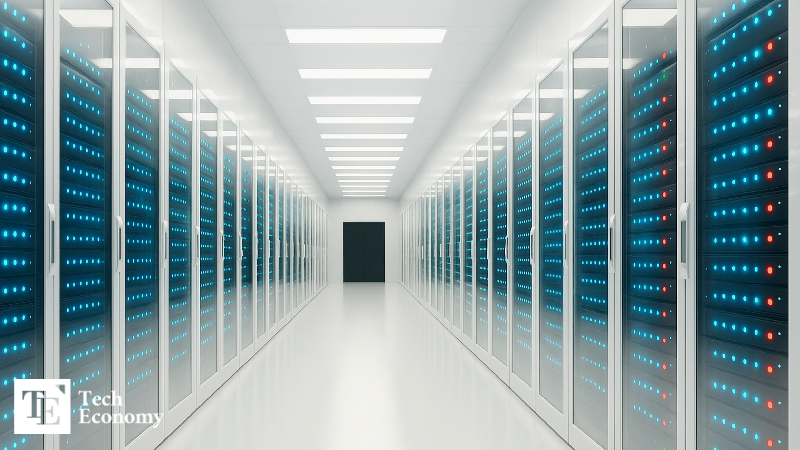
The primary force driving U.S. electricity prices higher is the proliferation of data centers. Bloomberg analyzed electricity prices in seven major U.S. regions and found that areas dense with data centers experienced the steepest increases: Baltimore saw a 125% rise, Buffalo 197%, Columbus 110%, while San Francisco and Minneapolis rose 65% each.
Among roughly 25,000 nodes surveyed by Bloomberg, some saw power prices soar as much as 267% compared to five years ago. More than 70% of the nodes with higher prices were located within 50 miles (about 80 km) of a data center—indicating a strong correlation between data center power demand and local price spikes. Bloomberg noted, “The massive electricity consumption of data centers is rapidly driving up prices,” adding that “consumers already burdened by higher food and housing costs are facing even greater financial pressure.”
Eastern grid operator PJM reported that surging data center development drove consumer costs across its coverage area—from Illinois to Washington, D.C.—up by more than $9.3 billion between June 2024 and May 2025. In Baltimore, capacity auction prices hit record highs, pushing average monthly bills up by $17, with an additional $4 increase expected by mid-2026. In Maryland, utility companies have even added staff to handle a surge in customer complaints over soaring bills. Meanwhile, states such as Oregon and Wisconsin, along with local regulators, are considering laws and special tariffs requiring data centers to shoulder a greater share of costs as part of broader electricity price management efforts.
Data center energy demand is projected to rise even more steeply. Globally, such facilities are expected to account for over 4% of total electricity consumption by 2035—roughly equivalent to the national usage of China, the United States, and India combined, ranking fourth worldwide. In the U.S. alone, data-related electricity demand is forecast to more than double by 2035, accounting for about 9% of total national consumption.
Aging Infrastructure and Climate Disasters Push Costs Higher
Another major driver of soaring U.S. electricity bills is the rising cost of maintaining and upgrading the country’s aging transmission and distribution infrastructure. A study by Lawrence Berkeley National Laboratory and Brattle Consulting analyzing electricity market data from all 50 states between 2019 and 2024 found that the prices of essential components—such as transmission lines, utility poles, and transformers—have risen far faster than overall inflation over the past five years. U.S. utilities are now spending more than $10 billion annually replacing outdated equipment. The country still relies on a 110-volt system, which causes significant energy losses during transmission. As these losses grow, additional power generation is required to compensate, which in turn drives up electricity rates.
Climate-related disasters have further escalated infrastructure costs. For instance, Hurricane Beryl last year crippled Houston’s power grid, leading to months of costly repairs. In the western states, wildfire risks have prompted the underground burial of transmission lines, with the resulting costs directly reflected in higher power bills. In California, more than 40% of the electricity price increases over the past five years stemmed from wildfire-related infrastructure upgrades.
Research shows that the generation costs of renewable sources such as wind and solar, as well as fossil fuels like natural gas and coal, have actually declined 35% over the past two decades—from $234 billion in 2005 to $153 billion in 2024. However, during the same period, the costs of building and maintaining transmission and distribution networks have tripled and doubled, respectively.
Lawrence Berkeley National Laboratory further noted that in states where renewable portfolio standards (RPS) have been strengthened—such as Maine, New Jersey, and Maryland—electricity prices rose by about 1 cent per kilowatt-hour between 2019 and 2024. It also pointed out that in states like California and Maine, expanded subsidies for solar installations have increased the number of self-generating consumers, thereby shifting fixed costs to remaining ratepayers and contributing to higher per-unit rates. The researchers concluded, “If AI and data center expansion accelerate new transmission and distribution investments, further rate increases will be inevitable,” while adding, “However, past trends cannot be assumed to persist indefinitely.”
Similar Post