China Condemns Japan’s “One-China Violation” as Anti-Japan Sentiment Deepens Tensions

Stefan Schneider brings a dynamic energy to The Economy’s tech desk. With a background in data science, he covers AI, blockchain, and emerging technologies with a skeptical yet open mind. His investigative pieces expose the reality behind tech hype, making him a must-read for business leaders navigating the digital landscape.
Authored On
Modified
Beijing denounces Taipei contact as a diplomatic provocation
Frosty APEC encounter underscores “smile-free diplomacy”
Anti-Japan sentiment surges through popular culture
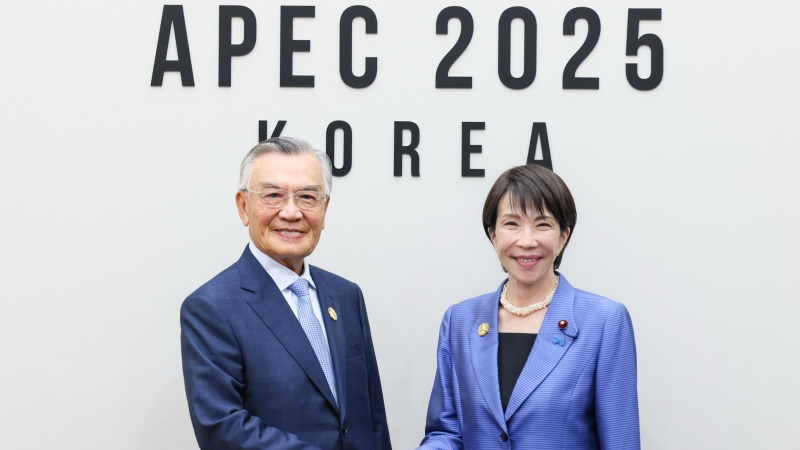
Tensions between China and Japan have sharply escalated after Prime Minister Sanae Takaichi met with Taiwan’s delegation during the APEC summit, drawing an official protest from Beijing. China’s Ministry of Foreign Affairs accused Japan of “violating the One-China principle,” while Tokyo maintained that the meeting was unofficial and urged against overinterpretation. With the leaders’ 30-minute meeting ending without a joint statement, prospects for political trust between the two countries appear increasingly bleak.
Beijing lodges protest through diplomatic channels
On the 1st, China’s foreign ministry released a statement condemning the meeting, saying, “Japan’s leader insisted on meeting with Taiwan authorities during APEC and publicly promoted it on social media—seriously violating the One-China principle, the spirit of the four political documents between China and Japan, and the basic norms of international relations.” The ministry added, “This sends a severely wrong signal to pro-independence forces in Taiwan. We have lodged a stern protest with Tokyo.”
The remarks came shortly after reports surfaced that Prime Minister Takaichi had met Taiwan’s senior presidential adviser Lin Hsin-yi for 25 minutes on the sidelines of the APEC summit in Gyeongju, South Korea, and shared photos of their handshake on X (formerly Twitter), writing that she hoped “Japan-Taiwan cooperation will deepen.”
China perceived the gesture as an affront. The foreign ministry warned that Japan “bears historical guilt for its colonial rule over Taiwan and should act with greater prudence.” State-run media outlets described the meeting as a “diplomatic discourtesy at APEC,” accusing Japan of “using Taiwan and the U.S. to counterbalance China.” Online platforms quickly amplified nationalist anger, with users condemning Tokyo for “openly flaunting friendship with Taipei.”
Tokyo sought to deescalate tensions, emphasizing that the encounter was informal. “It was merely a brief, unofficial conversation,” said Takaichi, while Japan’s Foreign Ministry characterized it as “a routine exchange related to APEC discussions.” Chinese media dismissed these explanations as “excuses,” further inflaming public outrage. Observers view the episode as a reflection of the deep-rooted dispute between Beijing and Tokyo over Taiwan rather than a mere diplomatic misstep.
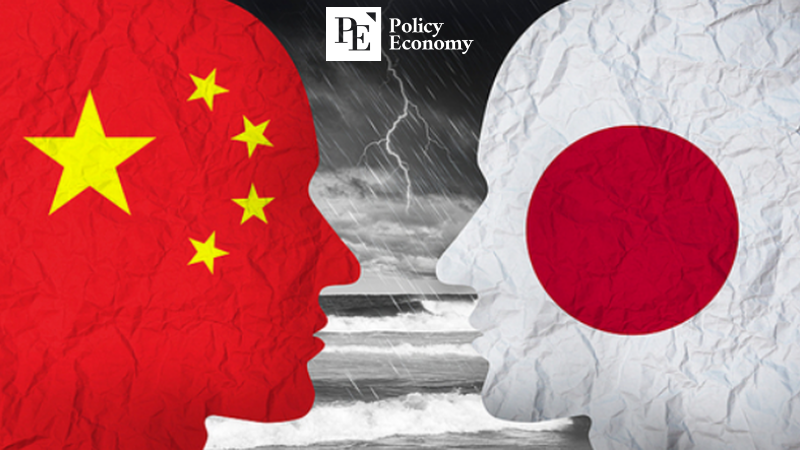
Diplomatic channels remain frozen
The icy mood extended to the bilateral summit between Takaichi and Chinese President Xi Jinping on October 31 at the Kolon Hotel in Gyeongju. The 30-minute meeting was limited to restating each side’s position on long-standing disputes—Taiwan, the Senkaku/Diaoyu Islands, and semiconductor export controls—without substantive progress. No joint statement was issued afterward, underscoring the chill in relations.
China held the meeting at its own delegation’s hotel to assert control over the proceedings. Choosing Xi’s residence, the Kolon Hotel, as the venue was a calculated move to highlight Beijing’s protocol advantage as the “inviting party.” Prime Minister Takaichi entered the site despite this disadvantage and refrained from responding to any questions from reporters. However, she allowed media access by declining to use barriers that would normally block officials’ movements from view. These details vividly captured the tension of a diplomatic standoff in which both sides were acutely aware of each other yet determined not to yield ground.
Xi stated, “China is willing to maintain communication so that relations move in the right direction,” but immediately stressed the need to “clarify issues of history and Taiwan.” He added that Japan should not forget the spirit of the Murayama Statement, which acknowledged wartime aggression—a pointed reminder given Takaichi’s past criticism of that declaration. The Japanese leader responded by reaffirming a “comprehensive strategic partnership” while directly raising concerns over China’s human rights record, the Senkaku dispute, and rare-earth export controls.
Analysts described the meeting as largely symbolic. Japan pressed for the protection of its citizens in China and relief from export restrictions, while China accused Japan of aiding Washington’s containment strategy. Diplomats concluded that the summit served more as a public posture for domestic audiences than a genuine attempt at reconciliation.
Rising hostility toward Japanese nationals in China
China’s long-standing resentment over Japan’s wartime history is increasingly manifesting in public and cultural arenas. A notable example is the recent box-office hit '731', directed by Zhao Lingshan, dramatizing human experimentation by the Japanese military during World War II. Released on September 18—China’s “National Humiliation Day” marking the Manchurian Incident—the film was framed as “patriotic cinema.” Zhao stated that the movie aimed to “turn theaters into courts of justice,” explicitly invoking nationalist sentiment.
The film sold out across major cities during its opening week. State media such as Global Times and China Daily hailed it as “a work of moral reflection,” reporting that it surpassed 'Avengers: Endgame' with first-day earnings of $42 million. Several similar anti-Japanese war films—including 'The Nanjing Photo Studio', 'Dongjidiao', and 'Mountains as Witness'—have since been released, further intensifying anti-Japanese sentiment through pop culture.
However, the surge in patriotic marketing has also fueled violent incidents. In Suzhou, a Japanese woman and her child were pelted with stones, while in Shenzhen, a Japanese elementary student was fatally stabbed on the way to school. Japanese schools have since instructed students to remain indoors, and the Japanese Embassy in Beijing issued safety advisories to expatriates. The string of attacks has alarmed Japanese media, which warn that “anti-Japan sentiment in China is escalating from rhetoric to violence.”
Observers argue that cultural hostility has compounded diplomatic paralysis. “Japan cannot easily issue conciliatory messages while its citizens face growing hostility,” one diplomatic source said. “Although economic and trade exchanges will likely continue, political trust has collapsed—leaving the two nations effectively in a state of informal estrangement.”
Stefan Schneider brings a dynamic energy to The Economy’s tech desk. With a background in data science, he covers AI, blockchain, and emerging technologies with a skeptical yet open mind. His investigative pieces expose the reality behind tech hype, making him a must-read for business leaders navigating the digital landscape.
Similar Post