TSMC Rejects 50% U.S. Production Demand, Exposing Taiwan’s Fragile “Silicon Shield” Myth

Authored On
Modified
“TSMC Is a National Strategic Asset” Sparks Backlash
U.S. CHIPS Act Strategy Faces Pushback and Policy Reassessment
Taiwan’s Semiconductor Security Concept Faces Its First Real Test
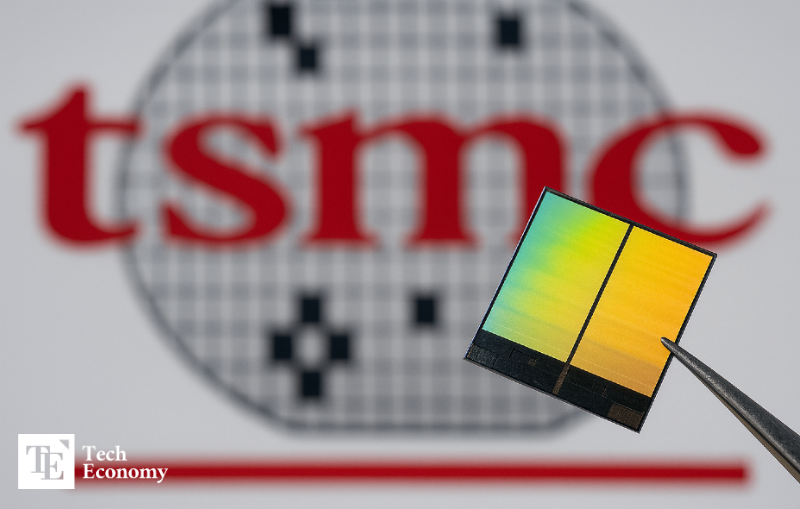
Taiwan’s TSMC has openly resisted Washington’s call to produce half of its semiconductors in the United States, intensifying debate over Taiwan’s so-called “Silicon Shield.” The Taiwanese government declared that it has no intention of complying with U.S. pressure, defining its domestic chip industry as a core pillar of national security. Meanwhile, the U.S. has accelerated efforts to build alternative production capacity, backed by large-scale investment and tax incentives. Experts argue that technology alone cannot guarantee security, saying the standoff has become a critical test of Taiwan’s semiconductor sovereignty strategy.
The “Silicon Shield” Role Comes to the Fore
According to Taiwan’s foreign and trade circles on the 3rd, Vice Premier Cheng Li-jun stated upon returning from the fifth tariff negotiation with the U.S. on the 1st that “Taiwan never agreed to produce semiconductors on a 50-50 basis with the United States, nor will it ever accept such a condition.” As the Trump administration pressures Taipei to lift U.S. domestic chip production to 50 percent, Taiwan has drawn a clear line—defending the strategic autonomy of its semiconductor industry, often dubbed the “Silicon Shield.”
This resistance goes beyond technological sovereignty and touches on national survival. Controlling about 65 percent of global chip foundry output, TSMC supplies key components to Apple, Nvidia, and AMD, monopolizing nearly 95 percent of the 3-nanometer process market. For this reason, Taiwan’s political and business leaders call TSMC the “guardian mountain of the nation,” saying that “moving half of production abroad would be like giving away the country’s heart.”
Against this backdrop, comments by U.S. Commerce Secretary Howard Lutnick have further inflamed domestic backlash. During the recent talks, he asked, “How can Taiwan protect itself if it manufactures most of its chips at home?” and asserted that “raising the U.S. share to 50 percent is the only way we can truly defend Taiwan.” His statement was widely seen as an attempt to expand Washington’s control over the supply chain under the guise of mutual protection.
Taiwan’s political parties united in condemning the proposal as “economic coercion.” Opposition lawmaker Hsu Yu-chen of the Kuomintang criticized, “This is not cooperation but plunder that undermines the Silicon Shield,” adding, “Taiwan’s survival rests on autonomy, not alliance. Transferring TSMC’s technology and facilities abroad weakens our national security.” While Taipei is demanding the withdrawal of a 20 percent provisional tariff, Washington is reportedly considering additional duties on semiconductor and high-tech products.
Taiwan’s hard-line stance also stems from practical concerns. TSMC’s Arizona fab—initially a USD 12 billion project—has ballooned to roughly USD 165 billion, plagued by labor shortages and high costs that have lowered efficiency. Many now view offshore production as economically unviable. Industry analysts describe the government’s move as “a de facto declaration of semiconductor sovereignty” and a rejection of Washington’s U.S.-centric supply-chain strategy.
U.S. Push to Reduce Foundry Dependence on Taiwan
Meanwhile, Washington is re-engineering its industrial plan to ensure advanced chip manufacturing operates continuously on U.S. soil. Secretary Lutnick told NewsNation that the interim goal is “at least a 40 percent U.S. market share,” requiring domestic investment of about USD 500 billion. The strategy’s core is to shift focus from “Taiwan’s deterrent monopoly” to “America’s on-demand production capacity,” securing a fixed share of manufacturing capability at home.
This approach entails structural changes across the semiconductor ecosystem. The U.S. aims to integrate fabrication, packaging, and R&D hubs into regional clusters, linking tax credits, subsidies, and procurement rules to monitor utilization, employment, and localization rates simultaneously. Subsidies will now be distributed in phases—based on investment, production, and job creation milestones—reflecting Washington’s intent to synchronize government funding with factory output.
Crucially, this framework does not target one company alone. If TSMC’s construction or capacity-share adjustment stalls, incentives for rivals like Samsung Electronics and Intel to expand in the U.S. will rise. Under such conditions, cash grants, investment tax credits (ITC), accelerated depreciation, procurement preferences, electricity discounts, and workforce programs would be tied to “verified domestic capacity” and “scheduled mass-production output.” In short, Washington’s message is clear: regardless of who manufactures them, a significant portion of chips must be made on American soil.
Production Sovereignty amid Geopolitical Risk: A Double-Edged Sword
Skepticism is growing that Taiwan’s “Silicon Shield” may be an illusion. The belief that TSMC’s existence guarantees U.S. military protection or deters a Chinese invasion is seen as technological optimism at best. Taiwanese analyst John Cheng wrote recently, “It is not TSMC that protects Taiwan—but Taiwan that protects TSMC,” emphasizing that “the island’s security stems from alliances, deterrence, and democratic legitimacy, not technology.” His argument, widely resonating at home, portrays the “Silicon Shield” as a political myth built on faith that semiconductors are stronger than weapons.
He added, “If the U.S. defends Taiwan, it will be to preserve the Indo-Pacific order, not because of TSMC,” stressing that “intervention depends on geopolitics, not technology.” While TSMC may be a “strategic asset,” it cannot serve as Taiwan’s security guarantee. The higher the industry’s external dependence, the more vulnerable it becomes—a classic double-edged sword.
Criticism of TSMC’s overseas expansion also stems from misunderstanding. Cheng called the company’s U.S. and Japan investments “a strategic evolution to reduce single-point-of-failure risk.” Semiconductors cannot be monopolized by any one nation; they rely on a global network of design in the U.S., materials in Japan, equipment from the Netherlands, and manufacturing in Taiwan. In this reality, even if China seized Taiwan, the West could instantly paralyze TSMC. In other words, TSMC exists only as long as Taiwan remains free.
Cheng concluded that while Taiwan should integrate its tech industry into its security framework, it must not overestimate its role. “The real shield lies not in silicon but in trust, alliances, and deterrence,” he wrote, asserting that “Taiwan’s survival depends on democratic legitimacy and coordinated international support, not on technology alone.” This skeptical view underscores how fragile Taiwan’s strategy of equating semiconductor prowess with sovereignty becomes when exposed to geopolitical realities.
Similar Post