Trump’s Policies Draw Global Capital Back to the U.S. as China and Southeast Asia Lose Favor

As one of the youngest members of the team, Tyler Hansbrough is a rising star in financial journalism. His fresh perspective and analytical approach bring a modern edge to business reporting. Whether he’s covering stock market trends or dissecting corporate earnings, his sharp insights resonate with the new generation of investors.
Authored On
Modified
Assets of Korea’s Top 10 Conglomerates’ U.S. Manufacturing Units Surge 600% in 8 Years
Korean Firms Continue to Exit Southeast Asia Once Seen as “Post-China” Base
Global Capital Flows Toward the U.S. Driven by Tariff Cuts and Tax Incentives
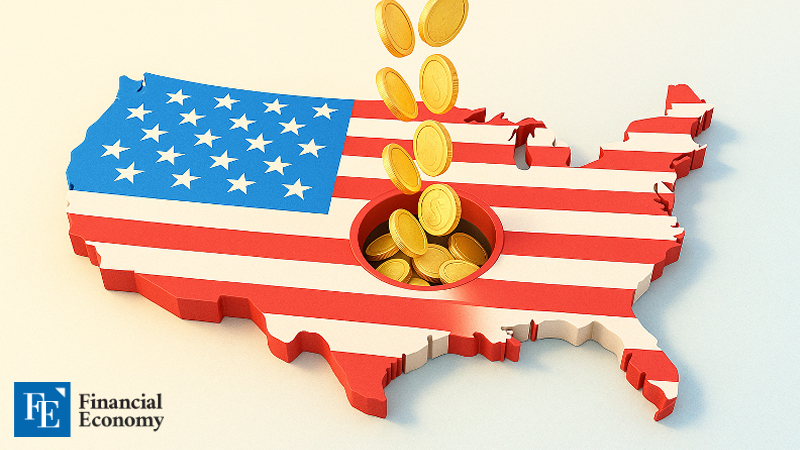
The United States has emerged as the largest overseas manufacturing base for Korea’s major conglomerates. Since the launch of Donald Trump’s second administration, investment incentives in the U.S. have grown sharply, prompting many companies to relocate from their previous production hubs in China and Southeast Asia to America. This surge in U.S.-bound investment is not limited to Korean industry but is increasingly evident across the global market.
Korean Conglomerates Move Production to the U.S.
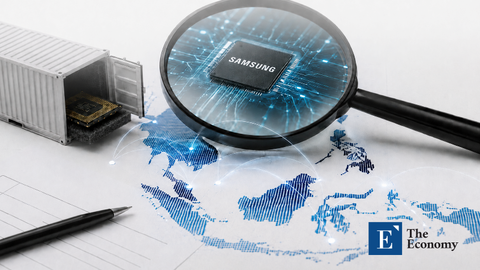
According to data released on the 29th by corporate analytics firm CEO Score, the total assets of overseas manufacturing subsidiaries owned by South Korea’s top 10 conglomerates reached about $351 billion at the end of 2024. That’s an increase of $202 billion (134.6%) from $149 billion in late 2016, just before Donald Trump’s first administration began.
Among these, assets held by U.S.-based manufacturing units soared from $15 billion in 2016 to $112 billion in 2024 — a 627% surge. During the same period, assets in China grew only 27%, from $66 billion to $84 billion, allowing the U.S. to surpass China as the top destination. Vietnam, which ranked second in 2016 with $19 billion in manufacturing assets, fell to third place at $37 billion by 2024.
As of late 2024, Samsung topped the list with $31 billion in U.S. manufacturing assets, followed by SK ($29 billion), LG ($28 billion), and Hyundai Motor ($21 billion). Together, these four conglomerates accounted for 95.4% of the combined U.S. manufacturing assets held by South Korea’s top 10 groups, totaling $110 billion.
SK recorded the largest increase, adding about $28 billion through major investments in its battery joint ventures BlueOval SK and SK Battery America. Samsung followed closely with a $27 billion rise, driven by the expansion of its Austin semiconductor operations and investment in its battery JV StarPlus Energy. LG and Hyundai Motor also saw significant growth by expanding their EV and battery production lines in the U.S.
Southeast Asia Loses Appeal for Korean Conglomerates
Markets are noting that major South Korean companies are turning away from Southeast Asia — once seen as an alternative to China. This shift is becoming more apparent through recent cases of investment withdrawals and market exits.
On the 3rd, Bao Xay Dung, a Vietnamese construction newspaper, reported that SK Group has withdrawn most of the $3.5 billion it invested in Vietnamese conglomerates over the past seven years, retaining only about $650 million in remaining assets. SK had gradually built influence in Vietnam’s corporate sector through equity investments in Vingroup, Masan Group, Petrolimex, PV Oil, and Imexpharm, but signaled a shift in strategy after selling all its shares in Vingroup in August. The group has since sold off a large portion of its holdings in Masan Group, while its stake in Imexpharm has been entirely acquired by a Chinese company.
Lotte Engineering & Construction also exited a major project in May, selling its entire stake in the La Premier development in Ho Chi Minh City to its local partner Phu Cuong Group. The project, launched in 2018, aimed to build two 25-story residential towers with 725 units and commercial facilities on a 15,848-square-meter site in the Tan My Loi New Urban Area. Lotte had acquired 51% of the project’s special-purpose company, Hau Giang Commercial and Construction Investment Co., for $10.6 million. Although construction was originally set to begin in October 2018 and finish by May 2020, the project saw no progress before Lotte’s stake sale.
In September, Lotte Group, Lotte E&C’s parent company, also withdrew from a large-scale project in Ho Chi Minh City. On September 20, the group informed the Ho Chi Minh City People’s Committee that it would suspend its Thu Thiem Eco Smart City development — a project worth around $720 million — citing prolonged approval delays. Lotte had entered the project in 2017 through Lotte Properties Ho Chi Minh, investing $160 million in initial capital. The plan was to develop a 50,000-square-meter site in the Thu Thiem district into a large mixed-use complex with shopping malls, offices, hotels, residences, and apartments spanning up to 60 floors. However, construction approvals and land-use fee negotiations were finalized only in July this year — eight years after initiation — and Vietnamese authorities reportedly raised the land fee from about $73 million to $720 million. Concluding that profitability had collapsed, Lotte decided to withdraw from the project.

How the Trump Administration Attracted a Wave of Global Investment
The shift from China and Southeast Asia toward increased investment in the United States is not limited to South Korea — it’s a global phenomenon. According to a Washington Post report last month, foreign direct investment (FDI) in the U.S. reached $102 billion in the second quarter of this year, marking a 137% surge from the previous quarter. The manufacturing sector led the influx, followed by information services and wholesale trade.
The sharp rise in investment has largely been attributed to President Donald Trump’s aggressive tariff policies. Since the launch of his second administration, Trump has imposed high tariffs on imports and urged companies to expand production within the U.S. In response, global corporations began pouring capital into domestic manufacturing. For instance, Taiwan’s TSMC, the world’s largest semiconductor foundry, announced in March that it would build five additional fabs in Arizona, investing $100 billion — bringing its total U.S. investment to $165 billion, up from about $65 billion previously.
Another major factor has been expanded tax incentives. The Trump administration enacted the “One Big Beautiful Bill” in March 2025, cutting corporate taxes and significantly increasing tax credits for manufacturing facility investments. The law also included provisions such as the permanent extension of individual tax rates, higher state and local tax deduction limits, and broader income deductions — all designed to encourage corporate investment in the U.S.
Strong government support for emerging technologies, especially artificial intelligence (AI), has further accelerated capital inflows. At a press conference on the 29th, Federal Reserve Chair Jerome Powell remarked, “The dot-com era was driven by ideas, but today’s companies are generating profits and have tangible business models.” He emphasized that unlike the 2000s dot-com bubble, the current AI boom is built on solid, profitable firms — signaling confidence from the central bank itself and fueling investor enthusiasm.
A similar trend is visible in the nuclear energy sector. The previous Biden administration had set a target to triple nuclear capacity from roughly 100 GW to 300 GW by 2050. In May, President Trump signed four executive orders to raise that target to 400 GW, aiming to rejuvenate the domestic nuclear industry. With the government actively leading the revival, Bloomberg Intelligence projected in a September report that nuclear power investments in the U.S. could total $350 billion (around $490 billion) by 2050.
As one of the youngest members of the team, Tyler Hansbrough is a rising star in financial journalism. His fresh perspective and analytical approach bring a modern edge to business reporting. Whether he’s covering stock market trends or dissecting corporate earnings, his sharp insights resonate with the new generation of investors.
Similar Post