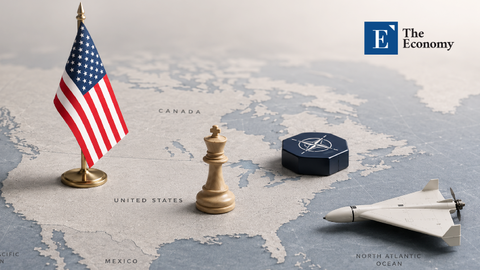
Trump Administration Optimistic About Supreme Court Tariff Ruling — Inside Its ‘Plan B’ Contingency

Authored On
Modified
Lower Courts Ruled Tariffs ‘Unlawful,’ but Conservative-Leaning Supreme Court Outcome Uncertain
“Taxation Is a Core Congressional Power” vs. “Congress Granted the Executive Emergency Authority”
Trump Calls It “A Matter of Life and Death for America,” Asserts Alternative Tariff Tools Even If Defeated
In a closely watched Supreme Court hearing, the Trump administration and the plaintiffs engaged in fierce arguments over the legality of tariffs imposed under the president’s emergency powers. The administration defended its sweeping reciprocal tariffs as an unavoidable measure to protect the U.S. economy from the long-term harm of chronic trade deficits, while the plaintiffs countered that imposing tariffs is an authority reserved exclusively for Congress. During the first oral arguments, several justices—including some conservatives—voiced skepticism about the legality of the tariffs. Although the administration insists it has a “Plan B” ready, critics warn that such measures could erode both the legal coherence and the economic credibility of U.S. trade policy.
Supreme Court Takes Up Legality of Trump’s ‘Global Tariffs’
On Nov. 5 (local time), the U.S. Supreme Court began deliberations over whether President Donald Trump’s sweeping global tariffs were lawful. Conservative justices appointed by Trump—Amy Coney Barrett and Neil Gorsuch—as well as Chief Justice John Roberts, appointed by George W. Bush, joined liberal justices Sonia Sotomayor, Elena Kagan, and Ketanji Brown Jackson in questioning the government’s claims. The nine-member Court requires a simple majority—five votes—to form a binding opinion.
The central issue was whether Trump’s “reciprocal tariffs,” imposed under the International Emergency Economic Powers Act (IEEPA), were legally valid. Deputy Solicitor General D. John Sauer, arguing for the government, claimed that Trump’s emergency action was justified by the “severe threat” posed by persistent trade deficits to the U.S. economy and national security. “This case concerns not the power to tax, but the authority to regulate foreign affairs and economic relations,” he argued, adding that any resulting tax revenue was merely “incidental.” Sauer further contended that the tariffs had “substantially advanced multiple trade negotiations” and warned that overturning them would leave the United States “vulnerable to retaliation from more aggressive nations,” jeopardizing both economic and security interests.
The plaintiffs, represented by attorney Neal Katyal on behalf of small businesses, rejected that interpretation. “A tariff is a tax,” he said, “and the Constitution grants the power to tax solely to Congress.” Katyal argued that interpreting IEEPA as authorizing the president to impose or alter tariffs “on any country, at any time, and on any product” was untenable. “If the government prevails, Congress’s constitutional powers would become effectively irretrievable,” he warned.
Even some conservative justices appeared skeptical. Chief Justice Roberts noted that “taxation has always been a core congressional prerogative.” Justices Gorsuch and Barrett emphasized that the Constitution explicitly assigns taxing authority to Congress, warning that the case could raise serious issues of unconstitutional delegation of legislative powers to the executive branch. “If this logic continues,” Gorsuch cautioned, “it becomes a one-way ratchet—concentrating power in the executive and distancing it from the people’s elected representatives.”
By contrast, Justices Brett Kavanaugh and Samuel Alito took a more sympathetic view toward the administration. Kavanaugh questioned, “Isn’t it odd to say that Congress empowered the president to shut down all trade but not to impose a 1% tariff?” calling this an “odd doughnut hole in the law.” He cited lower-court precedents allowing President Nixon to impose tariffs under similar statutes, arguing that Congress intended to equip presidents with “tools to respond appropriately in emergencies.”
Abuse of Power or Economic Security Measure?
Enacted in 1977, the IEEPA grants the president authority to restrict exports and imports in response to foreign threats during a declared national emergency. Invoking this law, Trump declared a national emergency in April and imposed reciprocal tariffs of 10% to 50% on more than 60 countries—including 50% tariffs on India and Brazil—and additional levies on Canada, Mexico, and China, citing illegal immigration and fentanyl trafficking.
In April, a coalition of American businesses and 12 state governments, including Oregon, sued the administration, seeking to nullify the reciprocal and fentanyl-related tariffs. Lower courts—including the U.S. Court of International Trade (USCIT) and the D.C. Circuit Court of Appeals—ruled against Trump, finding the tariffs unlawful. They held that IEEPA neither mentions tariffs nor provides procedural safeguards for imposing them, and reaffirmed that taxing and tariff authority rests solely with Congress.
Trump dismissed those rulings as “deeply partisan” and appealed to the Supreme Court, continuing to publicly pressure the justices. On Oct. 19, he warned that overturning his tariff program would “cripple the U.S. economy for years,” and on Nov. 4, the eve of the hearing, he declared, “Tomorrow’s hearing is literally a matter of life and death for our country,” adding, “If we win, we’ll secure strong, fair revenues and national security. If we lose, we’ll be defenseless against countries that have exploited us for years.”
Trump Administration’s ‘Plan B’: Dusting Off a 95-Year-Old Law
The Supreme Court’s ruling will serve as the judiciary’s final word on Trump’s tariff strategy. With the Court currently divided 6–3 in favor of conservatives, and past rulings often sympathetic to Trump, the outcome remains uncertain. A ruling in Trump’s favor would allow him to continue imposing broad tariffs under the IEEPA’s national emergency provisions, effectively bypassing congressional oversight. A loss, however, could void existing trade agreements and force the government to refund previously collected duties. According to CNN, the potential refunds could total up to $1 trillion.
Still, the Trump administration maintains that even a defeat would not halt its trade agenda. Officials point to at least five alternative legal provisions—Section 232 of the Trade Expansion Act, Sections 201, 301, and 122 of the Trade Act, and Section 338 of the Smoot-Hawley Tariff Act—that could serve as fallback authorities for imposing tariffs on foreign countries deemed harmful to U.S. interests.
Analysts, however, argue that these fallback tools are limited in both scope and speed. Section 232, which underpins existing tariffs on steel, aluminum, and autos, allows product-specific tariffs without rate or duration limits but requires a 270-day Commerce Department investigation before any action. Section 201 mandates an International Trade Commission (ITC) investigation and public hearings within 180 days. Experts caution that both 232 and 201 are “wartime-level emergency tools,” ill-suited for routine trade disputes and legally vulnerable if used broadly.
Section 122 permits temporary tariffs of up to 15% for 150 days to protect the balance of payments or stabilize the dollar, but extensions require congressional approval—and the provision has never been invoked.
Meanwhile, Section 338 of the 1930 Smoot-Hawley Tariff Act authorizes retaliatory tariffs in response to discrimination against U.S. goods, but it has never been enforced. Historically, its use during the Great Depression backfired disastrously: intended to protect domestic industries, it instead triggered retaliatory tariffs worldwide and deepened the global economic collapse. Economists still cite it as a cautionary example of protectionism gone wrong.
Democrats have already pushed back. After reports emerged that Trump was considering using Section 338, House Democrats introduced a resolution to repeal the clause entirely. Bloomberg noted that tariffs imposed under these “Plan B” provisions “could target only specific industries or unfair trade practices, not entire countries.” The outlet added, “If Trump attempts to invoke dormant statutes, it will spark both legal challenges and political controversy in Congress.”
Similar Post