Samsung Challenges TSMC’s Dominance with Next-Generation 2nm AP ‘Exynos 2600’

Oliver Griffin is a policy and tech reporter at The Economy, focusing on the intersection of artificial intelligence, government regulation, and macroeconomic strategy. Based in Dublin, Oliver has reported extensively on European Union policy shifts and their ripple effects across global markets. Prior to joining The Economy, he covered technology policy for an international think tank, producing research cited by major institutions, including the OECD and IMF. Oliver studied political economy at Trinity College Dublin and later completed a master’s in data journalism at Columbia University. His reporting blends field interviews with rigorous statistical analysis, offering readers a nuanced understanding of how policy decisions shape industries and everyday lives. Beyond his newsroom work, Oliver contributes op-eds on ethics in AI and has been a guest commentator on BBC World and CNBC Europe.
Authored On
Modified
2nm GAA Process as Samsung Foundry’s Proving Ground
Strong Benchmark Performance, Likely to Power Galaxy S26
Expected to Boost Foundry Profitability and Process Reliability
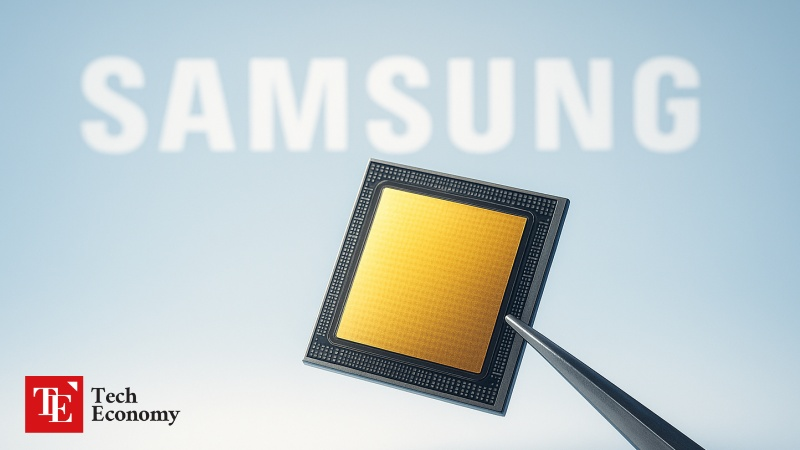
Samsung Electronics, which has long struggled with low yields in the global mobile application processor (AP) market, is moving to reclaim ground with its next-generation Exynos 2600 chip. As the first AP to adopt a 2-nanometer (nm) process node—a breakthrough at the 10⁻⁹-meter scale—the Exynos 2600 is set to serve as a crucial test case for Samsung’s 2nm foundry technology. Industry analysts expect the chip, which is likely to power the upcoming Galaxy S26 series, to play a key role in enhancing the profitability and credibility of Samsung’s foundry business.
Exynos 2600 Reaches 85% of Performance Target
According to semiconductor industry sources on November 10, both Samsung Electronics and TSMC are nearing commercial deployment of their 2nm nodes, setting the stage for intensified competition in AI-oriented chips next year. While TSMC had maintained a lead in the 3nm era thanks to stable yields and strong partnerships with major AP manufacturers, Samsung struggled to attract clients due to yield challenges. Now, however, with both companies advancing at a similar pace in 2nm process development, Samsung has fired the opening salvo with its Exynos 2600.
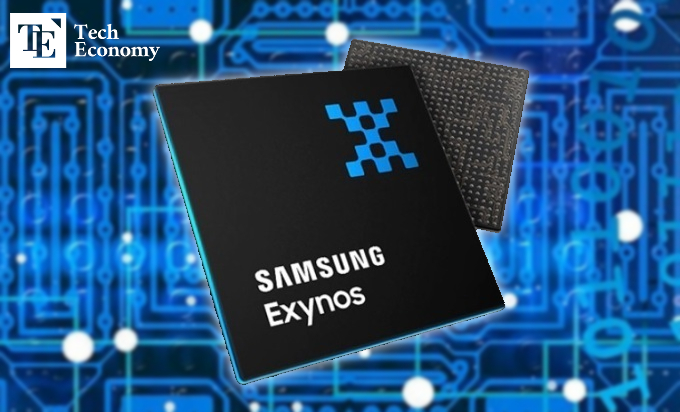
Samsung’s System LSI Division finalized development of the Exynos 2600 last month and began mass production this month. The chip is expected to debut in the Galaxy S26 lineup, including the Ultra model—the first time in four years the Exynos line will power Samsung’s flagship tier. As the first chip to be produced using Samsung Foundry’s 2nm GAA (Gate-All-Around) process, the Exynos 2600 is widely seen as a litmus test for the maturity of the company’s next-generation node. Industry sources say the process has reached roughly 85% of its target performance metrics.
Outperforming TSMC’s 3nm in Speed and Efficiency
Performance benchmarks have also drawn attention. On October 29, benchmarking platform Geekbench listed results believed to be from a device powered by the Exynos 2600. The device scored 4,217 points in single-core and 13,482 points in multi-core tests—the highest figures among recent leaks. Compared to earlier engineering samples (3,455 single-core, 11,621 multi-core), the new results represent 22% and 16% gains, respectively, suggesting the chip could deliver top-tier smartphone SoC (System-on-Chip) performance.
The prime core’s peak clock speed reached 4.20GHz, exceeding both Apple’s A19 Pro and Qualcomm’s Snapdragon 8 Elite Gen 5. The Exynos 2600 reportedly features a 10-core CPU structure in a “1+3+6” configuration—one prime core (4.20GHz), three performance cores (3.56GHz), and six efficiency cores (2.76GHz). Given that optimization is still ongoing, further performance gains are anticipated. Some analysts, however, note the leaked numbers likely reflect test overclock settings and may be slightly reduced in commercial units to manage thermal limits.
While benchmark scores do not directly equate to real-world performance, the Exynos 2600’s power efficiency has received favorable reviews. Tech outlet WCCFTech reported that the chip completed Geekbench’s multi-core test at 7.6 watts of board power—59% less than Apple’s A19 Pro fabricated on TSMC’s 3nm node. The improved efficiency stems from the transition to a 2nm process and the GAA transistor structure, which minimizes leakage currents compared to the conventional FinFET design.
Securing Supply Deals with Tesla, Apple, and Other U.S. Tech Giants
Encouraged by positive early feedback, Samsung’s outlook for its foundry business has brightened. If the Exynos 2600 powers the Galaxy S26, it could strengthen Samsung’s profitability and help narrow the gap with TSMC, while also boosting customer confidence in its advanced nodes.
Samsung has already landed high-profile contracts with major U.S. tech firms. The company recently signed a $16.5 billion deal with Tesla to supply AI6 chips for fully autonomous vehicles, with production set to begin in 2026 at Samsung’s Taylor, Texas plant. Samsung has also secured partial orders for the A15 node previously dominated by TSMC. In addition, it has partnered with Apple on next-generation image sensor development and will supply optimized chips for Apple devices produced in the U.S. The company has also joined NVIDIA’s “NVLink Fusion” ecosystem to advance GPU-based AI manufacturing technologies.
Industry watchers are also eyeing a potential rekindling of ties with Qualcomm. Samsung is currently providing 2nm process samples to Qualcomm, which shifted all production to TSMC in 2022 due to heat and yield issues. Sources say Qualcomm is now reconsidering Samsung for future orders, citing improved process stability and cost competitiveness. Samsung’s 2nm yield rate has reportedly risen from around 30% early this year to roughly 50% in recent months. The company plans to make its Taylor, Texas facility a global hub for advanced process manufacturing, with full-scale 2nm production set to begin next year.
Oliver Griffin is a policy and tech reporter at The Economy, focusing on the intersection of artificial intelligence, government regulation, and macroeconomic strategy. Based in Dublin, Oliver has reported extensively on European Union policy shifts and their ripple effects across global markets. Prior to joining The Economy, he covered technology policy for an international think tank, producing research cited by major institutions, including the OECD and IMF. Oliver studied political economy at Trinity College Dublin and later completed a master’s in data journalism at Columbia University. His reporting blends field interviews with rigorous statistical analysis, offering readers a nuanced understanding of how policy decisions shape industries and everyday lives. Beyond his newsroom work, Oliver contributes op-eds on ethics in AI and has been a guest commentator on BBC World and CNBC Europe.
Similar Post