K-Pharma and Biotech Firms Rush to Secure U.S. Bases amid Trump-Induced Uncertainty, Aiming to Hedge Risks and Expand Market Share

Siobhán Delaney is a Dublin-based writer for The Economy, focusing on culture, education, and international affairs. With a background in media and communication from University College Dublin, she contributes to cross-regional coverage and translation-based commentary. Her work emphasizes clarity and balance, especially in contexts shaped by cultural difference and policy translation.
Authored On
Modified
Celltrion, SK Biopharm, and others are increasing their local production footprint
Close watch on ripple effects of Trump’s tariff policy
Securing U.S. footholds seen as fastest path to growth
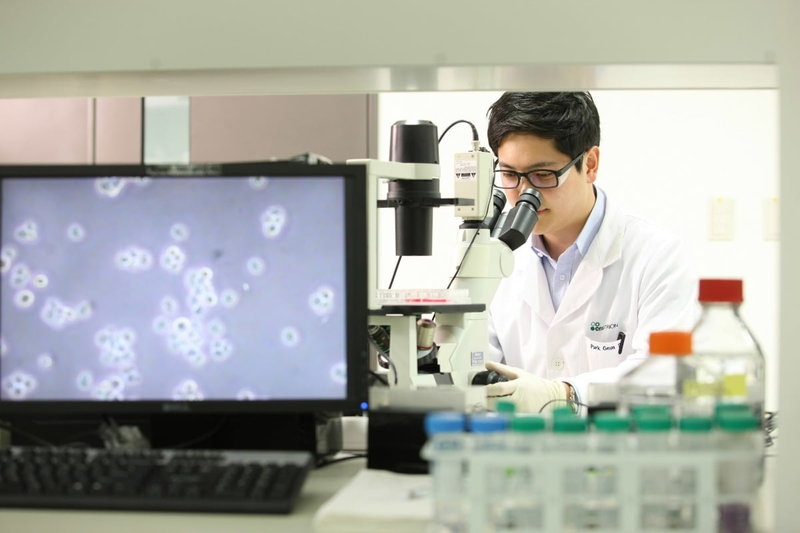
Amid mounting pressure from the Trump administration’s high-tariff policy and push for pharmaceutical reshoring, Korean pharmaceutical and biotech firms are accelerating efforts to establish production bases in the United States. Following SK Biopharm and Lotte Biologics’ move to set up manufacturing facilities in the U.S., Celltrion has finalized the acquisition of Eli Lilly’s New Jersey plant, signaling large-scale investment plans ahead. Although tariff negotiations between Seoul and Washington recently resulted in Korea-made pharmaceuticals receiving Most Favored Nation (MFN) treatment, thereby easing tariff risks, uncertainty remains over tariff exemptions for biosimilars and drug pricing pressures. Consequently, industry players are pursuing U.S.-based operations as a means to both mitigate exposure and gain direct access to local distribution and procurement networks.
K-Bio Firms in a Race to Establish U.S. Production Bases
On November 11, Celltrion announced it had completed all merger review procedures with the Premerger Notification Office (PNO) of the U.S. Federal Trade Commission for its acquisition of Eli Lilly’s production facility in Branchburg, New Jersey. The Branchburg plant, for which Celltrion signed a definitive agreement in September, spans 149,000 square meters and represents a major manufacturing site. The company invested about $330 million in the acquisition.
With the FTC review now complete, Celltrion has cleared all regulatory hurdles necessary for the takeover. The company had also secured approval from Ireland’s competition authority on October 31. These reviews—conducted under the U.S. Hart-Scott-Rodino Antitrust Improvements Act—determine whether mergers or acquisitions could impede market competition. As this review was a key determinant of the deal’s closing, the transaction is expected to proceed without delays before year-end.
Following the acquisition, Celltrion plans to inject at least an additional $440 million to expand the site. The company will utilize 36,000 square meters of idle land—about one-quarter of the total site—to expand production capacity. Once the upgrade is complete, the Branchburg plant’s capacity is projected to reach 1.5 times that of Celltrion’s largest existing facility in Songdo, Incheon. The company has also initiated post-merger integration (PMI) efforts, planning to deploy specialized teams on-site immediately after closing to ensure operational continuity. Additionally, tailored support will be provided to help existing staff adapt quickly to new management structures.
Prior to Celltrion’s move, SK Biopharm had established a manufacturing base in Puerto Rico. In July, CEO Lee Dong-hoon stated during a press briefing in Boston that the facility had completed regulatory inspections, adding that the company currently produces cenobamate in Canada for cost reasons. The choice of Puerto Rico was driven by lower labor costs compared to the U.S. mainland. Meanwhile, Lotte Biologics has begun operating a plant in Syracuse, while Samsung Biologics—though yet to set up an American base—is reportedly weighing both greenfield construction and acquisitions in the U.S.
U.S. Tariff Threats up to 200% Prompt Industry Countermeasures
These moves to secure U.S. bases stem from escalating concerns over tariff uncertainty under the Trump administration. President Donald Trump has repeatedly warned of imposing tariffs as high as 200% on imported pharmaceuticals. During a Cabinet meeting in early July, he remarked, “We could impose tariffs of 100% or even 200% on drugs imported into the U.S.,” adding that implementation would be delayed for “a year or perhaps 18 months,” granting foreign drugmakers time to relocate production back to the U.S. The goal, he said, was to expand domestic pharmaceutical manufacturing and job creation.
Should such extreme tariffs materialize, the prices of Korea-made drugs in the U.S. would more than double, forcing companies to reconsider the viability of their American operations. Biosimilar firms, in particular, would be hit hard given their dependence on price competitiveness. The stakes are high: the U.S. dominates the global pharmaceutical market, with multiple research institutions estimating its size at approximately $600 billion last year.
In contrast, South Korea’s domestic pharmaceutical market, according to the Ministry of Food and Drug Safety, amounted to roughly $23 billion last year—just 1/26th the size of the U.S. market. Even the benchmark for a blockbuster drug differs drastically: $760 million in annual sales in Korea versus $1 billion globally. The dependency on U.S. exports is also significant. According to the Korea Biotechnology Industry Organization, pharmaceutical exports to the U.S. totaled $3.98 billion last year, of which biologics accounted for 94.2%. Under these conditions, establishing U.S.-based production within 18 months—the grace period cited by Trump—would be nearly impossible, leaving most Korean firms little choice but to accelerate local investments.
Residual Burdens Despite Reduced Trump Risk
Fortunately, the high-tariff threat was neutralized after the late-October Korea–U.S. tariff negotiations held on the sidelines of the APEC summit. Under the new MFN framework, U.S.-bound Korean pharmaceuticals will face tariff rates capped at 15%, aligning them with European Union and Japanese benchmarks. Generic drugs will remain duty-free.
The industry views the agreement as more than just tariff relief. Most Korean pharma and biotech firms produce drug substances (DS) domestically—mainly in bio clusters like Songdo—and export them for final packaging and distribution in the U.S. or Europe. The resolution thus protects the core competitiveness of Korea’s manufacturing clusters, easing the pressure to relocate production entirely to the U.S. and enabling firms to rely on existing CMO and parallel production capacities for short-term compliance.
However, uncertainty persists for biosimilars, one of Korea’s primary export categories, as their eligibility for duty-free treatment remains unresolved. It is unclear whether biosimilars will be classified as generics or subjected to separate tariff evaluation. Compounding the challenge, President Trump continues to pressure pharmaceutical companies to lower U.S. drug prices to MFN levels—defined as the lowest price a company charges in other advanced economies.
Since taking office, Trump has pushed the MFN policy targeting multinational pharmaceutical firms, focusing on high-cost drugs covered under Medicare Part B, such as oncology and immunotherapy treatments. He even issued a 60-day ultimatum to major drugmakers to align U.S. prices with overseas benchmarks. The directive affected 17 companies, including AbbVie, Amgen, AstraZeneca, Boehringer Ingelheim, Bristol Myers Squibb, Eli Lilly, Merck (EMD Serono), Genentech, Gilead, GSK, Johnson & Johnson, Merck (MSD), Novartis, Novo Nordisk, Pfizer, Regeneron, and Sanofi.
This policy could indirectly impact Korean firms. Should U.S. prices become the global benchmark, pricing negotiations in other markets—including Korea—could face downward pressure. Multinational headquarters may also readjust global portfolios to offset reduced profitability in the U.S. Additionally, the administration’s reshoring mandate could alter R&D and CMO investment directions, potentially affecting Korean firms engaged in joint development and production partnerships. Companies with high U.S. export exposure are particularly vulnerable to changes in pricing and supply frameworks, heightening the need for strategic realignment in response to Washington’s evolving industrial policy.
Siobhán Delaney is a Dublin-based writer for The Economy, focusing on culture, education, and international affairs. With a background in media and communication from University College Dublin, she contributes to cross-regional coverage and translation-based commentary. Her work emphasizes clarity and balance, especially in contexts shaped by cultural difference and policy translation.
Similar Post
















