AI and DDR5: How China’s Semiconductor Industry Is Reshaping Itself — Memory Transition and Capital Mobilization Accelerate

Niamh O’Sullivan is an Irish editor at The Economy, covering global policy and institutional reform. She studied sociology and European studies at Trinity College Dublin, and brings experience in translating academic and policy content for wider audiences. Her editorial work supports multilingual accessibility and contextual reporting.
Authored On
Modified
China’s IC exports surge 24 percent in a year
Volatile prices hinge on speed of production shift
CXMT and YMTC seek IPOs to strengthen capital base
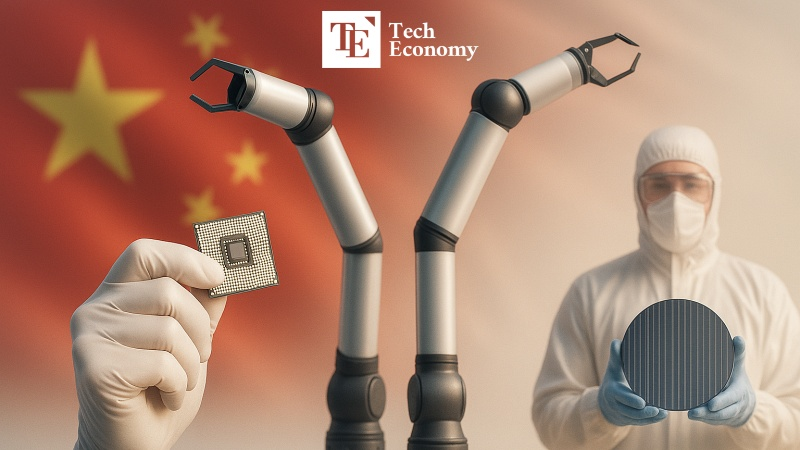
China is rapidly advancing a generational shift in its memory industry, disrupting global market dynamics in the process. Chinese chipmakers are simultaneously expanding artificial intelligence (AI) and double data rate 5 (DDR5) production, reshaping supply-chain priorities and the broader industrial structure beyond short-term price fluctuations. As AI server demand continues to rise, China’s semiconductor sector is no longer a follower but a driver of global trends. Behind the sharp price swings lies a larger master plan: the nation’s coordinated effort to expand capital and accelerate its technological transition.
DDR4 Supply Cuts Distort Short-Term Prices
According to the General Administration of Customs, China’s integrated circuit (IC) exports from January to October this year jumped 24.7 percent year-on-year to about 162 billion USD. That growth rate is nearly seven times faster than the 3.6 percent increase in total goods trade during the same period. The surge reflects both soaring AI server demand and rising memory prices. With global tech giants such as OpenAI, Microsoft, and Amazon now absorbing roughly half of the world’s monthly DRAM output, Chinese semiconductor fabs have ramped up production to meet demand, signaling a structural transformation of the memory market.
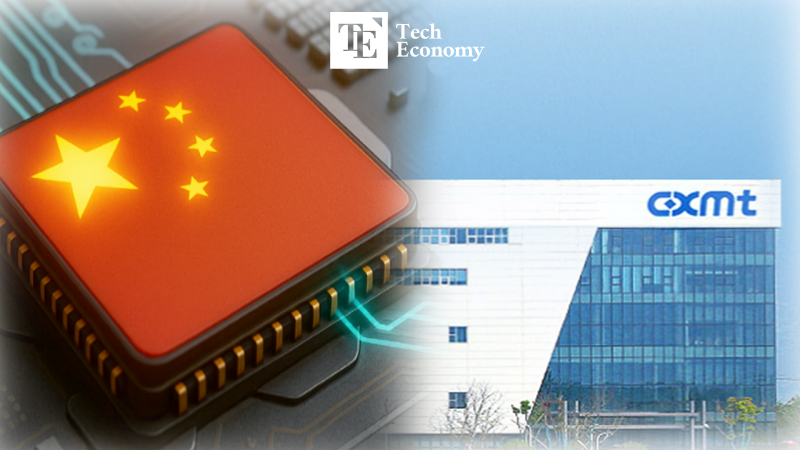
Amid this shift, Chinese memory makers are accelerating production transitions. ChangXin Memory Technologies (CXMT) has led the charge, scaling down DDR4 output since the first half of this year and building a DDR5-centered product portfolio. The company plans to convert more than 60 percent of total output to DDR5 by year-end and reallocate the rest to low-power LPDDR4 and LPDDR5 lines. This strategy is not only a response to the AI and cloud boom but also a means of securing profitability through high-value memory products under tightened U.S. export restrictions.
The CXMT-led shift has already rippled through market prices. In Shenzhen’s Huaqiangbei electronics market, DDR4 modules are trading at about 59 USD, earning the nickname memory more expensive than gold. This is viewed as a transitional imbalance triggered by reduced DDR4 supply and China’s full-scale pivot to DDR5. Analysts widely expect that once CXMT’s DDR5 production ramps up, renewed price competition will follow, squeezing profit margins—a repeat of the DDR4 price collapse cycle.
Price Spikes Signal Market Volatility and DRAM Realignment
Industry analysts say the surge in China’s IC exports largely reflects short-term price effects. With DDR4 output cut and AI servers proliferating, the memory market has shifted decisively toward supplier control. Samsung recently postponed contract pricing discussions with clients to the end of the month to account for rising costs, while SK hynix confirmed HBM, DRAM, and NAND are all sold out, acknowledging overwhelming demand. Market tracker TrendForce reported that DDR5 spot prices soared 60 percent in just two weeks, from 10 USD at the end of last month to 16 USD.
The sharp rise contrasts starkly with last year’s crash, when Chinese half-price memory flooded the market. CXMT and Fujian Jinhua had supplied DDR4 chips at 0.75–1 USD—half the market rate—sending average 8Gb chip prices plunging 36 percent from 2.1 USD in July to 1.35 USD by November. Weak global IT demand and inventory overhangs deepened the slump. But as Chinese firms shut DDR4 lines this year, stockpiling fears reignited, flipping the market into a supply shortage almost overnight. The swing highlights just how dramatically market dynamics hinge on supplier strategies.
The price rally is reshaping profit structures as well. TrendForce projects DDR5 could soon surpass even HBM3E in profitability, powered by hyperscale cloud expansion. AI training servers consume up to eight times more DRAM than conventional systems, sustaining supplier leverage for the foreseeable future.
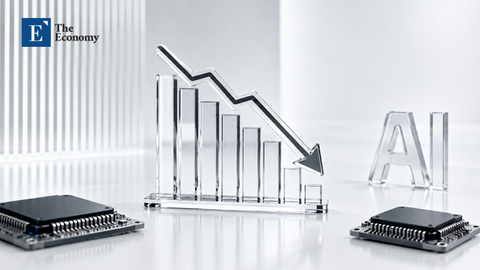
While this supports higher average selling prices and margins in the short term, volatility remains an inherent risk. If elevated prices persist, new investment and capacity expansion could lead to overproduction and another price downturn—a familiar boom-bust cycle. Thus, all eyes are on when and how quickly China’s DDR5 mass production begins. The global DRAM market may follow a three-phase path—short-term surge, mid-term correction, and post-transition stabilization—with China’s next moves determining the key inflection point.
Pursuing Semiconductor Self-Reliance and Market Share
The accelerated IPO plans of China’s two leading memory companies, CXMT and Yangtze Memory Technologies (YMTC), reinforce this trajectory. Both aim to raise capital to boost capacity and build a self-sufficient supply chain despite U.S. export restrictions. CXMT completed IPO pre-listing guidance in July, effectively finalizing preparations. Funds raised will support capacity expansion and HBM development. Analysts estimate its listing could raise up to 56 billion USD.
Dongfang Securities noted that CXMT’s expanded capital base will positively affect the entire Chinese DRAM ecosystem. The company is already building an HBM packaging plant in Shanghai, targeting HBM3 mass production next year, while accelerating upgrades in DDR5 and LPDDR5 lines—a shift from volume growth to value-driven expansion. Counterpoint Research forecasts CXMT’s global DRAM market share to rise from 6 percent in the first quarter to 8 percent by year-end, with DDR5 and LPDDR5 shares reaching 7 percent and 9 percent, respectively.
YMTC has also met the prerequisites for an IPO after its parent converted into a joint-stock company. YMTC’s current valuation stands at about 22.6 billion USD, and Bloomberg reports the firm is targeting recognition of up to 42 billion USD. Although U.S. sanctions previously constrained exports, YMTC has rebounded on the back of domestic production and government support. In the second quarter of this year, output at its Wuhan No. 2 fab more than doubled year-on-year to 130,000 wafers.
If both listings proceed as planned, they will mark the largest IPOs on China’s markets since 2022. The semiconductor sector’s momentum is already lifting investor sentiment. Shares of AI chipmaker Cambricon have surged more than 90 percent this year, while GPU startup Moore Threads has entered Shanghai’s STAR Market review process. Together, CXMT’s and YMTC’s IPOs symbolize not just corporate growth but the broader capital mobilization of China’s semiconductor industry—an unmistakable declaration that the country’s next technological leap will be financed on its own terms.
Niamh O’Sullivan is an Irish editor at The Economy, covering global policy and institutional reform. She studied sociology and European studies at Trinity College Dublin, and brings experience in translating academic and policy content for wider audiences. Her editorial work supports multilingual accessibility and contextual reporting.
Similar Post