U.S. Power Crunch vs. China’s Pipeline Push — AI Infrastructure Balance Falters

Niamh O’Sullivan is an Irish editor at The Economy, covering global policy and institutional reform. She studied sociology and European studies at Trinity College Dublin, and brings experience in translating academic and policy content for wider audiences. Her editorial work supports multilingual accessibility and contextual reporting.
Authored On
Modified
Grid inflation becomes reality in the U.S.
China keeps industrial electricity ultra-cheap
Russia–China gas pipeline cooperation strengthens China’s hand
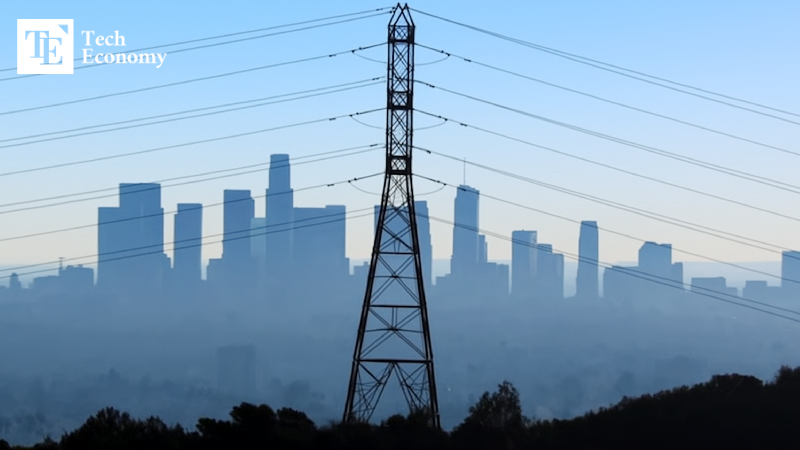
As global demand for data-center power surges amid the rapid expansion of artificial intelligence (AI), the contrast between the United States and China is becoming increasingly stark. In the U.S., aging grids and fuel-price volatility are undermining supply stability. China, by contrast, is expanding AI infrastructure on the back of cheap industrial power that minimizes cost swings. This widening gap is shifting from a difference in build-out speed to a more fundamental national advantage rooted in energy supply.
U.S. grid expansion stalls despite aging infrastructure
According to Bloomberg on the 13th (local time), several U.S. data centers have been unable to operate for years after completion due to insufficient power supply. Digital Realty Trust’s “SJC37” and Stack Infrastructure’s “SVY02A” in Santa Clara, California—each requiring around 100 MW—remain idle because utilities cannot deliver enough power. In Ashburn, Virginia, a major grid failure forced roughly 60 local data centers into temporary island-mode operation. Industry voices warn that fears of “AI chips piling up in warehouses because they cannot be powered” have effectively become reality.
The U.S. power-production problem has long been anticipated. Electricity generation reached 4,387 TWh last year, only 11.4% higher than in 1999 (3,936 TWh). Goldman Sachs described U.S. output as “essentially zero-growth.” Meanwhile, AI data-center demand has exploded—each hyperscale facility now requires hundreds of megawatts—causing simultaneous bottlenecks in generation, new-plant construction, and transmission. Efficiency gains that once offset rising power needs are no longer enough in the age of massive AI models.
The power crunch is directly feeding cost pressures. According to Lawrence Berkeley National Laboratory (LBNL), retail electricity prices in New Jersey jumped 19% year-over-year in August—far above the national average of 6%—while wholesale prices in the PJM region continued to climb. LBNL warned that “power inflation has become a social issue,” with more than four million U.S. households expected to fall behind on bills this year. Concentrated data-center demand has pushed up local electricity prices: Bloomberg found that some of the 25,000 U.S. power nodes have seen prices rise 267% over five years, and more than 70% of these hotspots sit within 50 miles of data-center clusters.
Aging transmission infrastructure is compounding the problem. The U.S. still relies heavily on a 110-volt system with high line losses, and ultra-high-voltage 765 kV HVDC transmission is almost nonexistent outside a handful of regions like Washington–California and California–Nevada. The Biden administration has tried to respond—streamlining transmission permitting and approving a $1.6 billion loan for rebuilding 8,600 km of lines across five states—but experts warn the country has already missed the “golden time” relative to AI-driven demand.
Stable electricity now directly equals industrial competitiveness
The U.S. struggles stand in sharp contrast with China’s position in the global AI race. Nvidia CEO Jensen Huang, speaking at the AI Safety Summit earlier this month, caused a stir by saying, “Low energy costs and light regulation are helping China pull ahead.” He criticized Western political debates and regulatory hesitation, arguing that China is simultaneously scaling manufacturing and data-center capacity on an industrial infrastructure foundation that the U.S. currently lacks. “In China, data-center electricity is basically free,” he said—highlighting the cost divergence that will shape future innovation speed.
China’s electricity-pricing trend reinforces this view. In regions like Guangdong, where direct power-purchase contracts are common, industrial electricity prices have fallen about 5% over the past year. Over the last decade, electricity consumption grew roughly 5% annually—but China expanded capacity by more than 10% per year, meaning supply has consistently outpaced demand. Solar and wind power grew rapidly, pushing generation costs down, while coal and nuclear expansions kept wholesale prices stable.
This shift in generation mix strengthens China’s long-term energy advantage. Gigantic solar-wind bases in the northwest desert produce power as cheaply as $0.30 per MWh—half the cost of China’s coal generation (~$0.70). Simultaneously, China is expanding nuclear—including small modular reactors—and maintaining coal plants as peak-shaving capacity. Cheap renewable energy paired with reliable baseload generation creates precisely the environment needed for sustained AI-data-center growth.
Policy also works in China’s favor. Regulators have introduced electricity-price discounts for firms using domestic AI chips from Huawei and Cambricon, and offer industrial-power pricing at roughly half the standard commercial rate. These subsidies are concentrated at hyperscale data centers run by ByteDance, Alibaba, Tencent, and others—greatly accelerating China’s AI build-out. A predictable, low-cost grid allows Chinese data centers to absorb the higher power consumption of domestic AI chips while keeping total costs low.
Securing long-term LNG pipelines to lock in energy dominance
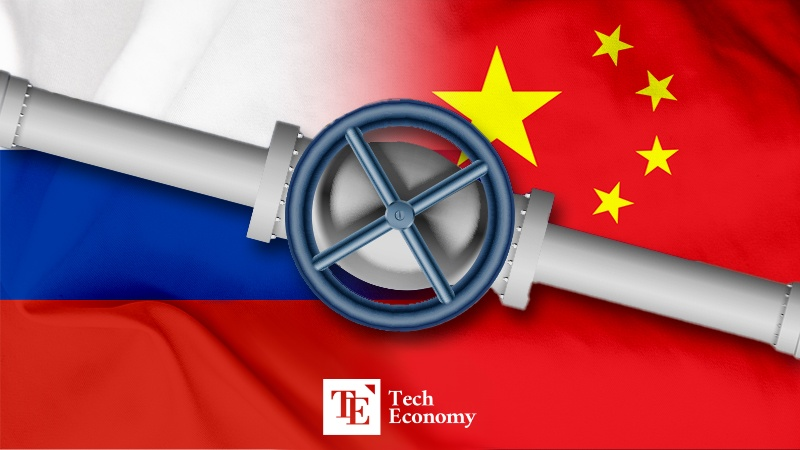
China is now moving to reinforce this energy advantage. At the center is its LNG-pipeline cooperation with Russia. The new “Power of Siberia 2 (PoS2)” project targets an annual capacity of 50 bcm (1 bcm = 1 billion m³). Combined with the already-operating PoS1 pipeline (38 bcm, expanding to 44 bcm), China could secure up to 94 bcm of pipeline gas annually. With Russia losing access to European buyers, Beijing sees an opportunity to lock in cheap, stable overland gas to support manufacturing and high-power AI data centers.
This will also reshape China’s energy-security architecture. Historically, China’s LNG imports faced maritime chokepoints such as the Malacca and Hormuz straits. A Russia–China pipeline network would shift much of that risk onto continental routes. Massive long-distance pipelines would help stabilize heating, industrial demand, and baseload power—cutting volatility in China’s energy costs.
AI data-center operations stand to benefit directly. Chinese AI chips may be less energy-efficient than U.S. alternatives, but stable, low-cost power keeps total costs competitive. AI workloads require substantial cooling, consistent voltage, and strong grid reliability—all of which pipeline-driven baseload gas generation can support. This makes Russian gas a strategic asset not just for energy security, but for the long-term foundation of China’s AI industry.
Niamh O’Sullivan is an Irish editor at The Economy, covering global policy and institutional reform. She studied sociology and European studies at Trinity College Dublin, and brings experience in translating academic and policy content for wider audiences. Her editorial work supports multilingual accessibility and contextual reporting.
Similar Post