Incheon Airport Corporation Sees Green Light for Expansion of Overseas Investment-Development Projects, but Low Profitability Remains a Challenge

Anne-Marie Nicholson is a fearless reporter covering international markets and global economic shifts. With a background in international relations, she provides a nuanced perspective on trade policies, foreign investments, and macroeconomic developments. Quick-witted and always on the move, she delivers hard-hitting stories that connect the dots in an ever-changing global economy.
Authored On
Modified
Winning the Montenegro airport project would mark its first order in Europe
Expansion underway from consulting-centered portfolio to investment-development projects
Several projects incur losses due to low unit-price contracts that worsen deficits during operation
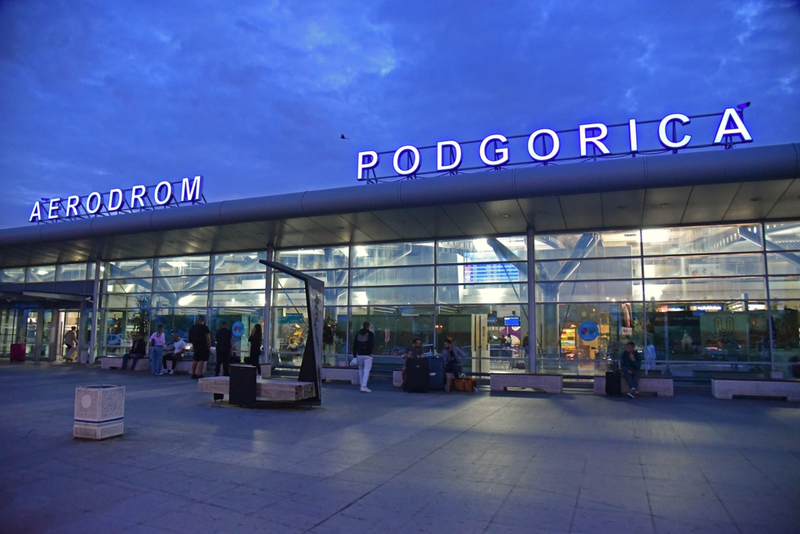
Incheon International Airport Corporation (IIAC) is broadening its footprint in overseas investment-development projects, reinforcing its expertise as a global airport operator. After securing the development and operation project for Urgench Airport in Uzbekistan last May—its first entry into Central Asia—the corporation is now seen as the leading contender for Montenegro’s Podgorica and Tivat airport project, brightening the outlook for future overseas investment-development ventures. However, poor profitability and financial strain observed in existing projects in the Philippines, Indonesia, and Kazakhstan remain pressing challenges.
Top Ranking Again in the Re-Evaluation for Podgorica and Tivat Airports
On the 13th (local time), Montenegro’s media outlets including Vijesti reported that IIAC ranked first across all evaluation categories in the re-assessment of the international tender for Podgorica and Tivat airports. According to the tender committee results posted by the Montenegrin Ministry of Transport the previous day, IIAC scored 96.18 points, significantly outpacing Luxembourg-based U.S. company Corporación América Airports (CAAP), which scored 65.15—a gap of 31.03 points.
Montenegro’s Ministry of Spatial Planning had released identical scoring results in July, officially announcing IIAC at 96.18 points and CAAP at 65.15 points. However, due to an objection filed by CAAP, the results were re-evaluated three months later. Under Montenegro’s procurement rules, the newly released results may also face objection, in which case a conclusion must be reached within 30 days. Still, local media view IIAC’s selection as virtually confirmed.
The international tender for Podgorica and Tivat airports is a public-private partnership (PPP) led by Montenegro’s government, granting 30-year construction, operation, and decision-making rights for both airports. Podgorica Airport, located near the nation’s capital, and Tivat Airport, situated in a western coastal resort city, are Montenegro’s key gateway airports. As of 2024, their passenger volumes stand at 1.8 million and 1.1 million, respectively—both exceeding capacity—making terminal modernization and infrastructure expansion urgent.

Target to Expand Investment-Development Portfolio to 10 Projects by 2030
If IIAC wins the Montenegro airport project, it would mark the corporation’s first direct investment-development contract in Europe—an important milestone. Since launching its consulting support for Iraq’s Erbil International Airport in 2009, IIAC has secured 39 projects across 18 countries, totaling $424 million in orders. Consulting accounts for the largest proportion—84.6%—across 33 projects including nine operational support, eight technical support, ten master plans, five dispatch programs, and one training project.
However, consulting projects generate smaller contract values and offer limited scalability compared to investment-development projects. Thus, despite higher project counts, consulting represents only 25.37% of order value—$107.5 million. By contrast, investment-development projects account for 22.8%—$92.66 million—from only two contracts (5.13%). Accordingly, IIAC aims to expand its investment-development portfolio to ten projects by 2030 and directly develop and operate 30 airports by 2040, actively pursuing PPP tenders worldwide.
The geographic scope is also expanding rapidly. While IIAC once concentrated mainly on Southeast Asia—including Indonesia’s Hang Nadim International Airport in Batam and the Philippines’ Ninoy Aquino International Airport (NAIA) in Manila—it secured its first Central Asian PPP project last May with the development and operation of Urgench Airport. The Urgench project, jointly undertaken with Korea Overseas Infrastructure & Urban Development Corporation (KIND), involves a total investment of $151 million to build a new passenger terminal, cargo terminal, and ancillary facilities capable of handling three million passengers annually. IIAC will operate the airport for 19 years and retain 100% equity—its first full-ownership case.
In June, IIAC also joined the PPP project for Guayaquil’s new airport, Ecuador’s largest airport initiative. As Ecuador’s top economic and industrial hub, Guayaquil is promoting a new airport capable of handling more than seven million passengers annually. IIAC secured the “Master Plan for the Development of the Guayaquil New Airport Aerotropolis,” providing technical and policy advisory. Through this engagement, it intends to strengthen official cooperation with the Guayaquil Airport Authority and lay groundwork for participating in the full construction and operation project.
Cumulative Overseas Losses Near $382 Million
However, critics note that simply expanding the number of overseas projects does not guarantee meaningful outcomes; profitability must be secured amid intensifying global competition. In reality, many of IIAC’s overseas projects repeatedly record operational deficits, burdening its financial position. Official data confirm this. IIAC’s overseas division has posted operating losses for five consecutive years since 2020. During this period, total overseas investment grew from $246 million to $385 million, an increase of $139 million, while cumulative operating losses reached $382 million.
The NAIA project in the Philippines—secured in February last year and promoted as Korea’s “first airport operation export”—is cited as a representative loss case. During the initial planning stage, IIAC agreed to remit 63% of revenue to the Philippine government, but the final contract raised the revenue-sharing ratio to over 82%, undermining the project’s commercial viability. As of 2024, its long-term borrowings amount to $538 million, and its capital impairment ratio stands at 7.7%. Persistent deficits have deteriorated cash flows, while accumulated foreign exchange losses continue to mount. The project effectively generates little real profit and steadily increases debt.
The situation is even more serious at Indonesia’s Batam Airport project. Facilities worth $25.4 million, equivalent to 48% of total assets, remain incomplete, while repeated construction delays and contract adjustments have escalated cost burdens. Central Asia shows similar concerns. IKAS, the Kazakh subsidiary operating IIAC’s projects in Almaty and other airports, recorded a 38% year-on-year increase in sales in 2024 but still posted a net loss. With operational unit costs so low that “the more it operates, the more it loses,” capital has continued to decline, raising doubts about long-term project sustainability.
Anne-Marie Nicholson is a fearless reporter covering international markets and global economic shifts. With a background in international relations, she provides a nuanced perspective on trade policies, foreign investments, and macroeconomic developments. Quick-witted and always on the move, she delivers hard-hitting stories that connect the dots in an ever-changing global economy.
Similar Post