Vietnam Signals End of the “Cheap Assembly Hub” Era as It Bets on Technology With a Revised High-Tech Law

Stefan Schneider brings a dynamic energy to The Economy’s tech desk. With a background in data science, he covers AI, blockchain, and emerging technologies with a skeptical yet open mind. His investigative pieces expose the reality behind tech hype, making him a must-read for business leaders navigating the digital landscape.
Authored On
Modified
Reducing External Dependence → Preparing to Move Up the Value Chain
Leveraging the Accumulated Effect of Legal and Institutional Reforms
Rising Tariff Pressures Amid Supply-Chain Congestion
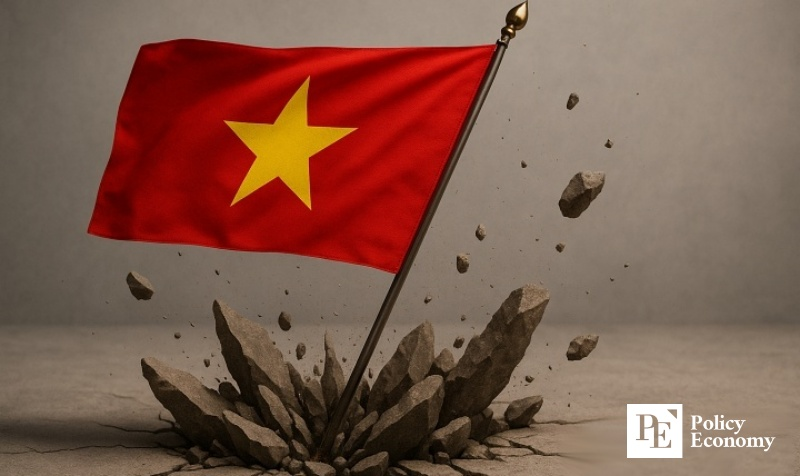
Vietnam’s move to scale back generous incentives for foreign companies marks a clear shift away from the long-standing model of relying on overseas capital and low-cost manufacturing. Instead, the country is steering toward a technology-driven industrial structure. Manufacturers operating in Vietnam—already burdened by U.S. tariff risks and an increasingly crowded supply chain—worry about rising costs. Yet the prevailing view is that, given Vietnam’s geographic advantages and market access, there are still few realistic alternatives.
Foreign Manufacturers Brace for Direct Impact
According to Reuters on the 13th, Vietnam’s National Assembly has begun deliberating amendments to the High-Tech Law. The proposal would abolish top-tier tax, tariff, and land incentives previously granted to high-tech companies, leaving foreign firms operating in Vietnam exposed to significant changes. The government is reviewing adjustments to incentive categories, a restructuring of investment preferences, and the scaling back of existing benefits. A final vote is expected in December.
For decades, Vietnam attracted global electronics and component makers with ultra-low tax rates and favorable land terms. Samsung, for instance, received an effective tax rate of about 5 percent and has grown into a core investor responsible for more than 10 percent of the country’s total exports. But the introduction of the OECD’s 15 percent global minimum tax undermined Vietnam’s low-tax advantage, and the rapid progress of the High-Tech Law revisions has created a sense of urgency. Although Hanoi has pledged to prepare compensatory measures for key investors, companies remain uneasy due to the lack of clarity on criteria and procedures.
This push for legal reform stems from Vietnam’s internal recognition that a foreign-investment-dependent growth model cannot deliver technological self-reliance. The U.S. first imposed a 20 percent tariff on Vietnamese goods in August and then floated the possibility of raising tariffs to as high as 40 percent on products heavily reliant on foreign components. As a result, Vietnam increasingly views its traditional “low-cost assembly” structure as unsustainable. Moving toward a self-sufficient, tech-based economy has become not just desirable but necessary.
Foreign companies in Vietnam now see this shift as a variable that could force a broad redesign of global supply chains. From January to October this year, new investment filings by Korean firms in Vietnam reached 3.7 billion dollars, up 15 percent from a year earlier. While this may appear to signal an investment revival, beneath the surface companies are increasingly uneasy about the weakening of incentives, the uncertainty surrounding U.S. tariff rules, and the accumulation of structural risks. Future investment decisions will likely diverge sharply depending on how Vietnam implements its policy transition.
Years of Legal Overhaul Now in Focus
Vietnam’s latest policy moves also cast renewed attention on the country’s long-running efforts to overhaul its legal and institutional framework in pursuit of technological advancement. Over the past several years, Vietnam has pushed a sweeping reform package covering technology transfer, commercialization of research, digital transformation, and national strategic industries. The revised High-Tech Law is a continuation of this trajectory, reflecting Vietnam’s long-term ambition to transform its growth model into a knowledge- and technology-driven economy.
A centerpiece of this evolution is the revised Technology Transfer Law led by the Ministry of Science and Technology. Earlier this month, Minister Nguyen Manh Hung said Vietnam intends to break the pattern of “research results collecting dust on shelves” and instead push them toward real-world products and services. The draft law expands the scope of eligible technologies—including green-growth technologies—while strengthening mechanisms that spread technology to small and medium-sized enterprises. It also includes updates to technology valuation rules, clarifies government oversight authority, and allows capital contributions based on proprietary technologies.
In parallel, five additional draft laws—covering digital transformation, AI, high-tech industries, and intellectual property—are nearing completion. The digital transformation bill would require nearly all public services to operate digitally, aside from a narrow set of paper-based exceptions. It also mandates accessibility features, multilingual support, and digital-first administrative systems. Revisions to the High-Tech and IP laws focus on monetizing and commercializing research outcomes and clarifying rules for IP transactions, thereby strengthening Vietnam’s institutional foundation for tech-driven growth.
The draft Investment Law, which would significantly streamline project approval procedures, is another key element of this roadmap. The Ministry of Finance has signaled plans to limit approval requirements to sensitive sectors such as the environment, defense, ports, and airports, while exempting projects included in national or provincial master plans or selected through bidding. Although some warn of oversight gaps, the overall goal is to eliminate regulatory redundancy, reduce corporate burdens, and accelerate market entry for technology-based projects.
Limits of the “Low-Cost Factory” Model
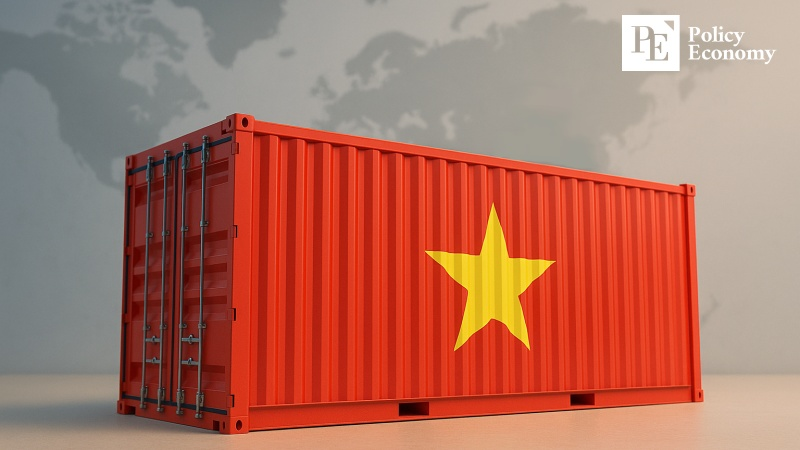
Despite these shifts, Vietnam remains a highly attractive production base for global manufacturers. When the U.S.–Vietnam tariff rate was finalized at 20 percent—rather than the initially flagged 46 percent—Korean companies operating in Vietnam broadly welcomed the outcome. One manufacturer noted that a 46 percent rate would have forced the shutdown of certain production lines, adding that 20 percent, while heavy, at least avoided immediate restructuring of existing contracts.
Still, the cost burden tied to Vietnamese production has not disappeared. Compared with the previous 10 percent tariff, the new rate is roughly double, prompting companies to reexamine export portfolios, renegotiate prices, and evaluate alternative production locations. While Vietnam’s labor cost advantage and long-developed industrial parks remain valuable, the weight of U.S. tariff risks means the traditional “low-cost base” strategy is no longer sufficient to protect profitability.
China’s accelerating influx of manufacturers adds both opportunity and risk. In the first half of the year, Chinese investment in Vietnam totaled 2.55 billion dollars, below Korea’s 3.08 billion dollars, but China led in project count with more than 600 new filings. While Korean companies primarily focused on expanding existing plants and shifting toward higher-value products, Chinese firms aggressively established new entities and built new factories, widening their manufacturing footprint.
This shift is closely tied to Vietnam’s push for technological autonomy and high-value manufacturing. Vietnam fears that its position as a “post-China” hub for global manufacturing could be overshadowed by an influx of Chinese companies seeking tariff-avoidance bases. The government sees the current moment as critical: unless Vietnam firmly establishes itself as a strategic node for R&D, high-value production, and global supply-chain control, the gains accumulated over decades could be ceded to competitors such as China.
Stefan Schneider brings a dynamic energy to The Economy’s tech desk. With a background in data science, he covers AI, blockchain, and emerging technologies with a skeptical yet open mind. His investigative pieces expose the reality behind tech hype, making him a must-read for business leaders navigating the digital landscape.
Similar Post