Foreign VC Funding for Chinese Startups Dries Up ㅡ Hit by Weak Demand and a Prolonged Sector Slump

Aoife Brennan is a contributing writer for The Economy, with a focus on education, youth, and societal change. Based in Limerick, she holds a degree in political communication from Queen’s University Belfast. Aoife’s work draws connections between cultural narratives and public discourse in Europe and Asia.
Authored On
Modified
Chinese Startups Secure Only 10% of Overseas Funding
Prolonged Venture Slump Keeps Profitability Stagnant
Oversupply and Weak Consumption Send a Chill Through China’s Domestic Market
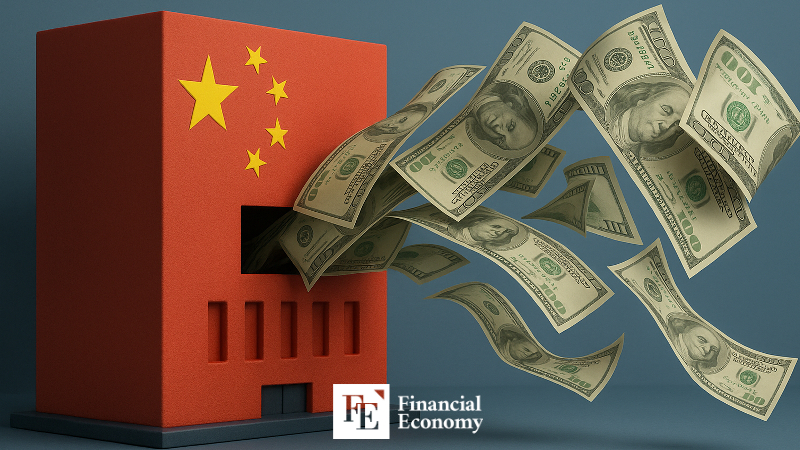
Overseas venture-capital firms have sharply scaled back their investments in Chinese startups. As the sector’s slump drags on and domestic demand remains weak, foreign capital is pulling out at a rapid pace. With private funding drying up, local companies are becoming increasingly dependent on state-backed capital.
Foreign Capital Inflows Into China’s Venture Sector Shrink
According to Nikkei Asia on the 16th (local time), citing financial-data provider Shanghai DZH, Chinese startups raised $6.6 billion from overseas in the first eight months of this year — only about 10 percent of their total funding. This is a sharp drop from 2018, when offshore financing accounted for roughly 50 percent of total fundraising. As access to dollar funding declines, overall capital raised has continued to fall since peaking in 2021.
State-backed funds are increasingly filling the gap left by foreign investors. Zhipu AI — an artificial-intelligence company founded by a Tsinghua University alumnus and now preparing for an IPO — counts not only private firms like Alibaba but also government-affiliated funds from Beijing and Shanghai as shareholders. Its lead underwriter will be China International Capital Corporation (CICC), a state-owned investment bank. The arrangement reflects Beijing’s push to support early-stage firms in strategic technologies.
Zhipu AI is far from alone. Many Chinese startups are leaning on government capital for growth. According to PitchBook, 16 percent of all startup investments in China in the first quarter involved state-linked investment entities. Government funding is concentrated in strategic sectors — pharmaceuticals, semiconductors, materials, and AI — aligning closely with Beijing’s long-term economic and technological priorities.
Growth and Profitability Darken in Tandem
The sharp pullback of foreign capital from China’s venture sector stems from a prolonged downturn in the country’s startup ecosystem. Data from IT Juzi show that the number of Chinese startups receiving VC funding peaked at 51,302 in 2018 but plunged to 1,202 in 2023 — a drop of 98 percent. The decline continued this year. According to GlobalData, VC deal volume in China from January to April 2025 fell about 16 percent year over year, while total investment value sank 50 percent.
Profitability challenges among AI companies — a core pillar of China’s startup landscape — are adding to the strain. A recent report by Uniquely Research and San Francisco–based Tech Buzz China found that only four Chinese apps appeared in the global top 100 private AI apps ranked by annual recurring revenue (ARR) as of August. Their combined ARR was $447 million, accounting for just 1.23 percent of the top 100’s $36.4 billion total. The four developers — Glority, Ploud, ByteDance, and Zhuiyoufang — remain minor players in revenue terms despite rapid growth in China’s AI scene.
Experts say the weak profitability of Chinese AI startups reflects deeper structural issues. One market analyst noted that while Chinese firms are advancing quickly in technology, they lag far behind U.S. competitors in building viable business models and expanding globally. He added that limited VC funding has pushed many companies toward short-term government projects, delaying the development of sustainable revenue models.
“Supply Keeps Growing While Consumption Doesn’t” — China’s Domestic Demand Sinks
Some analysts say China’s chronic weakness in domestic consumption has eroded the growth engine of its startup sector. Industries across the country are locked in wasteful competition driven by overproduction, delaying improvements in overall quality. The auto industry shows this most clearly. Last year, China’s annual vehicle production capacity reached 55.07 million units, more than double its domestic sales of 26.9 million. Actual capacity utilization hovered around 50 percent, far below the commonly accepted overcapacity threshold of 75 percent.
Automakers, struggling with excess supply, slashed prices aggressively to stay competitive. The average price of an electric vehicle in China fell from $31,000 in 2021 to $24,000 in 2024, while industry profit margins dropped from 8.0 percent in 2017 to 4.3 percent in 2024. In May, BYD — the world’s largest EV maker — cut prices to clear inventory, prompting rivals to follow and fueling fears of a sector-wide “race to the bottom.” Beijing has since intervened, restricting excessive discounting and removing EVs from its list of strategic industries.
Despite excess supply, demand continues to freeze. Chinese households traditionally prefer saving over spending, and that tendency strengthens when economic uncertainty rises. Household consumption now accounts for about 39 percent of GDP — far lower than the roughly 60 percent typical in advanced economies. Weak demand is also suppressing price momentum. China’s consumer price index (CPI) rose just 0.2 percent in October from a year earlier, while the producer price index (PPI) fell 2.1 percent, marking 37 consecutive months of decline.
Aoife Brennan is a contributing writer for The Economy, with a focus on education, youth, and societal change. Based in Limerick, she holds a degree in political communication from Queen’s University Belfast. Aoife’s work draws connections between cultural narratives and public discourse in Europe and Asia.
Similar Post