U.S. EV Ecosystem Falters After Subsidy Cuts ㅡ Exposing the Limits of State-Driven Industrial Growth

As one of the youngest members of the team, Tyler Hansbrough is a rising star in financial journalism. His fresh perspective and analytical approach bring a modern edge to business reporting. Whether he’s covering stock market trends or dissecting corporate earnings, his sharp insights resonate with the new generation of investors.
Authored On
Modified
U.S. Battery Belt Contracts After EV Subsidy Cuts
Automakers Begin Restructuring and Shift Production Strategies
China’s EV Sector, Long Fueled by Subsidies, Faces Pressure as Support Fades
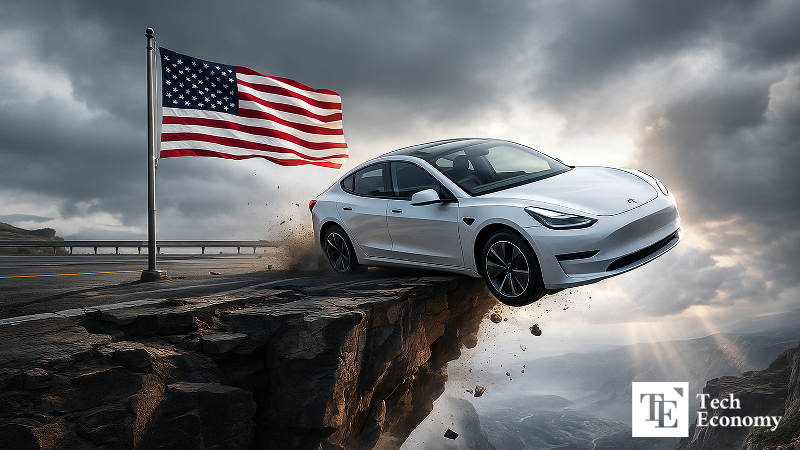
America’s “Battery Belt” — the EV-battery manufacturing corridor that emerged across the former Rust Belt and the Southeast — is beginning to falter. As the Trump administration ends federal tax credits for electric vehicles, demand has weakened sharply, sending shockwaves through the broader supply chain. A similar pattern is unfolding in China, where the EV industry, long propped up by massive state subsidies and positioned as a key player in the U.S.–China tech rivalry, is now facing mounting pressure as government support fades.
Battery Belt Loses Momentum as Subsidies Disappear
According to The Detroit News on the 14th (local time), production across America’s Battery Belt has cooled sharply. In Michigan, the $1.6 billion factory site of Our Next Energy sits empty with only bare ground exposed, while suppliers such as BorgWarner and Freudenberg have closed plants and laid off hundreds of workers. In Kentucky, Ford and SK On’s second BlueOval SK plant is little more than a vacant shell.
StarPlus Energy — the joint venture between Stellantis and Samsung SDI — is also struggling. The company had planned to hire 2,800 workers to produce EV batteries, but employees are now manufacturing energy-storage-system (ESS) batteries for grid stabilization and data centers instead. With massive sums already committed, the pivot reflects a desperate attempt to cope with an EV demand collapse. Switching EV production lines to ESS units requires significant additional capital, and profitability remains uncertain.
The broader collapse of the Battery Belt stems from the Trump administration’s passage of the One Big Beautiful Bill Act (OB3). The law ended the federal $7,500 EV tax credit on September 30, months ahead of schedule. As a result, U.S. EV sales in October fell more than 24 percent from the previous month. The shift reveals the market realities emerging as the bubble created by government-driven industrial policy deflates.
Carmakers Also Enter Emergency Mode
The drop in EV demand is hitting automakers as hard as the battery industry. GM announced late last month that it plans to lay off more than 3,400 workers across several sites, including its Factory Zero plant in Detroit. More than 1,700 will be furloughed indefinitely, while over 1,500 are expected to return around mid-next year. Ultium Cells — GM’s battery joint venture with LG Energy Solution — will suspend operations at its Ohio and Tennessee plants starting in January, with production expected to resume in mid-2026. Ford has scrapped its goal of producing 2 million EVs next year and is reassessing its strategy from the ground up. Nissan has postponed mass production of two new EV models that were slated to be built in the United States starting in 2028.
More automakers are shifting away from full EV production and leaning into hybrids. Hyundai recently unveiled a hybrid version of the Palisade, while Kia plans to add a hybrid Telluride. Japanese and European brands are also expanding their hybrid and plug-in hybrid (PHEV) lineups. Tesla, a pure EV maker, introduced “Standard” trims for the Model Y and Model 3, cutting prices by about $5,000 to offset part of the increase in effective purchase costs caused by the subsidy phase-out.
Given the Trump administration’s policy direction, most analysts expect EV demand in the United States to remain weak. Consulting firm AlixPartners projects that fully electric vehicles will account for only 7 percent of U.S. sales next year — roughly half of its previous forecast of 13 percent. Even by 2030, EVs are expected to make up just 18 percent of U.S. sales, far below the projected 40 percent in Europe and 51 percent in China.
Similar Signs Emerge in China
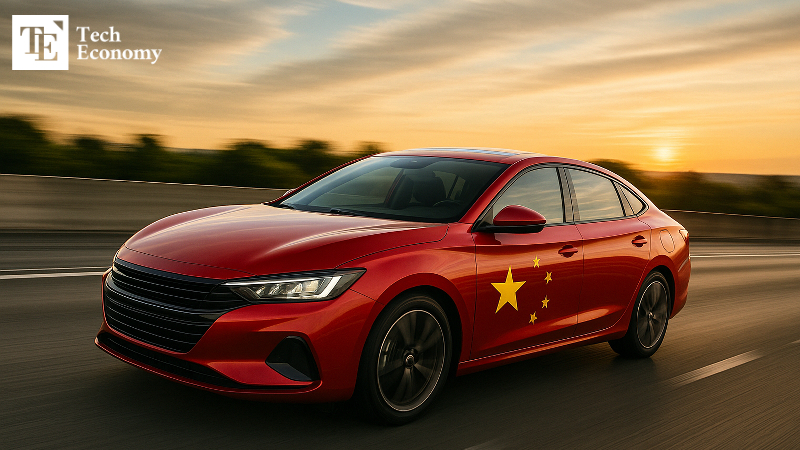
As the end of U.S. subsidies throws the American EV industry into turmoil, analysts say the move reflects the broader U.S.–China technology rivalry. With China’s EV sector having grown rapidly on the back of massive state subsidies, some experts argue the U.S. chose not to match Beijing’s industrial push and instead stepped back from nurturing its own market. Research by Scott Kennedy of the Center for Strategic and International Studies (CSIS) estimates that China’s government provided $230.9 billion in subsidies and related support to its EV industry over the past 15 years.
China’s own subsidy regime, however, has been shrinking for years. By the end of 2022, most central-government subsidies had been sharply reduced or eliminated, while local governments — pressured by debt and fiscal strain — have pulled back from indiscriminate support. At the end of 2023, the National Development and Reform Commission (NDRC) declared it would phase out uncompetitive EV makers and concentrate resources on a select group of core companies.
As subsidies and cheap credit recede, the overcapacity built up during the boom years has started to collapse. Market demand now falls far short of supply. China’s annual auto-production capacity reached 55.07 million units last year, more than double domestic sales of 26.9 million. Capacity utilization remains around 50 percent. Automakers slashed prices aggressively to survive, pushing the average EV price down from $31,000 in 2021 to $24,000 in 2024. Industry profit margins fell from 8.0 percent in 2017 to 4.3 percent in 2024.
Companies unable to stay competitive are rapidly disappearing. According to China Industrial Information Network data, more than 4,000 EV-related firms shut down or had their registrations canceled in the second half of 2023 alone. Even WM Motor — once hailed as a “Chinese Tesla” and valued at more than 30 billion yuan in 2019 — filed for bankruptcy protection at the end of 2023 after a collapse in sales and mounting financial distress. Aiways has entered restructuring this year, while Neta and Li Auto have announced large-scale layoffs and production cuts.
As one of the youngest members of the team, Tyler Hansbrough is a rising star in financial journalism. His fresh perspective and analytical approach bring a modern edge to business reporting. Whether he’s covering stock market trends or dissecting corporate earnings, his sharp insights resonate with the new generation of investors.
Similar Post