Europe’s First “Zero-to-One” Rare-Earth Magnet Plant Opens in Estonia

Niamh O’Sullivan is an Irish editor at The Economy, covering global policy and institutional reform. She studied sociology and European studies at Trinity College Dublin, and brings experience in translating academic and policy content for wider audiences. Her editorial work supports multilingual accessibility and contextual reporting.
Authored On
Modified
Europe’s rare-earth magnet production becomes a reality
Despite urgent supply-chain needs, core capabilities remain weak
Rare-earth facility investments accelerate across Europe
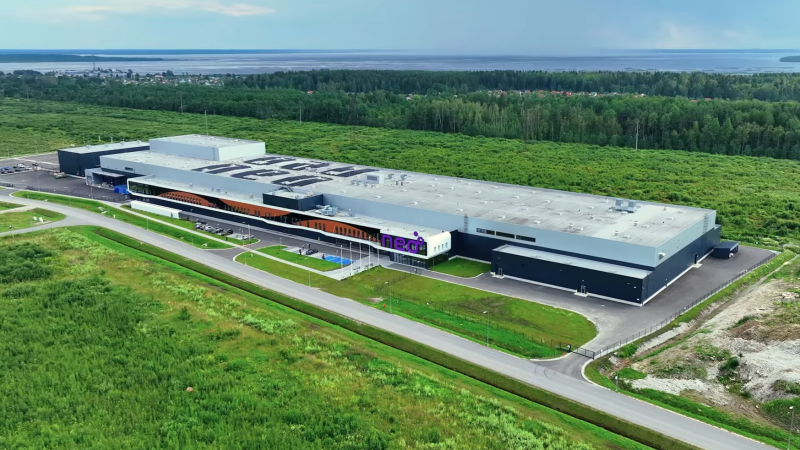
Europe has secured its first industrial foothold in rare-earth magnet production with the launch of a 2,000-ton-per-year facility in Estonia, marking a realistic initial step toward reducing dependence on China, which has long dominated over 90 percent of global output. But because most ore and refined metals still come from China, Europe’s supply chain remains fragile, and many analysts remain skeptical that the continent can quickly overcome China’s cost and efficiency advantages built on a tightly integrated, single-region value chain. As plant construction and investment accelerate across Europe, the path to narrowing the gap with China is expected to be a long-term effort.
Demand Uncertainty Removed → Commercial Operations Begin
According to the Wall Street Journal on the 16th, U.K.-based Neo Performance Materials began commercial production of rare-earth magnets in September in Narva, northeastern Estonia. With an annual capacity of 2,000 tons of permanent magnets, it is the first fully operational commercial rare-earth magnet plant in Europe. Although 2,000 tons is not a large share of global demand, it represents roughly 10 percent of Europe’s needs, prompting assessments that the region has finally gained some degree of internal sourcing capability.
Neo invested about 75 million dollars in the project. The neodymium magnets produced at the plant are high-value components used in electric-vehicle drive motors, smartphones, wind turbines, and fighter jets. Even the initial production volume could supply enough magnets for up to 1 million EVs annually. From the design phase, Neo built a fully linked system spanning raw-material procurement from suppliers such as Australia, local separation and refining in Estonia, and supply contracts with automakers and parts manufacturers. This was intended to avoid a lengthy trial-run period and move straight into commercial output.
Neo also moved early to lock in demand and reduce commercial risk. Bosch secured a large portion of the plant’s output under a long-term agreement, while Schaeffler, Mahle, and others also joined as customers. With rare-earth supply disruptions intensifying and Estonia hosting Europe’s only operational neodymium-magnet plant, these contracts materialized quickly. A parts-sector official said, “Neo is currently the only company in the West capable of reliably producing EV drive-motor magnets.”
Still, skepticism remains about how quickly Europe can raise its self-sufficiency. Ore, metals, and refining are still concentrated in China. Even so, the rapid sequence of acquiring an existing plant, refurbishing it, and shifting to commercial production is widely seen as a sign that Europe is moving beyond symbolic declarations and into real supply-chain construction. Neo plans to raise annual output in Estonia to around 6,000 tons after 2027.
Europe’s Race Against Time
Experts say Europe is moving even faster than the United States to build rare-earth independence because its vulnerabilities span both defense and industry. Washington also aims to reduce dependence on Chinese rare earths, but the U.S. already has viable domestic mining and refining projects in the pipeline. Europe, by contrast, relies on China for 98 percent of its core rare-earth materials, and much of its rearmament—missiles, fighter jets, drones, radars, and submarines—depends directly on Chinese metals and magnets. The New York Times recently described this as Europe’s “deepest contradiction”: calling for rearmament while depending on China for the raw materials that make weapons work.
Despite mounting criticism, the European Union has taken a cautious approach. On one hand, it has discussed activating trade-defense tools in response to China’s export controls. On the other hand, it has simultaneously sought short-term supply assurances through direct negotiations with Beijing—sparking backlash, particularly as Germany and France push to formally name China’s economic coercion in summit documents. For now, Europe’s approach appears guided by short-term pragmatism aimed at avoiding sudden supply shocks.
Against this backdrop, Neo’s Estonia plant highlights the urgency facing Europe. Unlike the United States, Europe acknowledges it cannot quickly build a full chain—from mining to refining to magnet production—and has opted for stopgap measures to fill immediate supply gaps. According to consultancy SFA Oxford, Europe may need up to 12 years to establish mining, refining, manufacturing, and supply-chain integration. Neo’s project, it said, represents a “minimum defensive line”—allowing Europe to source at least a portion of the magnets needed for EVs and defense within the region, even while still relying on Chinese raw materials.
A Long Road to Matching China’s Efficiency and Costs
Europe’s attempt to build a step-by-step chain—mining, refining, magnet production—has begun to expand meaningfully. In Norway’s Telemark region, surveys revealed 8.8 million tons of total rare-earth oxides, including 1.5 million tons suitable for EV and wind-turbine magnets. Since the EU’s Critical Raw Materials Act targets at least 10 percent domestic mining of rare earths by 2030, Telemark is seen as a leading candidate to link upstream extraction with Estonia’s downstream magnet production.
Market volatility has also accelerated Europe’s policy momentum. A dramatic example is yttrium, whose price surged 4,400 percent in Europe—heightening alarm that fluctuations in even a single element can ripple through defense, power, and battery industries. With fears of repeated price shocks rising, governments across Europe have begun revising exploration budgets, permitting processes, and environmental rules. Political and industrial leaders increasingly agree that expanding domestic capacity is essential, as raw-material volatility can disrupt defense planning and industrial-strategy priorities.
Outside Europe, joint refining and recycling projects are helping reinforce the region’s supply chain. A notable example is the partnership between French mining firm Carester and Japan’s Ministry of Economy, Trade and Industry, which is building a facility capable of producing 590 tons annually of dysprosium and terbium while recovering rare earths from end-of-life EV magnets. Scheduled to start operations late next year, the project is significant because Europe can expand mining and magnet production while using France as a midstream refining hub.
Even with these developments, Europe still faces major structural constraints. China’s ability to mine, refine, and manufacture magnets in a single geographic zone provides unmatched cost and efficiency advantages. Even if Europe accelerates plant construction and investment, shifting the entire supply chain outside China involves overlapping technological, regulatory, and procurement challenges—making delays inevitable. As a result, Europe’s rare-earth strategy is increasingly framed not as “rapid substitution” but as a gradual transition aimed at reducing dependence rather than eliminating it outright.
Niamh O’Sullivan is an Irish editor at The Economy, covering global policy and institutional reform. She studied sociology and European studies at Trinity College Dublin, and brings experience in translating academic and policy content for wider audiences. Her editorial work supports multilingual accessibility and contextual reporting.
Similar Post