China Limits Travel to Japan After PM’s Taiwan Comments — Blow to Tourism, Potential Relief for an Overtouristed Japan

Aoife Brennan is a contributing writer for The Economy, with a focus on education, youth, and societal change. Based in Limerick, she holds a degree in political communication from Queen’s University Belfast. Aoife’s work draws connections between cultural narratives and public discourse in Europe and Asia.
Authored On
Modified
China Urges Citizens to Avoid Travel to Japan Amid Escalating Tensions
With No Shift in either Side’s Position, Anti-Japan Sentiment Expected to Rise
Sharp Drop in Chinese Tourists Looms — Will It Hit Japan’s Real Economy?
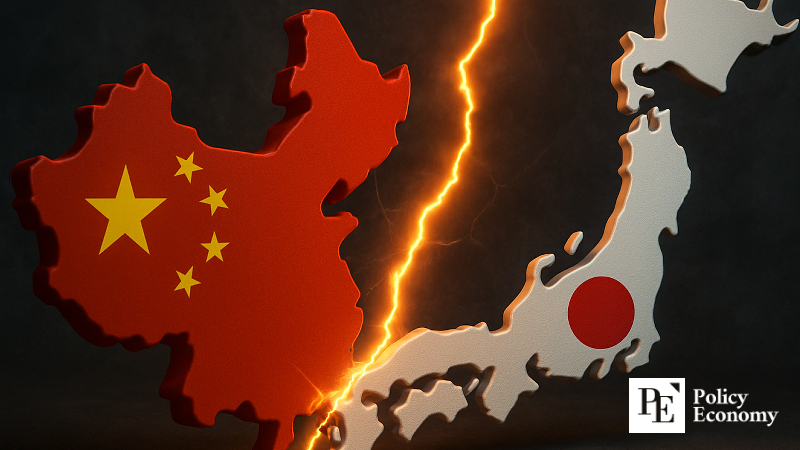
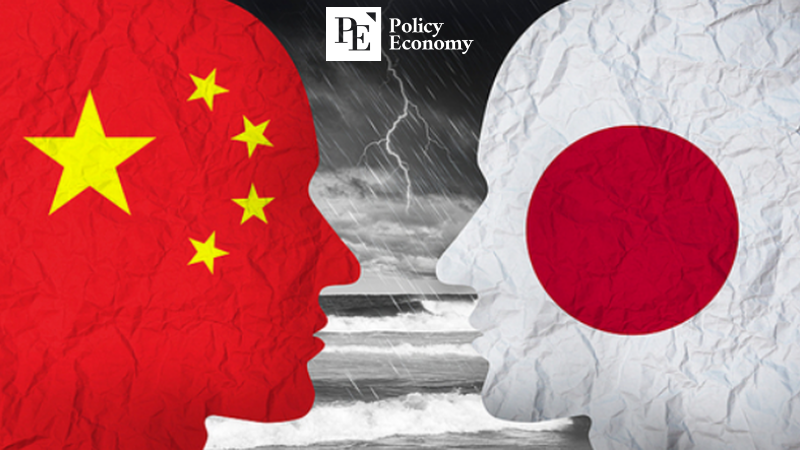
China’s foreign ministry has urged its citizens to refrain from traveling to or studying in Japan. The advisory comes as bilateral relations deteriorate sharply following Japanese Prime Minister Sanae Takaichi’s recent remarks about intervening in a potential Taiwan contingency — a move Beijing views as hostile. The guidance functions as a de facto “limit-Japan” measure that could pressure Japan’s real economy by curbing Chinese tourism. But some analysts note that Japan has already struggled with excessive tourist inflows, suggesting the overall economic impact may be limited.
China Takes a Hard Line: “Do Not Travel to Japan”
On the 16th, China’s Ministry of Culture and Tourism issued a public notice urging Chinese citizens to refrain from traveling to Japan for the time being. It also advised Chinese nationals currently in Japan to stay alert to local security risks, strengthen personal protection, and contact the Chinese embassy or consulates immediately in case of emergency.
Two days earlier, China’s foreign ministry warned that “open provocations over the Taiwan issue have severely damaged the atmosphere for people-to-people exchanges between China and Japan,” adding that travel to Japan may involve “serious threats to life and safety.” China’s Ministry of Education also cautioned students to reconsider studying in Japan, citing rising social instability and a surge in crimes allegedly targeting Chinese nationals. In line with the government stance, six airlines — including Air China — announced that passengers with Japan-bound tickets through year-end may cancel or change them without fees.
Beijing’s sharp response follows Japanese Prime Minister Sanae Takaichi’s comments signaling possible involvement in a Taiwan contingency. On the 7th, she told the Lower House Budget Committee that if China were to impose a maritime blockade on Taiwan, U.S. forces might intervene and China could use force to stop them — a situation that could constitute a “survival-threatening crisis.” Under Japanese law, such a designation allows Tokyo to exercise collective self-defense. It was the first time a sitting Japanese prime minister explicitly described a Taiwan emergency as a scenario that could trigger this authority. Takaichi similarly stated during last year’s LDP leadership race that “a Taiwan contingency would inevitably be a Japan contingency.”
Tensions Deepen, Raising the Risk of Intensifying Anti-Japan Sentiment in China
Beijing reacted sharply, viewing the Taiwan issue as central to its diplomacy. On the 8th, Xue Jian, China’s consul general in Osaka, posted an article about Prime Minister Sanae Takaichi’s remarks on X (formerly Twitter) and wrote, “We will have no choice but to cut off that filthy head they are thrusting forward without hesitation.” He added that framing a Taiwan contingency as a Japanese contingency is “a path toward destruction chosen by a few foolish politicians,” urging Japan to “recover basic rationality and respect for law so it does not face another national catastrophe like its defeat in the war.”
Japan pushed back. Chief Cabinet Secretary Minoru Kihara said on the 10th that China’s comments were “extremely regrettable” and lodged a strong protest. Beijing countered that Takaichi’s remarks hinted at the possibility of military involvement in the Taiwan Strait and seriously violated Japan’s political commitments under the One-China principle. Takaichi later said on the 11th that she would not retract her comments, while on the 13th, Chinese spokesperson Lin Jian warned that “playing with fire over Taiwan will only lead to getting burned.”
With both sides holding firm, experts warn that the episode could further inflame anti-Japan sentiment within China. Hostility rooted in Japan’s wartime history has surfaced repeatedly in Chinese society. A recent example is the film 731, released last month, which depicts the biological experiments conducted by the Imperial Japanese Army during World War II. Director Zhao Linsan reportedly spent 12 years on research, saying he hoped the film would “serve as historical evidence and turn theaters into courts of justice.” The release date was set deliberately for September 18 — the anniversary of the Mukden Incident, commemorated in China as a national humiliation day — to appeal to patriotic audiences.
The film quickly sold out in major cities including Beijing. State media such as Global Times and China Daily praised 731 as prompting “universal reflection on war and justice,” noting that it topped $42 million at the box office on its first day, surpassing Avengers: Endgame for the highest opening-day revenue on record in China. Since then, a wave of anti-Japanese wartime films — including Nanjing Photo Studio, Dongjidai, and Mountains and Rivers as Evidence — has reinforced anti-Japan sentiment through popular culture.
Related incidents have also appeared. In August, a group of Chinese diners in Shenzhen surrounded a Japanese family and demanded to know “what they think of Unit 731.” In September, also in Shenzhen, a taxi driver forced a passenger to get out at a dangerous spot after confirming the passenger was Japanese, sparking public criticism.
Is China’s Drop in Outbound Tourism a Gain or a Loss for Japan?
Whether China’s travel advisory will meaningfully damage Japan’s real economy remains a key question. According to the Japan Tourism Agency, Chinese travelers accounted for 23.6 percent (7.48 million people) of all foreign visitors to Japan through September this year. Over the same period, their spending reached about $3.9 billion, representing 28 percent of total foreign tourist consumption. Nomura Research Institute estimates that if Chinese arrivals fall sharply, Japan could lose up to around $14.7 billion.
Some analysts, however, argue the overall impact may be limited. Japan has been inundated with tourists in recent years — to the point of suffering from severe “overtourism.” Crowding at major attractions has strained local infrastructure and fueled frustration among residents. By September, Japan had already welcomed 31.65 million foreign visitors, surpassing the 30-million threshold faster than any year on record.
To curb the pressure, the Japanese government is considering raising the current departure tax from what is now roughly $7 to more than $20. It also plans to increase visa-issuance fees for foreign visitors starting next April — the first such hike since 1978. As Japan moves to raise barriers for inbound travel, a decline in Chinese tourists caused by Beijing’s restrictions may, in effect, support rather than hinder the government’s policy direction.
Aoife Brennan is a contributing writer for The Economy, with a focus on education, youth, and societal change. Based in Limerick, she holds a degree in political communication from Queen’s University Belfast. Aoife’s work draws connections between cultural narratives and public discourse in Europe and Asia.
Similar Post