Duty-free Operators Show Profit on Shrinking Sales: A Mirage Driven by Store Closures and Cost Cuts

Niamh O’Sullivan is an Irish editor at The Economy, covering global policy and institutional reform. She studied sociology and European studies at Trinity College Dublin, and brings experience in translating academic and policy content for wider audiences. Her editorial work supports multilingual accessibility and contextual reporting.
Authored On
Modified
Average spend shifts fuel a wave of profit turnarounds
Industry-wide restructuring and voluntary retirements
Tourist spending patterns point to a smaller future market

Korea’s duty-free operators reported a noticeable improvement in profitability in the third quarter, signaling a rebound despite sales that remain below pre-pandemic levels. Operating margins improved on the back of restructuring, cost cuts, and a reduced reliance on Chinese daigou resellers. However, as Chinese MZ tourists shift from luxury and bulk-buying toward road shops and value-focused retailers, duty-free stores are no longer the primary channel for tourist spending but one option among many.
A break from daigou reliance opens a path to recovery?
According to financial disclosures on Nov. 17, Lotte Duty Free posted third-quarter revenue of about 496 million dollars, down 9.4 percent year over year. Cumulative sales for the year reached about 1.39 billion dollars, down 17.1 percent, but operating profit swung to about 27.5 million dollars. The figures show revenue contraction but a lower breakeven level, reflecting strengthened cost discipline and a shift toward profitability-focused operations.
This shift aligns with Lotte’s move away from heavy dependence on Chinese daigou traders. For years, the company relied on a small number of daigou who made bulk purchases in exchange for high commissions and rebates, inflating revenue while weakening margins. This year, Lotte reduced daigou exposure and expanded individual-tourist demand, online duty-free sales, and revenue from overseas branches. Online duty-free revenue rose at a double-digit pace, while international branches posted solid gains.
Other operators moved in a similar direction. Hyundai Duty Free recorded revenue of about 152 million dollars, down 2.5 percent, but returned to a roughly 0.9 million-dollar operating profit after exiting its Dongdaemun store in July. Shilla Duty Free generated revenue of about 582 million dollars and reduced operating losses to about 7.1 million dollars. Shinsegae Duty Free grew revenue to about 369 million dollars, up 14.2 percent, and narrowed losses to about 3.8 million dollars. Despite volatility, the overall trend shows a pivot from scale expansion to profitability stabilization.
The duty-free industry expects this trend to continue into the fourth quarter, with profitability becoming even clearer. A Lotte Duty Free representative said the company “secured three consecutive quarters of profit by strengthening efforts to attract both domestic and foreign customers and by boosting online sales,” adding that it plans to “enhance downtown duty-free infrastructure and expand on- and offline promotions to sustain sales growth while improving both operational efficiency and marketing to raise revenue and profitability at the same time.”
A recovery driven not by growth but by cuts
Market analysts attribute the rebound to restructuring efforts underway for the past one to two years. With the pre-pandemic expansion model—large downtown stores and daigou-centric volume—no longer viable, operators shifted from scale competition to eliminating unprofitable stores and cutting overhead. Last year, the four major duty-free operators posted a combined operating loss of about 190 million dollars, prompting recognition that expansion alone could no longer address structural challenges.
The foundation for this quarter’s recovery was set last year through voluntary retirements, staff reductions, and store closures. Shilla Duty Free executed large-scale voluntary retirements to reduce senior labor costs, and Lotte, Shinsegae, and Hyundai Duty Free also ran voluntary-retirement programs to streamline their workforce. As a result, personnel-expense burdens fell significantly.
Store-level restructuring also played a direct role. Shilla Duty Free relinquished its Incheon Airport DF1 concession, absorbing a penalty of about 1.30 billion dollars to eliminate an annual loss of roughly 342 million dollars. Shinsegae Duty Free liquidated its Busan operation and converted its underground space into fashion and character retail. Hyundai Duty Free closed its Dongdaemun store and downsized its Trade Center branch. Lotte Duty Free reduced operating areas at major locations, signaling a retreat from store-count expansion.
Analysts describe the duty-free industry as entering a transition from an expansion phase to a defensive, cost-management phase. Even if inbound tourism recovers, operators are unlikely to rebuild staff and store networks quickly. Profit improvement will likely remain driven by restructuring combined with modest demand recovery.
From expansion to defense
Shifts in foreign-tourist spending patterns reinforce the shift toward defensive management. While tourist arrivals are rising, their spending destinations and categories are diverging from duty-free channels. Chinese MZ tourists increasingly prefer practical, low-cost, well-reviewed products rather than bulk luxury purchases. Operators acknowledge that despite short-term boosts from visa-waiver policies, this structural shift limits long-term growth.
Data reflect this shift. July duty-free sales totaled about 630 million dollars, down 8.6 percent year over year, while average spending per visitor fell to about 244 dollars—down sharply from roughly 1,800 dollars during 2021’s daigou-driven peak. The duty-free association attributes this to a collapse in daigou bulk buying and a shift toward road shops and value retailers.
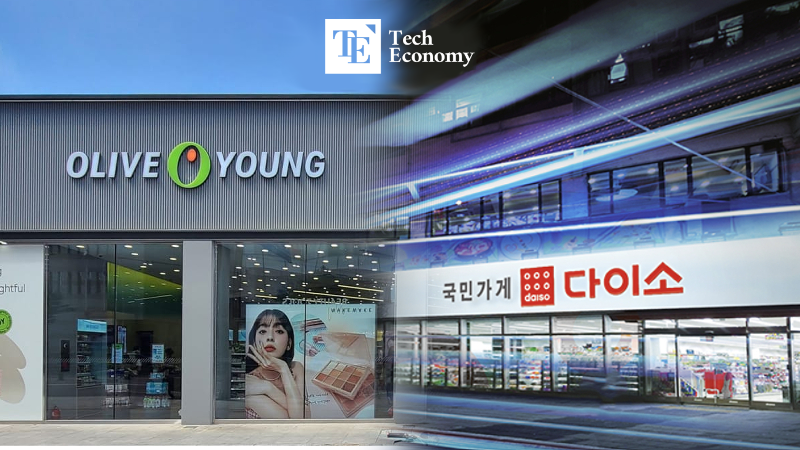
The change carries significant implications. Chinese MZ travelers prefer lifestyle goods, cosmetics, snacks, and daily products commonly used by Koreans, purchased in retailers such as Olive Young, Daiso, and Musinsa. These stores have become core tourist stops, and even daigou traders increasingly purchase from road shops, using receipts and photos to validate authenticity. As a result, duty-free stores face erosion in price competitiveness and merchandise appeal.
Niamh O’Sullivan is an Irish editor at The Economy, covering global policy and institutional reform. She studied sociology and European studies at Trinity College Dublin, and brings experience in translating academic and policy content for wider audiences. Her editorial work supports multilingual accessibility and contextual reporting.
Similar Post