[De-Dollarization] China Quietly Buys Gold at 10× Official Levels ㅡ Accelerating Its Push for De-Dollarization and Yuan Dominance

Aoife Brennan is a contributing writer for The Economy, with a focus on education, youth, and societal change. Based in Limerick, she holds a degree in political communication from Queen’s University Belfast. Aoife’s work draws connections between cultural narratives and public discourse in Europe and Asia.
Authored On
Modified
China’s Actual Gold Purchases This Year Estimated at 250 Tons — Far Above Official Figures
A Strategy to Hedge Dollar Risk and Strengthen the Yuan’s Global Role
As De-Dollarization Spreads Around China, the U.S. Counters With “Dollarization” Policies
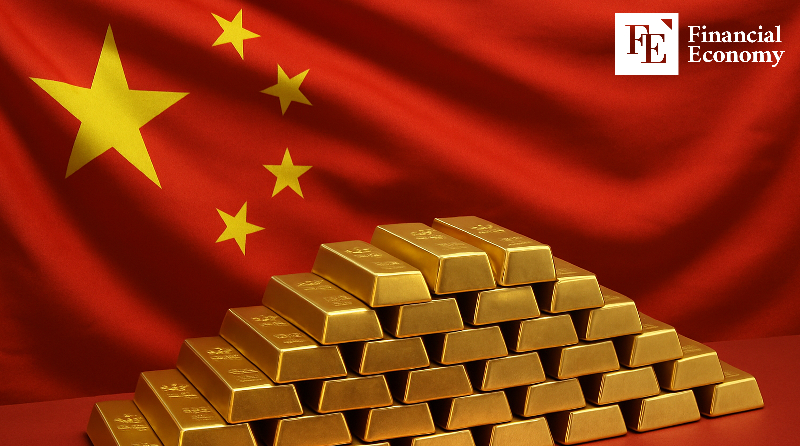
Analysts say China may be buying more than ten times the amount of gold it officially reports, acquiring large quantities off the books. With the dollar weakening, Beijing appears to be accelerating efforts to hedge dollar risk and advance its broader de-dollarization strategy by leaning on gold as a safe-haven asset. As the dollar’s dominance faces mounting pressure in global markets, the United States is weighing ways to reinforce its position through renewed “dollarization” measures.
China Quietly Expands Its Gold Purchases
On the 14th, the Financial Times reported that China has been buying gold far beyond its official disclosures, raising doubts about the reliability of Beijing’s published figures. According to Société Générale, China’s actual gold purchases this year may reach up to 250 tons. Bruce Ikemizu of the Japan Bullion Market Association noted that “official Chinese data carries little credibility in the market,” estimating China’s current gold holdings at roughly 5,000 tons. By contrast, the State Administration of Foreign Exchange — under the People’s Bank of China — has reported only 25 tons of purchases so far this year.
Analysts say the discrepancy reflects China’s broader de-dollarization strategy. Beijing appears to be reducing its reliance on the dollar and building a buffer against potential U.S. financial sanctions by quietly accumulating safe-haven assets. Jeff Currie, chief strategy officer at Carlyle Group, said China is “strategically stockpiling gold as part of its de-dollarization push.” Nicky Shiels of MKS PAMP added that gold remains a key hedge against U.S. risks, and that “if China fears U.S. retaliation, it makes sense to disclose as little as possible.”
China’s pivot away from the dollar is also evident in its steady selloff of U.S. Treasuries. China’s holdings fell from $1.07 trillion in 2021 to $760.8 billion as of January 2025 — a drop of about 30 percent, far exceeding the 17 percent decline recorded between 2015 and 2022. U.S. Treasury data shows that China has offloaded more than $100 billion in Treasuries annually over the past three years.
Why China’s De-Dollarization Strategy Is Accelerating
China’s push to reduce its reliance on the dollar has gained momentum as the U.S. currency shows a clear downward trend. The trade-weighted U.S. dollar index, which hovered in the 90s in 2010 near the end of the financial crisis, climbed about 40 percent to the 120 range by late 2024. But in 2025, the trend reversed. After standing near 122, the index fell roughly 11 percent from January to June and has remained flat since.
Structural dollar weakness has emerged before, but those periods unfolded under a stable Pax Americana. Today, however, the U.S.-led global order is eroding, driven in part by Washington’s increasingly unilateral, America-first posture — one that has strained relations not only with rivals but also with its allies. As more countries question dollar dependence, the currency’s global dominance has weakened. According to the IMF, the dollar accounted for 56.32 percent of global foreign-exchange reserves in the second quarter of 2025 — the lowest share in 30 years.
Some analysts say China’s de-dollarization also serves its goal of elevating the yuan’s international standing. Beijing has stepped up efforts to globalize the currency and expand yuan-based trade with countries pursuing similar strategies. Within BRICS, transactions using currencies other than the dollar have already become common, and the yuan is reportedly used for roughly half of intra-bloc trade. Saudi Arabia, the leading Arab oil producer, even suggested last September that it could settle some oil sales in yuan.

A Quiet Currency Power Struggle Takes Shape
The Trump administration is moving to counter China’s de-dollarization push by exploring ways to expand the global use of the U.S. dollar. According to the Financial Times, senior officials from the Treasury Department and the White House met in August with Steve Hanke, a prominent Johns Hopkins economist, to discuss how Washington might encourage other countries to adopt the dollar as legal tender. The United States is reportedly eyeing nations facing currency distress — including Argentina, Lebanon, Pakistan, Ghana, Türkiye, Egypt, Venezuela, and Zimbabwe — as potential candidates for dollarization.
The White House confirmed the meeting but said no formal decision has been made on whether the administration will actively promote dollarization abroad. “President Trump has repeatedly emphasized the importance of maintaining a strong dollar and preserving its global influence,” spokesperson Kush Desai said. He added that the administration regularly consults outside experts on major national issues, and that such discussions “should not be interpreted as official policy positions.”
Even as the United States and China intensify a behind-the-scenes battle for currency dominance, markets broadly agree that the yuan will not challenge the dollar anytime soon. The gap in global usage remains enormous: the yuan accounts for about 7 percent of foreign-exchange trading, compared with 90 percent for the dollar. In SWIFT payments, the yuan represents just 4 percent, while the dollar approaches 48 percent. Even if yuan-denominated transactions grow at double-digit rates, analysts say it would take decades before the currency could meaningfully erode the dollar’s position.
Aoife Brennan is a contributing writer for The Economy, with a focus on education, youth, and societal change. Based in Limerick, she holds a degree in political communication from Queen’s University Belfast. Aoife’s work draws connections between cultural narratives and public discourse in Europe and Asia.
Similar Post