China Redefines the Automotive Industry, Pivoting Toward Software Amid Market Saturation

Anne-Marie Nicholson is a fearless reporter covering international markets and global economic shifts. With a background in international relations, she provides a nuanced perspective on trade policies, foreign investments, and macroeconomic developments. Quick-witted and always on the move, she delivers hard-hitting stories that connect the dots in an ever-changing global economy.
Authored On
Modified
Mounting Pressure for an Autonomous-Driving and AI-Centric Transition
Market Distortions Triggered by Chronic Overcapacity
Accelerating Realignment as the Sector Reaches a Critical Inflection Point
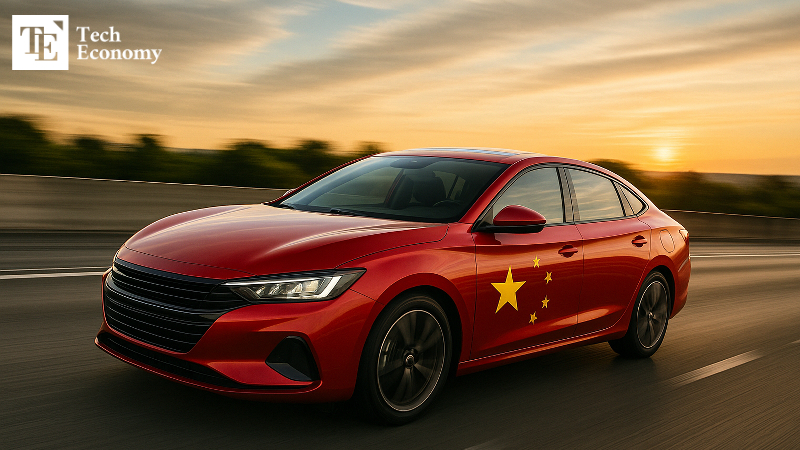
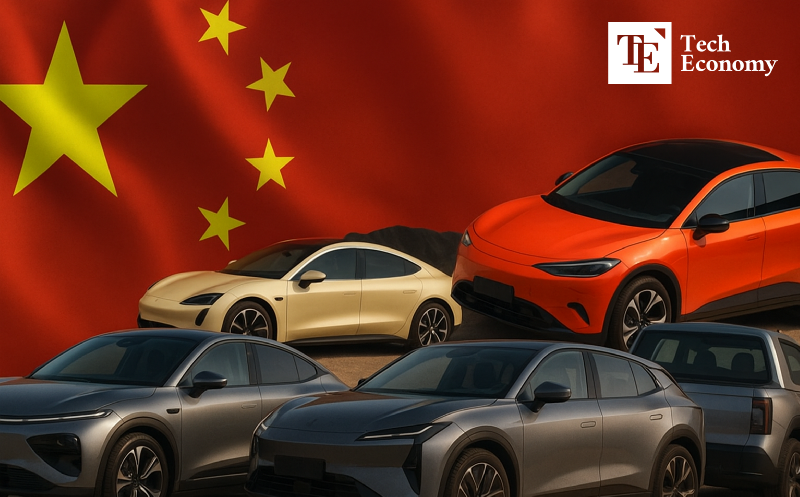
China’s automotive industry is confronting an abrupt inflection point. As overcapacity and the expiration of subsidies accelerate a collapse in profitability, manufacturers are rushing to shift from a hardware-led growth model to a software-centric paradigm. A sense of existential risk is spreading across the sector, driven by the understanding that firms unable to secure high-complexity strategies—such as technological internalization and the construction of service ecosystems—can no longer guarantee survival.
Prioritizing AI, Autonomous Driving, and Mobility Services
According to a recent report by the state-run China Daily on the 18th, the core competitive edge in China’s automotive sector is shifting from hardware manufacturing toward software and service ecosystems. CHINA EV100, a policy-research consortium created to support the development of China’s electric-vehicle (EV) and smart-connected-car industries, was among the first to signal this transition. In the era of artificial intelligence (AI), it argues, China’s automotive competitiveness must be evaluated by entirely new metrics.
CHINA EV100 forecasts that the value created by automotive service industries during vehicle operation will surpass that of manufacturing by 2028, reaching approximately USD 1.13 trillion—based on the KRW→USD rate of 1,460 KRW per USD and the KRW-equivalent figures provided in the original text. Research data further indicates that the traditional aftermarket for component replacement and maintenance alone will expand to USD 296 billion by 2028. But the service ecosystem extends far beyond that scope: it encompasses vehicle sales, finance and insurance, charging and energy-service solutions, customization, and renewal services—a vast market covering the full range of mobility-related economic activity.
Autonomous-driving technology is one of the critical forces making this service ecosystem increasingly tangible. Huawei’s advanced autonomous-driving system (ADS), “QianKun ADS 4.0,” in particular, carries significant implications for the Chinese automotive sector. The system raised assisted-driving engagement rates from 15% to nearly 20%, while its usage rate in parking scenarios reached 42%. Huawei’s subsidiary Yinwang projects that Level 3 highway autonomy will be adopted at scale in 2026, urban Level 4 autonomy in 2027, and unmanned trunk logistics in 2028. The period from 2025 to 2027 is widely expected to mark a “golden three years” for commercialization.
Chinese automakers have begun accelerating internalization of vehicle semiconductors and software this year. BYD is pushing for semiconductor independence while developing its proprietary autonomous-driving suite “DiPilot,” equipping even mass-market models with assisted-driving features to broaden AI adoption. Xpeng has introduced its in-house AI chip “Turing” in its latest vehicles, providing autonomous-driving support on highways and in urban environments as it expands its footprint across China’s major cities. NIO likewise unveiled its proprietary 5-nanometer chip, the “Shenji NX9031,” while pushing into Europe and Southeast Asia.
Profitability Collapses Under the Weight of Overcapacity
The sector’s shift in business models stems directly from the crisis engulfing China’s automotive industry. A combination of excessive supply and bruising price competition is eroding profitability across the board. According to a report released on the 10th by the Korea Automobile Research Institute titled “The Paradox of China’s Automotive Industry: Neijuan (Involution),” China’s vehicle-production capacity is nearly twice the size of its domestic market. Last year, China’s annual production capacity stood at an estimated 55.07 million units, while domestic sales reached only 26.9 million units. Even after factoring in exports, more than 20 million units’ worth of production facilities remain idle. China’s National Bureau of Statistics reported an average capacity-utilization rate of 72.2% among manufacturers above a designated size last year, but when extended to all registered manufacturers, the effective utilization rate is estimated to be around 50%. Any rate sustained below 75% is generally considered excess capacity.
With supply far outstripping domestic demand, price competition has intensified, further eroding margins. Last year, the average selling price of vehicles produced by major Chinese EV makers was USD 24,000, a 21% plunge over three years. Profit margins among Chinese automakers fell from 8% in 2017 to 4.3% in 2024. As of last year, only four EV makers—BYD, Tesla, Li Auto, and Geely—were profitable among China’s roughly 130 manufacturers, leaving most companies commercially unsustainable.
Even in Russia, which had delivered explosive growth, China’s dominance has begun to unravel. After Western and Korean automakers exited the Russian market following the 2022 invasion of Ukraine, Chinese brands rapidly filled the void. China’s vehicle exports to Russia jumped to 950,000 units in 2023—nearly six times the 163,000 units exported in 2022—capturing nearly 50% market share. In 2024, China sold 1.158 million vehicles to Russia, making it China’s largest export destination. But with Russia raising its recycling fees on imported vehicles by 85% in late 2024 and hiking import tariffs from 20% to 38% in January this year, that growth story has come to an abrupt end.
Subsidy Withdrawal and the End of a Price-War Era
Under these pressures, China’s central government is scaling back massive financial support for EVs and urging companies to establish self-sustaining business structures. According to China’s state broadcaster CCTV, the government will end its full exemption of purchase taxes on new-energy vehicles (including EVs, fuel-cell vehicles, and hybrids) on December 31 and cut the incentive in half from January 1, 2025 through the end of 2027. As a result, the current tax benefit—previously worth up to USD 4,240—will shrink to USD 2,123 next year. The Chinese Communist Party has also indicated that under the upcoming 15th Five-Year Plan, beginning next year, EVs will be removed from the list of designated strategic industries, signaling a broader termination of subsidy programs.
Experts view the subsidy reduction as the government’s opening move in restructuring the new-energy-vehicle sector. Many EV manufacturers expanded supply excessively on the back of tax incentives, yet their technological and quality improvements fell short of expectations. Before cutting incentives, Beijing had already tightened eligibility criteria: plug-in hybrids (PHEVs) and extended-range EVs (EREVs) previously qualified for tax benefits if they delivered at least 43 km of EV-mode driving range; last month, the threshold was raised to 100 km.
Beijing has also moved to curb the surge in “0-km used cars”—vehicles technically registered as used immediately after factory exit but effectively brand-new—which Chinese manufacturers had used to offload excess inventory. According to the China Association of Automobile Manufacturers, shipments of these 0-km used vehicles climbed from 15,000 units in 2021 to 436,000 last year and are expected to exceed 500,000 units this year. Regulators worry the practice damages the reputation of Chinese brands and the broader industry, and new restrictions have blocked this outlet for clearing unsold stock.
Amid these developments, Chinese automakers have been forced to chart their next phase of strategy. Yet a software-driven transformation is viable only for firms with ample capital and advanced technological capabilities. Smaller manufacturers are therefore likely to be squeezed out rapidly, accelerating consolidation around larger, platform-oriented players. Pressure is mounting further as foreign automakers re-enter the Chinese market—Hyundai being a notable example. Last month, Hyundai launched “ELEXIO,” a customized EV for China, marking its first locally led EV program covering both design and production, equipped with BYD’s LFP battery. Hyundai plans to follow with a compact EV sedan next year and introduce six new-energy models by 2027, while expanding partnerships with Chinese autonomous-driving firms to release a wide array of China-specific vehicles.
An economic expert noted, “With China’s subsidy regime effectively ending, EV makers can no longer rely on pure price competition. Production efficiency has already reached a mature threshold, but many firms that proliferated during the subsidy boom lack the foundations for self-sustaining operations and may collapse in succession. The next several years will become a decisive turning point: unless Chinese automakers secure software capabilities, technological internalization, and service-ecosystem competitiveness, survival itself will become increasingly uncertain.”
Anne-Marie Nicholson is a fearless reporter covering international markets and global economic shifts. With a background in international relations, she provides a nuanced perspective on trade policies, foreign investments, and macroeconomic developments. Quick-witted and always on the move, she delivers hard-hitting stories that connect the dots in an ever-changing global economy.
Similar Post