Hyundai Shifts Production to the U.S. — Korean Firms Accelerate Exit from Korea and Expand U.S. Investments

As one of the youngest members of the team, Tyler Hansbrough is a rising star in financial journalism. His fresh perspective and analytical approach bring a modern edge to business reporting. Whether he’s covering stock market trends or dissecting corporate earnings, his sharp insights resonate with the new generation of investors.
Authored On
Modified
Hyundai Plans to Lift U.S. Production Share to 80% by 2030
Major Firms Including Samsung Electronics and SK Hynix Also Expanding Investment in the U.S.
“Heavy Regulation and Labor Constraints” Expose Structural Limits of the Korean Market
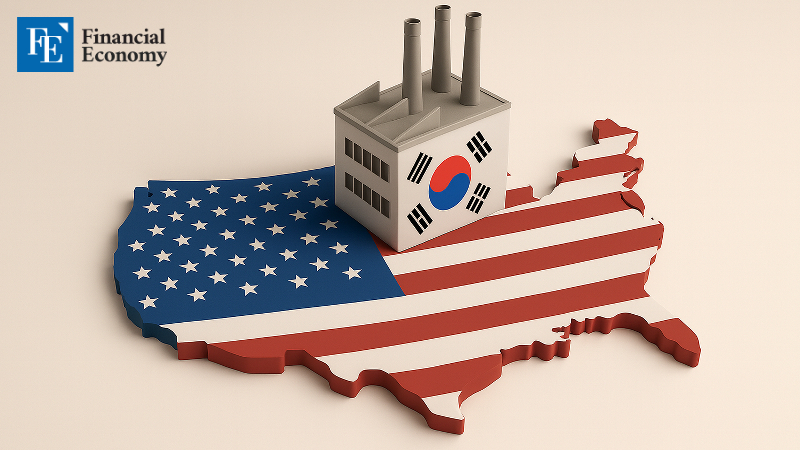
Hyundai Motor has begun expanding its production capacity in the United States. The company aims to increase local output to offset tariff risks under the Trump administration and strengthen its price competitiveness in the U.S. market.
This shift away from Korea—and the broader wave of increased U.S. investment—is spreading across Korean industry. Companies are relocating production bases to escape high labor costs, heavy regulations, and steep inheritance taxes.
Hyundai Turns to U.S. Production to Offset Tariff Risks
According to the auto industry on the 19th, Korea and the United States released a Joint Factsheet (JFS) on the 14th outlining the details of their trade and security negotiations. The document states that U.S. tariffs on Korean-made vehicles will be cut from 25% to 15%. As a result, Hyundai and Kia will now face the same tariff rate as Japanese competitors such as Toyota and Honda, forcing a recalibration of production and sales strategies. Before the “tariff war,” Korea paid no U.S. auto tariffs under the bilateral FTA, while Japan faced a 2.5% duty.
For Hyundai and Kia, the most urgent task is boosting their U.S. production share. Toyota and Honda manufacture roughly 50% and 80% of their U.S. sales locally, while Hyundai and Kia remain in the low-40% range. This left them far more exposed to tariff shocks and disadvantaged in setting competitive prices in the U.S. market. Recognizing this, Hyundai Motor Group announced during its “2025 CEO Investor Day” in New York last September that it would lift its U.S. production share to 80% by 2030—expanding its Georgia plant from 300,000 to 500,000 units a year and shifting Genesis models to local production.
The challenge is that expanding U.S. output inevitably reduces production volume at home. Hyundai’s Ulsan EV line is already feeling the impact of “domestic manufacturing hollow-out.” Weekend overtime has disappeared, partial shutdowns have occurred eight times this year, and “pitch-down” output reductions are now routine. As Hyundai increases reliance on overseas plants and export volume declines, domestic factory utilization continues to fall.
Korean Conglomerates Ramp Up U.S. Production
This “exit-from-Korea” shift is not unique to Hyundai. According to DigiTimes, overseas production assets held by Korea’s top 10 conglomerates rose from roughly $161 billion in 2016 to about $377 billion at the end of 2024—an increase of nearly 135%. The largest jump came from assets in the United States. Data from CEO Score shows that U.S. production assets held by the top 10 groups reached about $121 billion as of late 2024—nearly matching the combined value of their production assets in China (about $90 billion) and Vietnam (about $40 billion), once considered the global manufacturing hubs.
The newly released Korea–U.S. Joint Factsheet also includes a $150 billion roadmap for U.S.-bound Korean corporate investment. Samsung Electronics and SK Hynix are expected to accelerate major projects in Texas and Indiana, including new foundry and advanced packaging facilities. Samsung has already laid out plans to invest more than $37 billion in Taylor, Texas. SK Group is preparing to spend over $13 billion, including a $3.87 billion advanced packaging plant in Indiana.
Hyundai Motor Group will invest $26 billion in the United States to build out its EV value chain—covering the Meta Plant America EV factory in Georgia, a new electric arc furnace steel mill in Louisiana, and a new robotics plant. LG Group plans to sharply expand local capacity in batteries and home appliances, while LS Group will spend $3 billion on U.S. subsea cable manufacturing and power equipment. Korean Air is moving ahead with a $36.2 billion purchase plan for 103 fuel-efficient Boeing aircraft. For the $150 billion Korea–U.S. shipbuilding collaboration known as the “Marsca Project,” Korea’s “Big Three”—HD Hyundai, Hanwha Ocean, and Samsung Heavy Industries—are preparing large-scale investments.
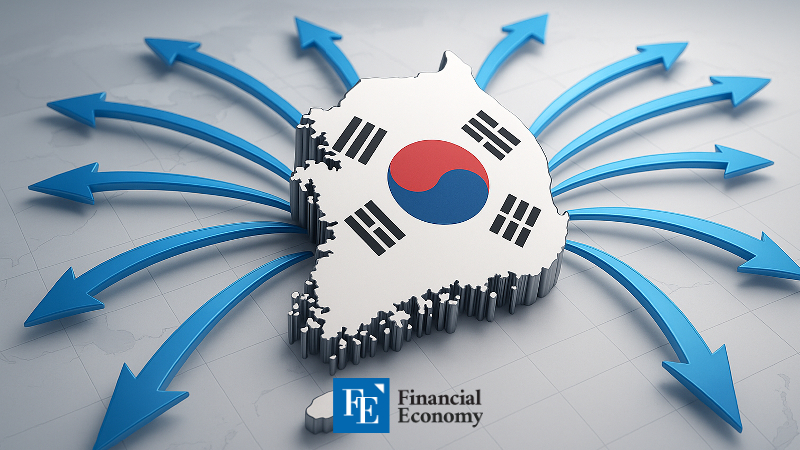
Why Korean Firms Are Turning Away From the Domestic Market
A growing number of Korean companies—far beyond the major conglomerates with strong global footprints—are moving their production bases overseas. According to KOTRA, as of early 2025, 9,930 Korean firms operate across 84 countries, with about 28% classified as manufacturing or production entities rather than simple sales offices, underscoring how frequently factories themselves are being relocated abroad. Between 2014 and 2022, an average of more than 2,600 Korean companies expanded overseas each year, while only 126 returned.
Multiple structural factors are driving this shift. High labor costs and a rigid labor market remain major challenges. Korea’s wage levels are far higher than those of developing economies, yet labor flexibility remains low—burdened by the 52-hour workweek, steep minimum wage hikes, and strict dismissal rules. Increasingly stringent permits, environmental and safety regulations also act as constraints that erode operational efficiency. Legislation such as the “Yellow Envelope Bill,” which expands corporate liability, further amplifies risk-avoidance incentives among firms.
Korea’s uniquely difficult succession environment is another chronic obstacle. The top inheritance tax rate has remained at 50% since being raised from 45% in 2000—the second-highest among OECD members after Japan (55%). When the 20% valuation surcharge applied to major shareholders’ inherited shares is included, the effective rate can reach 60%. As a result, more companies are opting to relocate their headquarters abroad or pursue foreign investment to ease the tax burden.
As one of the youngest members of the team, Tyler Hansbrough is a rising star in financial journalism. His fresh perspective and analytical approach bring a modern edge to business reporting. Whether he’s covering stock market trends or dissecting corporate earnings, his sharp insights resonate with the new generation of investors.
Similar Post