Conservative resurgence reshapes Latin America amid left-wing fatigue

Authored On
Modified
Growing fatigue with leftist governments’ unmet promises
Hopes for diversified foreign partnerships sway voters
Rising speculation over Trump’s intervention in Latin America

A wave of left-leaning administrations had dominated Latin America until recently, but soaring living costs, deteriorating public security, and recurring corruption scandals have sharply eroded public trust. In countries such as Argentina and Bolivia, calls for economic stabilization have intensified, accompanied by a widening perception that leftist governments have failed to deliver meaningful improvements. Against this backdrop, conservative leaders have regained momentum by highlighting renewed ties with the United States—emphasizing tariff adjustments, restored cooperation channels, and strengthened security partnerships as “immediately verifiable outcomes.”
Growing demand for “economic normalization”
According to Bloomberg on the 18th, Latin America is experiencing a spreading “blue tide” as frustration with left-wing governments—unable to tame economic distress or rising crime—fuels support for conservative parties. While each country faces different circumstances, Bloomberg notes that the underlying dynamics are similar: in Bolivia, prolonged fuel and dollar shortages have caused systemic bottlenecks, while Argentina’s chronic economic crises have hollowed out real purchasing power. These differing circumstances, Bloomberg wrote, are nevertheless pushing voters in the same direction.
Chile’s presidential race illustrates this trend clearly. In the first-round vote on the 16th, far-left candidate Jeanette Jara led with 26.85 percent, but candidates in second through fifth place were all conservative or right-leaning—raising expectations of a unified conservative front in the runoff. Fourth-place candidate Johannes Kaiser publicly endorsed second-place José Antonio Kast, signaling an effective consolidation. If right-wing voters rally behind Kast, analysts estimate he could secure as much as 70 percent support.
Argentina provides an even more direct example of economics shaping election outcomes. In last month’s midterms, President Javier Milei’s right-wing bloc soundly defeated the leftist opposition, reinforcing his mandate for the remainder of his term. Argentines have endured years of severe inflation and fiscal instability, and progressive social programs had failed to translate into tangible economic recovery. As a result, voters increasingly sought a leader capable of restoring macroeconomic order—prompting a decisive shift toward the right.
Bolivia likewise ended two decades of left-wing rule when centrist-right candidate Rodrigo Paz won last month’s presidential runoff with 55 percent of the vote. Living-cost strains, security breakdowns, and corruption scandals weighed heavily, and the ruling party’s dismal 3 percent showing in the first round underscored the collapse of public confidence. Similar patterns are emerging in Ecuador and El Salvador, where right-leaning leaders promising tough security measures and economic stability continue to gain traction. Across the region, the common thread is a perception that leftist incumbents bear responsibility for economic failure—opening space for conservative resurgence.
Market-friendly, U.S.-aligned policies regain appeal
As recently as last year, Latin America appeared firmly in the grip of a left-wing resurgence. The trend began with Andrés Manuel López Obrador’s 2018 victory in Mexico and continued as progressive leaders won elections in Argentina, Peru, Chile, and Colombia—heralding what many called a “second pink tide.” Voters hoped these governments would address inequality, welfare gaps, and Indigenous rights—issues that right-wing predecessors had been slow or unwilling to tackle. Brazil’s President Luiz Inácio Lula da Silva further cemented this shift by pairing social expansion with private investment during his previous terms, suggesting the left could govern economically responsibly.
But cracks began to show late last year. Left-wing administrations struggled to convert their pledges into real economic gains, and while welfare and social-rights agendas earned public backing, broader economic improvements remained scant. Corruption scandals in Peru and Bolivia further damaged credibility, with the impeachment of Peru’s former president Pedro Castillo and bribery allegations against President Dina Boluarte reinforcing disillusionment. The pink tide’s political foundation began to erode.
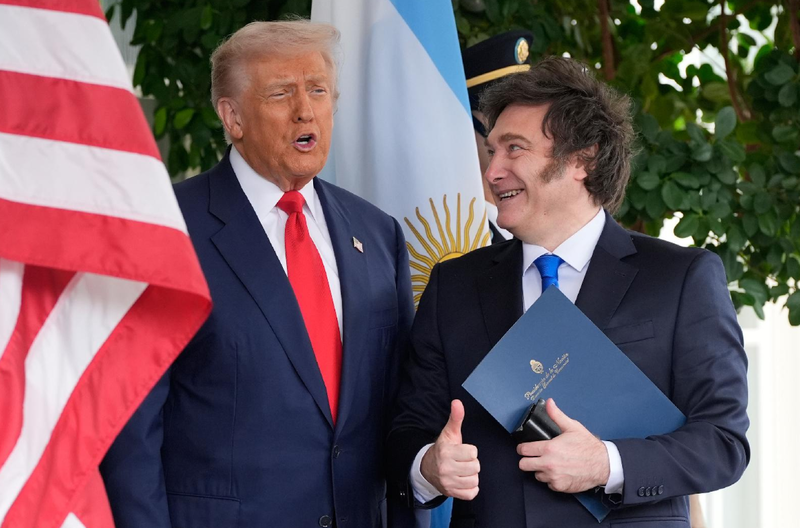
Foreign policy added another layer of complexity. Left-leaning governments had deepened ties with China while distancing themselves from the United States, but the benefits proved limited. Conservative leaders seized the opening—promising to restore U.S. relations as a catalyst for economic revival. Argentina’s President Milei swiftly pursued tariff adjustments and visa-free travel agreements with Washington, while Ecuador’s President Daniel Noboa expanded military and intelligence cooperation with the U.S. under the banner of combating drug cartels.
Bolivian conservative candidates likewise pledged to restore diplomatic relations with the U.S. after 17 years of severed ties—a move aimed at signaling a sharp departure from the left’s foreign-policy orientation. The expectation is that reengagement with Washington could bolster investor confidence and support economic recovery. The broader regional shift thus reflects not only ideological realignment but also a strategic recalibration after leftist governments failed to meet rising public expectations.
Military pressure paired with economic incentives
Some analysts argue that former U.S. President Donald Trump directly influenced Latin America’s political shift through aggressive interventionist policies. Since the start of his second term, Trump has escalated military pressure on leftist governments in Venezuela and Colombia under the banner of combating narcotics. He deployed aircraft carriers to the Caribbean and authorized operations to sink vessels designated as drug-trafficking ships—actions that resulted in at least 43 deaths. Venezuelan President Nicolás Maduro accused Washington of “engineering a war,” underscoring the severity of the confrontation.
Trump extended similar pressure to Colombia, calling President Gustavo Petro a “drug lord” and questioning his commitment to narcotics enforcement. The U.S. Treasury added Petro’s relatives and associates to its sanctions list, and Washington designated Colombia a “non-cooperative country” in drug control for the first time in nearly three decades. When Petro criticized the U.S. at a pro-Palestinian rally in New York, he later had his visa revoked—illustrating the fraught bilateral climate.
At the same time, Trump signaled clear support for right-leaning governments. His so-called Monroeist approach to Latin America blends military force with financial incentives to tilt the regional political landscape toward the right. Promised support for Argentina included a $20 billion currency swap and another $20 billion through private funds—moves that U.S. Treasury Secretary Scott Bessent openly said were intended to influence upcoming elections in Colombia and Chile. This underscores the explicitly political nature of the assistance.
The challenge is that such support is highly conditional, making it unpredictable. When Trump remarked that he would assist Argentina only if Milei won the general election, the Argentine peso plummeted—showing how volatile U.S. pressure can be. Still, Washington’s mix of coercion and incentives has delivered a clear message across Latin America: cooperation with the U.S. can dramatically reshape a country’s economic and security environment. This calculus has contributed to renewed conservative momentum and is likely to influence the region’s economic trajectory in the years ahead.
Similar Post