“Ukraine Must Cede Donbas and Halve Its Military”: New Peace Proposal Tilting Toward Russia Raises Concerns of Prolonged War

Siobhán Delaney is a Dublin-based writer for The Economy, focusing on culture, education, and international affairs. With a background in media and communication from University College Dublin, she contributes to cross-regional coverage and translation-based commentary. Her work emphasizes clarity and balance, especially in contexts shaped by cultural difference and policy translation.
Authored On
Modified
Witkoff Leads Drafting of the Proposal
Ukraine to Cede Entire Donbas and Cut Forces by Half
Harsher Terms Than August Alaska Talks
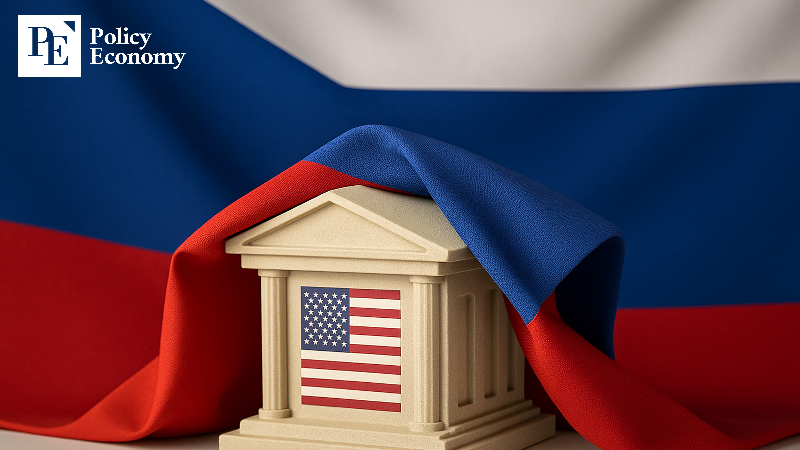
A draft ceasefire proposal for the war in Ukraine, jointly prepared by U.S. and Russian officials, has been revealed. The plan reportedly calls for Ukraine to surrender the entire Donbas region and reduce its military forces by half. However, analysts warn that such terms would effectively dismantle Ukraine’s security foundation, crossing red lines long considered nonnegotiable by Kyiv—making the plan largely untenable in practice.
Backchannel Negotiations via Unofficial Channels
According to the Financial Times on November 19 (local time), Steve Witkoff, U.S. Special Envoy for Middle Eastern Affairs under President Donald Trump, met in Miami with Rustem Umerov, Secretary of Ukraine’s National Security and Defense Council, to deliver the U.S.-Russia draft proposal. The draft, still in its early stages, reportedly demands that Ukraine relinquish the remainder of the Donbas region still under its control—effectively ceding the entire eastern territory to Russia.
The document also stipulates that Ukraine must abandon its key weapons systems and accept a reduction in U.S. military assistance, potentially leaving the country vulnerable to future Russian incursions. In addition, it calls for granting Russian status as an official language in Ukraine and recognizing the Ukrainian branch of the Russian Orthodox Church—both long-standing political objectives of the Kremlin.
In August, during the U.S.-Russia summit held in Alaska, President Vladimir Putin had already demanded cession of Donbas territory. The current draft appears to reflect Russia’s stance even more strongly. Ukraine was again excluded from these discussions, as it had been in August, when the proposed deal stipulated that Russia would halt offensives in southern regions such as Kherson and Zaporizhzhia in exchange for Donbas concessions. That earlier version, however, did not include a requirement to cut Ukraine’s military in half.
De Facto Sovereignty Surrender—Kyiv Rejects Terms Without Major Revisions
The U.S. and Russia have reportedly been negotiating the 28-point peace framework in secret for several weeks. Witkoff represented the U.S. side, while Russia was represented by Kirill Dmitriev, head of the Russian Direct Investment Fund (RDIF) and economic envoy to President Putin. The two met intensively from October 24 to 26 in Miami to refine the draft. Russian officials now claim that their key demands have largely been incorporated. Dmitriev remarked, “Unlike before, Russia’s position is genuinely reflected in this document.”
Nevertheless, diplomatic and security experts view the proposal as tantamount to Ukraine relinquishing its sovereignty and therefore politically impossible to accept. Many of the conditions mirror those Ukraine has long defined as inviolable red lines. One diplomatic source suggested Russia might be “toying with Washington’s eagerness for progress.” Ukrainian officials have made it clear that the proposal would be unacceptable without sweeping revisions.
Even in terms of battlefield dynamics, most analysts agree the draft lacks practical viability. Following Russia’s full-scale invasion in February 2022, its forces initially advanced deep into Ukrainian territory, even threatening Kyiv, but withdrew by April after suffering setbacks. Since then, the front lines have stabilized largely across eastern and southeastern Ukraine, where both sides have alternated between gains and retreats.
In recent months, persistent Russian offensives have gradually pushed Ukrainian forces back. Ukraine has lost roughly 20% of its territory, yet it is not in absolute military collapse. For Europe, a “Korean-style outcome”—where Ukraine surrenders part of its territory and relies on allied security guarantees—would also be strategically damaging, erasing the buffer zone separating Russia from NATO’s eastern flank.
Stalemate Deepens, Long War Looms
Experts increasingly predict a prolonged deadlock, with no clear exit path in sight. Nearly three months have passed since the U.S. and Russian presidents met to discuss an end to the war, but negotiations remain stalled, while fighting has only intensified along the front.
The fiercest battles are now centered around Pokrovsk, a key logistical hub in Donbas with a population of 60,000. The mining town serves as a major crossroads for regional rail and road networks, providing crucial supply routes. Should Russia capture Pokrovsk, it would gain a direct route to Kramatorsk and Sloviansk. Both armies are engaged in a desperate struggle for control, with Ukraine reporting that in some sectors the ratio of engaged troops and equipment favors Russia by as much as 10 to 1. Yet Ukrainian forces continue to face severe shortages of manpower and materiel.
With a population only one-fourth that of Russia, some voices in Ukraine are urging a strategic withdrawal. President Volodymyr Zelensky, however, has refrained from signaling any such retreat, saying only that “protecting our soldiers is the top priority.” Any pullback could be seized by Putin as evidence supporting his claim to Trump that “supporting Ukraine is a waste.”
Regional Powers Reinforcing Military Readiness
Ukraine’s neighbors are responding with heightened vigilance. The European Union has already approved Ukraine’s access to the $7.3 billion European Defence Fund (EDF) and is advancing a “military Schengen” framework to facilitate cross-border troop movements among EU states. The EDF agreement aims to channel defense investments within the existing EU budget to support the bloc’s “ReArm Europe” initiative, enabling Ukraine to join joint defense research and development projects.
The European Commission also plans to unveil a draft document on “military mobility” later this month, including legislative measures to remove logistical bottlenecks for moving troops, equipment, and supplies across member states. Once implemented, EU forces would be able to deploy across Europe far more rapidly.
Poland, sharing a border with Russia’s Kaliningrad exclave, is taking its own precautions. It has launched its largest-ever military training program, targeting 400,000 troops by next year. In 2024, Poland spent an estimated $643 billion on defense—ranking fifth among NATO members, behind only the U.S., Germany, the U.K., and France—and the highest relative to GDP at 4.12%. Its active-duty force of 216,000 ranks third in NATO, and Warsaw plans to expand troop levels by more than 30% over the next decade.
Germany, meanwhile, has finalized a new semi-conscription system. The coalition government of the CDU/CSU and SPD announced on November 13 that while voluntary enlistment will remain the norm, compulsory service may be introduced if recruitment targets are not met. Beginning next year, all Germans turning 18 will receive a written inquiry about their willingness to serve. Women may decline to respond, but men must answer. The Defense Ministry plans to increase the active force from 180,000 to 270,000 over the next decade and strengthen reserve mobilization, bringing total potential manpower to 460,000—comparable to Cold War levels.
Siobhán Delaney is a Dublin-based writer for The Economy, focusing on culture, education, and international affairs. With a background in media and communication from University College Dublin, she contributes to cross-regional coverage and translation-based commentary. Her work emphasizes clarity and balance, especially in contexts shaped by cultural difference and policy translation.
Similar Post