Clashes between China and Japan expose supply-chain fractures, complicating third-country cost-benefit calculations

Niamh O’Sullivan is an Irish editor at The Economy, covering global policy and institutional reform. She studied sociology and European studies at Trinity College Dublin, and brings experience in translating academic and policy content for wider audiences. Her editorial work supports multilingual accessibility and contextual reporting.
Authored On
Modified
China attempts to isolate Japan on the diplomatic stage
Corporate efforts overshadowed by deep reliance on China
Supply-chain realignment brings both opportunities and burdens
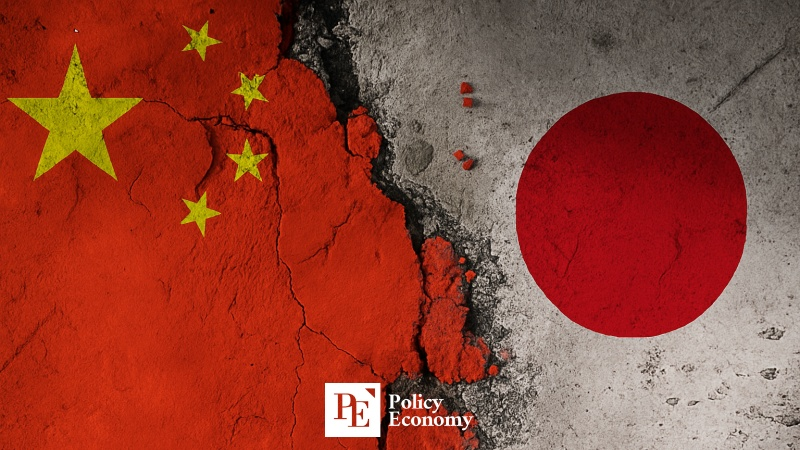
Tensions between China and Japan, originating from the Taiwan issue, have entered a prolonged phase, widening rifts not only diplomatically but across their broader economic relationship. As developments such as Japan’s possible postponement of a summit involving South Korea draw attention, the confrontation between the two countries is spreading into the international arena. Japanese companies, meanwhile, are scrambling to respond to “China risk” by adjusting production bases and diversifying procurement routes.
Conflict ignited by Japan’s anti-China message
According to the Mainichi Shimbun on the 24th, Japan’s plan to host a trilateral summit with South Korea and China in January has become uncertain after China rejected the proposal. Japan has begun exploring the possibility of holding the meeting after February, but China’s Lunar New Year schedule makes coordination difficult. Japan had originally aimed to ease heightened bilateral tensions by arranging a meeting between Japanese Prime Minister Sanae Takaichi and Chinese Premier Li Qiang during the G20 summit in Johannesburg on the 22nd and 23rd. However, China declined, deepening the rift.
The conflict traces back to Prime Minister Takaichi’s public remark suggesting that Japan’s Self-Defense Forces might intervene in the event of a Taiwan contingency—a statement that triggered strong backlash from Beijing. Chinese Foreign Minister Wang Yi criticized Japanese right-wing forces’ historical awareness and the potential involvement of external actors in the Taiwan Strait, saying Takaichi had “crossed a red line” with remarks that “should not have been made.” This signaled China’s intent to escalate its response by framing her statement as an infringement on its “core interests.”
The response quickly moved beyond rhetoric. On the 21st, Fu Cong, China’s ambassador to the United Nations, sent a letter to UN Secretary-General António Guterres denouncing Japan’s Taiwan-related remarks. The letter argued that any Japanese military involvement in the Taiwan Strait would constitute aggression and referenced Japan’s postwar responsibilities, demanding a retraction. China also announced plans to circulate the letter to all UN member states, making clear its intention to isolate Japan internationally.
Japan reacted sharply, mindful that China could revive past tactics such as tightened customs checks, restrictions on group tourism to Japan, and consumer boycotts of Japanese products. The Japanese government is now preparing countermeasures against potential phased retaliation. The challenge is compounded by weakened pro-China networks since the launch of the Takaichi administration, particularly after the Komeito Party—long an advocate of maintaining stable relations with Beijing—left the ruling coalition.
At the G20 summit, both leaders visibly avoided each other, even in informal settings after the official photo session. China further narrowed Japan’s diplomatic space by emphasizing its Taiwan-related stance in meetings with Global South representatives. Chinese Premier Li Qiang and South African President Cyril Ramaphosa reaffirmed mutual support for each other’s “core interests,” underscoring Beijing’s effort to rally international backing.
Gap widens between “decoupling” rhetoric and reality
Japan’s corporate sector has responded to China’s pressure primarily by shifting production bases and diversifying suppliers. A recent Teikoku Databank survey of 1,908 Japanese firms operating overseas found that the share considering China their most important production base dropped to 16.2%, down 7.6 percentage points from 2019. Teikoku Databank noted that China’s unpredictable regulatory environment and opaque information access are dampening business confidence, leaving firms little choice but to factor geopolitical and policy-driven risks into management decisions.
After Prime Minister Takaichi’s Taiwan remarks, Chinese countermeasures—including suspension of Japanese seafood imports and advisories discouraging travel to Japan—heightened concerns in Japan’s business community. Fears have grown that China may deploy high-risk measures such as export controls on rare earths. Beijing’s recent coordination with three Central Asian states to issue a statement opposing Taiwan independence and its UN letter targeting the Japanese government have further underscored the potential impact of geopolitical tensions on raw-material procurement.
Other surveys reflect similar shifts. In a Nikkei Asia survey of Japan’s top 100 corporations, 79 companies said they plan to reduce the share of components sourced from China. By sector, 60% of machinery firms and 57% of automotive and chemical companies intend to cut reliance on Chinese suppliers, signaling that key manufacturing segments are actively responding. Meanwhile, 80% of firms cited the risk of a Chinese invasion of Taiwan as a major concern—highlighting that geopolitical shocks now outweigh cost savings or market expansion in corporate risk assessments.
Yet despite this stated intention to “de-China,” Japan’s actual reliance remains extremely high. According to Japan’s 2024 Trade White Paper, of roughly 4,300 import categories, China accounts for more than half of imports in 1,406 categories—about 30%, far above the G7 average of 5%, Germany’s 10%, or the United States’ 20%. Only 20% of Japan’s import categories were found to have sufficiently diversified supply chains, compared with 60% for Germany and 40% for the United States. This illustrates the limits of corporate-level responses when national-level dependence remains deeply entrenched.
Implications for South Korea, the U.S., and the EU
Global markets are watching how deteriorating China-Japan relations create both opportunities and risks for third-country actors. As the two nations intensify their rivalry across diplomacy, security, and economics, some countries may benefit from shifts in supply chains, while others face additional exposure. Japan last year issued a joint ministerial statement with the European Union on strengthening economic security, clarifying its intent to rebalance supply-chain dependencies. Motivated by concerns that China’s heavy subsidies distort markets, the cooperation now encompasses technology-leakage prevention and secure access to strategic materials.
South Korea has emerged as an important variable amid these shifts. According to the Ministry of Trade, Industry and Energy, Korea’s dependence on Japan for parts and materials fell from 17.1% in 2020 to 13.9% in 2024, while dependence on China increased from 27.7% to 29.8%. In categories designated as “critical strategic items” for supply-chain security, Chinese imports account for more than half. This raises concerns that Korea could face significant disruption if Beijing tightens export controls.
However, Korea also stands to benefit. If China and Japan remain locked in long-term conflict, some supply lines for semiconductors, electric vehicles, and renewable-energy products may shift toward Korea. The Japan-EU “sustainable supply chain” framework could open participation opportunities for Korean companies, and as EU-centric norms spread, more firms seeking to reduce reliance on China may consider Korea as an alternative production hub. Korea’s ongoing efforts since the 2020s to localize materials, parts, and equipment could also strengthen its competitiveness.
The United States and EU are also likely to gain strategic leverage. The EU has been vocal about reducing reliance on China, with its cumulative trade deficit with China reaching 460.8 billion dollars by 2022. The United States, meanwhile, has been coordinating subsidy standards with Japan in decarbonization sectors, suggesting it could benefit directly from Japan’s supply-chain realignment. As China-Japan tensions reshape global supply networks, markets now face the dual challenge of capturing emerging opportunities while managing heightened geopolitical risk.
Niamh O’Sullivan is an Irish editor at The Economy, covering global policy and institutional reform. She studied sociology and European studies at Trinity College Dublin, and brings experience in translating academic and policy content for wider audiences. Her editorial work supports multilingual accessibility and contextual reporting.
Similar Post