Trump Prepares Plan B Ahead of Potential Loss in Tariff Lawsuit, Raising Prospect of an Early Lame-Duck Scenario

Siobhán Delaney is a Dublin-based writer for The Economy, focusing on culture, education, and international affairs. With a background in media and communication from University College Dublin, she contributes to cross-regional coverage and translation-based commentary. Her work emphasizes clarity and balance, especially in contexts shaped by cultural difference and policy translation.
Authored On
Modified
U.S. Commerce Department and USTR Review Alternative Legal Basis to Replace IEEPA
Even Conservative Justices Question Presidential Authority
Defeat Could Trigger Refunds and a Wave of Litigation
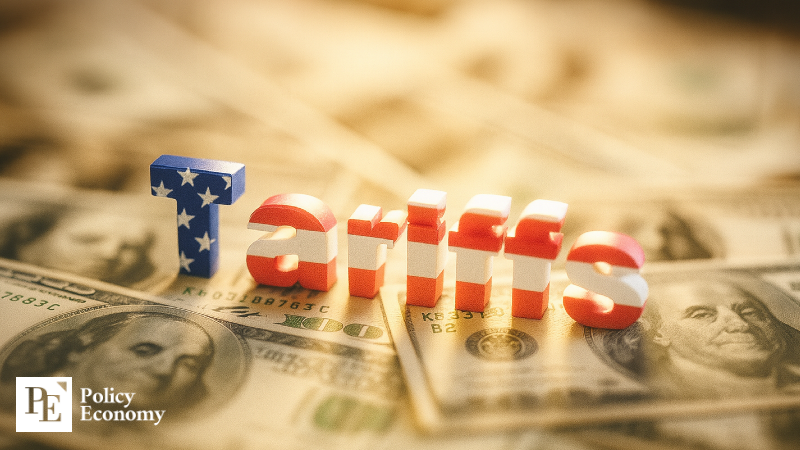
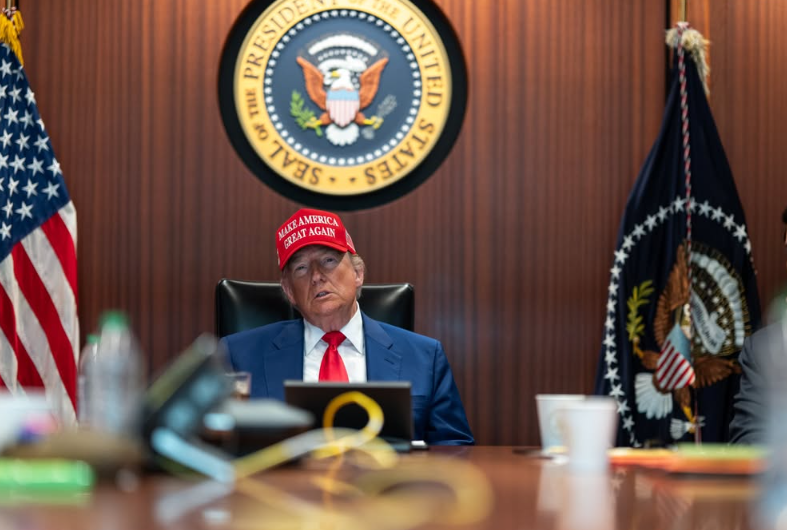
The administration of U.S. President Donald Trump is accelerating preparations for a “Plan B” as the Supreme Court considers the legality of reciprocal tariffs and appears increasingly likely to strike down the measures. Should the Court rule that tariffs imposed under the International Emergency Economic Powers Act (IEEPA) are unlawful, the administration intends to continue levying duties under alternative legal authorities. Yet most observers agree that any fallback option would provide neither the immediacy nor the breadth of authority afforded by IEEPA, constraining the speed and reach of Trump’s tariff-driven strategy. Some Democrats warn that a ruling invalidating the tariffs could undermine President Trump’s political command and hasten an early lame-duck phase.
Plan B Moves Forward Despite Potential Defeat, Trade Act Section 122 and Tariff Act Section 338 Under Review
According to Bloomberg on the 24th (local time), the U.S. Department of Commerce and the Office of the U.S. Trade Representative (USTR) are reviewing Sections 301 and 122 of the Trade Act as potential replacement authorities for IEEPA-based tariffs. While the White House declined to detail its preparations, it acknowledged searching for “new approaches” to maintain Trump’s trade policy. “President Trump has lawfully exercised the emergency tariff powers granted by Congress, and the administration is confident of ultimate victory before the Supreme Court,” said White House spokesperson Kush Desai. “At the same time, we are constantly reviewing new ways to address America’s record goods trade deficit and restore critical manufacturing essential to national and economic security.”
Some elements of Plan B are already underway. In July, the Trump administration launched a Section 301 investigation into Brazil, while Section 301 tariffs from the first term on Chinese imports remain in force. Kevin Hassett, chairman of the White House National Economic Council (NEC), has said that if the administration loses at the Supreme Court, it could reimpose tariffs using authority under Sections 301 or 122. At a Washington Economic Club event on the 13th, he noted, “There are various tools that allow us to reconstruct current trade policy under different authorities.”
However, Section 301 carries a major drawback: it requires lengthy investigations before tariffs can be imposed. Moreover, retaliation is capped at a level commensurate with the burden or restriction imposed on the United States — meaning duties cannot be applied arbitrarily or beyond the assessed level of harm. Section 122 authorizes the president to impose tariffs of up to 15 percent, but only for a maximum of 150 days, a limitation that has diminished its appeal. Peter Navarro, former White House trade and manufacturing adviser, previously stated that the administration had no intention of relying heavily on Section 122 due to these strict time constraints.
The administration is also weighing expansion of Section 232 of the Trade Expansion Act — the statutory basis currently used for tariffs in specific industries such as metals and automobiles. Wendy Cutler, vice president of the Asia Society Policy Institute, suggested on social media that “if tariffs imposed under IEEPA are struck down, expansion of Section 232 could emerge as Plan B,” warning that “it may be only a matter of time before Section 232 effectively blankets most of the manufacturing base.” Section 338 of the Tariff Act is likewise being floated, as it allows the president to impose tariffs of up to 50 percent indefinitely in response to discriminatory foreign commercial practices. Bloomberg noted, however, that “because there is no precedent, it could invite new legal challenges and rapidly become the subject of litigation.”
Conservative Supreme Court Justices Also Question Presidential Tariff Authority
The administration’s sudden push for a fallback strategy reflects its internal assessment that loss is possible, particularly after conservative justices expressed skepticism during oral arguments on the 5th. The core issue is whether reciprocal tariffs imposed under IEEPA are legally justified. IEEPA empowers the president to take economic measures in response to foreign threats during national emergencies.
The lawsuit began when small businesses harmed by the tariffs and 12 Democratic-leaning states filed suit. In May, the Court of International Trade (CIT) — the trial court — ruled that the president does not have unlimited authority and invalidated all tariffs imposed under IEEPA. An appellate ruling in August by the Federal Circuit concurred, stating that the “regulate importation” authority under IEEPA’s national emergency provisions does not include the power to levy tariffs.
Several justices raised concerns that reciprocal tariffs were overly broad and granted excessive authority to the president. Chief Justice John Roberts, a conservative, questioned whether Trump’s actions permitted “tariffs on all products from any country, in any amount, for any duration,” suggesting the administration may have exceeded its lawful powers. Justice Amy Coney Barrett — viewed as the key swing vote in this case despite her conservative leanings — pressed the government to explain why the tariffs were applied even to allies such as Spain and France, asking whether “it was necessary to apply reciprocal tariffs to every country.” Although conservatives outnumber liberals 6–3 on the Court and have often sided with Trump, this case has prompted growing reservations among conservative justices about the scope and scale of presidential tariff authority.
Against this backdrop, President Trump has softened certain positions to appeal to public sentiment — promising to eliminate tariffs on coffee and bananas while pledging USD 2,000 per person in purported “tariff dividends.” While he has long been mocked as “TACO” (Trump Always Chickens Out), earlier reversals typically followed negotiation; now, however, he is increasingly pursuing decisions at odds with his own declared policy vision. His meeting on the 21st with New York City Mayor Zohran Mamdani was interpreted by many simply as another erratic maneuver to bolster public approval. The proposed dividend payment contradicts Trump’s long-standing claim that tariff revenues would resolve the government’s fiscal challenges, and even Republican lawmakers have reacted coolly, raising doubts about passage in Congress.
Massive Refund Obligations Could Trigger Significant Fallout
Experts warn that if the Supreme Court rules the tariffs unlawful, the administration may be forced to refund duties collected from importers and companies over the past ten months. According to the U.S. Treasury Department, the Trump administration has collected more than USD 89 billion in tariffs since taking office. It is for this reason that President Trump described the case as “one of the most important in the nation’s history,” warning that defeat could have “catastrophic consequences” for the U.S. economy.
Moreover, companies may file lawsuits seeking compensation for damages incurred due to the tariffs. Such an outcome would make it significantly harder for future administrations to raise or lower tariffs unilaterally, forcing them instead to seek congressional approval or navigate formal legal procedures. While businesses and consumers would enjoy short-term relief, the government’s policy flexibility would narrow substantially.
Tariff-related provisions underpinning Trump’s trade agreements could also be thrown into disarray. Throughout his presidency, Trump has negotiated various deals — on market access, defense spending, and investment — predicated on promises of tariff reductions if certain conditions were met. The New York Times noted that “depending on the Supreme Court ruling, the administration may have to withdraw from all of its bilateral trade agreements.”
Fiscal pressures could intensify as well. On the 5th, when conservative justices signaled doubt about the legality of Trump’s tariffs, yields on the 10-year U.S. Treasury rose 6 basis points to 4.159 percent. In September, when the Federal Circuit struck down most of Trump’s tariffs as illegal, yields on the 30-year bond surged to 4.97 percent amid concerns that tariff refunds would widen the fiscal deficit. Rising deficits leading to greater bond issuance could push interest rates higher, potentially constraining capital flows into emerging markets such as Korea.
A ruling against the tariffs could also erode Trump’s political standing. Tariff policy has been one of Trump’s primary tools for mobilizing core constituencies — including manufacturing workers, Midwestern labor groups, and communities affected by trade deficits. Should the Supreme Court upend this policy, confusion among these support bases would be inevitable. Even if tariffs remain in place, inflationary pressures, retaliatory tariffs, and supply-chain disruptions provide ample ammunition for Trump’s opponents. Some Democrats argue that the ruling could push the already embattled president into an early lame-duck phase. In recent weeks, even Senate Republicans have begun disregarding Trump’s demands, including calls to end the filibuster through the “nuclear option,” underscoring his diminishing political influence.
Siobhán Delaney is a Dublin-based writer for The Economy, focusing on culture, education, and international affairs. With a background in media and communication from University College Dublin, she contributes to cross-regional coverage and translation-based commentary. Her work emphasizes clarity and balance, especially in contexts shaped by cultural difference and policy translation.
Similar Post