ASML Accused of Offering U.S. Access to Chinese Secrets as U.S.–China Tech Rivalry Intensifies

Authored On
Modified
Book by Bloomberg Journalist Reveals: “ASML Offered to Share Inside Information on Its China Factory With the U.S.”
China, Struggling to Improve Lithography Technology, Has Even Damaged ASML Tools While Attempting Reverse Engineering
Global Chip-Equipment Makers Can’t Ignore China Sales Despite U.S. Pressure
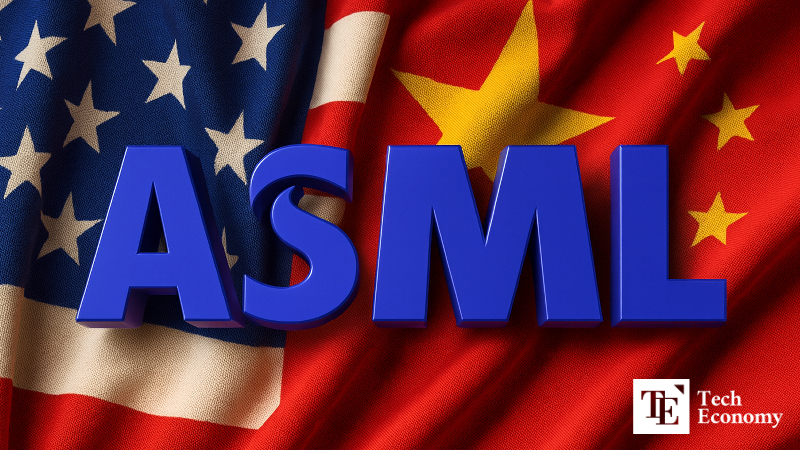
Claims have emerged that Dutch chip-equipment maker ASML offered to provide the United States with internal confidential information from its Chinese customers. As Washington moved to tighten restrictions on ASML’s business in China, the company was reportedly considering information sharing as a way to preserve its local operations. ASML has strongly denied the allegation, but the controversy has renewed market focus on the deep, persistent interdependence between ASML and China.
ASML Strongly Denies Spy Allegations
According to the semiconductor industry on the 25th, several media outlets—including IT publication Tom’s Hardware—have highlighted claims from a new book, The Most Important Machine in the World, written by former Bloomberg journalists Diederik Baazil and Cagan Koc. The book describes events in 2023, when the United States and the Netherlands were negotiating export restrictions on ASML’s deep ultraviolet (DUV) lithography tools bound for China. Both governments later finalized an agreement to restrict such exports starting in 2024.
The issue centers on the interim period between January and September 2023. During this transition, Washington and The Hague established a “gentleman’s agreement”—a nonbinding diplomatic understanding—under which ASML would ship only a limited number of DUV tools already contractually obligated, while voluntarily halting any additional sales. However, according to the book, ASML violated this understanding and shipped more DUV units to China than agreed.
In response, the United States considered going beyond restricting new sales, exploring an unprecedented step to block all maintenance and service for ASML tools already operating in Chinese fabs. Without maintenance from the supplier, the multibillion-dollar machines would become useless, effectively destroying ASML’s business foundation in China. The book claims that, during this critical moment, then-CEO Peter Wennink offered to provide the U.S. with internal information about Chinese customers in exchange for continued service access.
One of the authors wrote that Wennink made “an unprecedented offer to give the U.S. insight into Chinese factory operations in return for allowing ASML to service Chinese customers.” After the book’s release, however, ASML issued a statement firmly denying the account, saying the claim “is not true and risks creating serious misunderstandings.” The company stressed that any suggestion it offered to “act on behalf of a government” is inaccurate and reaffirmed its adherence to export-control rules and legal obligations.
China Attempts to Advance Its Technology by Imitating ASML
Market observers say the latest controversy underscores the deep interdependence between China and ASML. Due to ongoing U.S. export restrictions, China still lacks competitiveness in lithography equipment manufacturing. In a report released in late August, Goldman Sachs noted that China’s lithography technology remains at roughly the 65-nanometer level—at least 20 years behind the West. Publicly disclosed Chinese progress remains at the laboratory stage, and the bank estimated it would take another 20 years for China to develop equipment suitable for mass production. Huawei founder and CEO Ren Zhengfei similarly admitted in People’s Daily in June that China’s single-chip manufacturing technology is “a generation behind” the United States. For Beijing—locked in a tech rivalry with Washington—securing ASML’s cutting-edge tools remains essential.
Recently, allegations surfaced that China attempted to reverse-engineer ASML equipment in an effort to catch up technologically. On October 19, Brandon Weichert, national security senior editor at The National Interest, wrote on X that an ASML DUV machine used in China had malfunctioned, prompting Chinese operators to request repairs. When ASML technicians inspected the tool, they reportedly found damage caused by Chinese engineers who had disassembled and reassembled the system. According to Weichert, China dismantled the older DUV model to find ways to circumvent U.S. restrictions on newer equipment and hoped to learn how to build an upgraded version through reverse engineering—an effort that “appears to have failed.”
Experts say the incident illustrates the reality of China’s limitations. A market analyst noted that lithography tools require nanometer-level precision, making it nearly impossible to replicate them simply through disassembly—and the process often risks damaging the equipment. The analyst added that copying the physical structure alone does not guarantee comparable performance. Still, as long as U.S. export controls remain in place, attempts at reverse-engineering ASML tools are expected to continue.
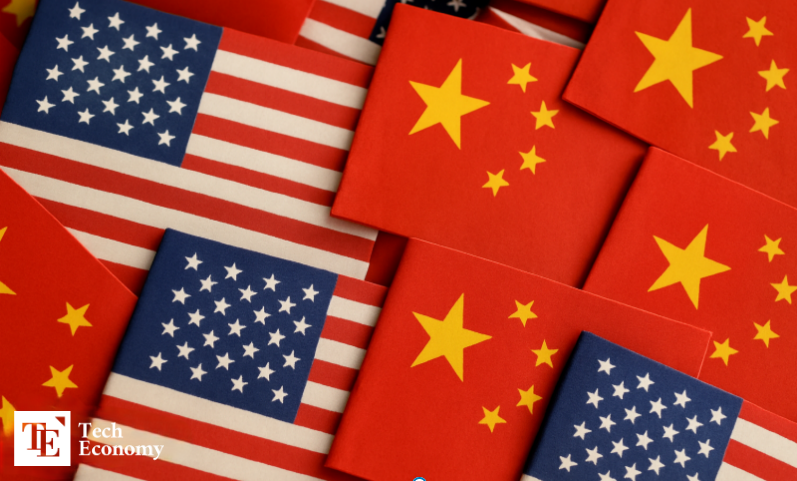
China Becomes a Central Pillar of the Semiconductor Equipment Market
ASML’s dependence on China is significant. In the third-quarter results released on the 15th, the company reported $5.4 billion in new orders and $7.5 billion in revenue. China accounted for 42% of ASML’s quarterly revenue—up from 27% in the previous quarter—showing that demand for semiconductor equipment in China remains resilient despite U.S. export controls.
The trend extends beyond ASML. According to a report released last month by the U.S. House Select Committee on China, major global equipment makers—including Applied Materials (AMAT), Lam Research, KLA, ASML, and Tokyo Electron—sold $38 billion worth of semiconductor tools to China in 2023. This represents a 66% increase from $22.9 billion in 2022 and accounts for about 39% of their combined annual revenue. Robust sales continued even after the U.S. Commerce Department imposed export controls in October 2022 on advanced manufacturing equipment and high-performance chips for AI and supercomputing. Many of the Chinese buyers—such as Naura Technology, Shenzhen PNC Technology, and XIN Integrated Circuits—are companies Washington views as potential security risks. The House committee urged broader restrictions on sales to China, beyond the narrow bans already in place.
As the U.S. considers additional controls, China is pushing back. In August, Beijing E-Town Semiconductor Technology (E-Town) filed a lawsuit against Applied Materials with the Beijing Intellectual Property Court, according to documents submitted to the Shanghai Stock Exchange. E-Town claims Applied Materials hired two employees from Mattson, its U.S. subsidiary, who had access to proprietary plasma technology. Applied Materials then filed a patent in China asserting the technology was invented by those employees. E-Town argues the patent contains trade secrets jointly owned by E-Town and Mattson and is seeking a court order blocking Applied Materials from using the information, demanding the destruction of related materials, and requesting $19.2 million in damages.
Similar Post